15 Viral Food Hacks That Actually Work (And 5 That Are Total Fails)
You’ve seen them all over your feed. Those satisfying videos promising to change your kitchen game forever. Some look too good to be true. Others seem genius. But which viral food hacks that actually work are worth trying, and which ones are just wasting your time?
We tested the most popular food hacks flooding TikTok and Instagram to separate the legitimate time-savers from the total flops. No more guessing whether that egg peeling trick will leave you with a perfect result or a destroyed breakfast.
Most viral food hacks fall into two categories: legitimate time-savers that work consistently, and flashy tricks that fail in real kitchens. The best hacks solve actual cooking problems without requiring special equipment. We tested twenty popular methods to identify which ones deserve space in your routine and which ones you should scroll past without a second thought.
The ice cube tray method actually changes meal prep
Freezing leftover herbs in olive oil transforms how you start cooking. Fill an ice cube tray with chopped herbs, top with oil, and freeze. When you need flavor, pop out a cube and toss it in your pan.
This hack works because it solves a real problem. Fresh herbs go bad fast. Nobody wants to run to the store for three basil leaves. The frozen cubes last months and add instant flavor to any dish.
The same method works for:
- Leftover wine (perfect for deglazing pans)
- Tomato paste (use tablespoon-sized portions)
- Coconut milk (great for curries)
- Coffee (for iced drinks that don’t get watery)
Peeling garlic in a jar sounds fake but actually works
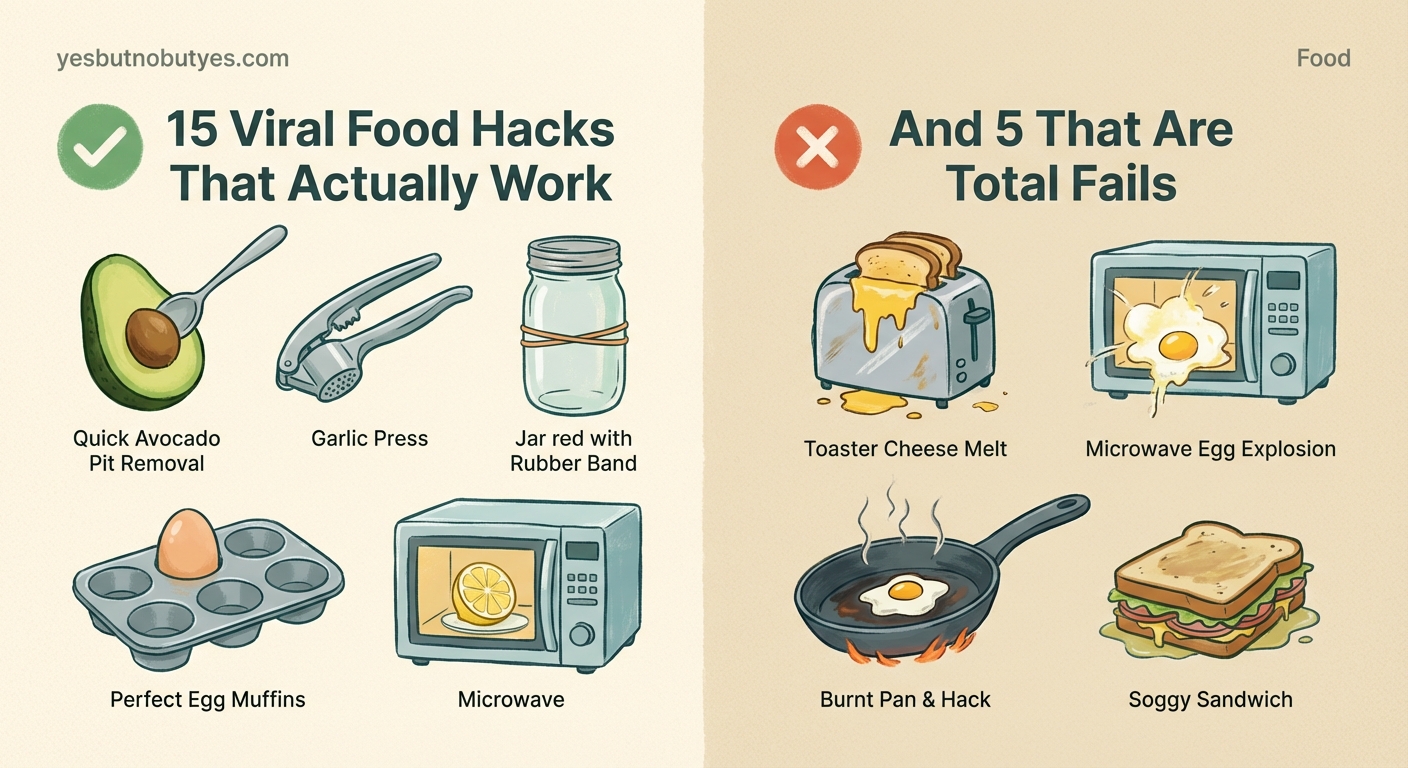
Shake whole garlic cloves in a sealed jar for 30 seconds. The skins fall right off. No sticky fingers. No garlic press to clean. Just perfectly peeled cloves ready to chop.
This method works because the cloves bang against each other and the jar walls, loosening the papery skin. Use a mason jar or any container with a tight lid. The bigger the jar, the better the results.
The jar method cuts my garlic prep time in half. I can prep a whole head in under a minute, which used to take forever when I peeled each clove individually.
The truth about viral cooking shortcuts
Not every hack that goes viral actually improves your cooking. Some create more mess than they solve. Others require such specific conditions that they fail in normal kitchens.
| Hack | Does It Work? | Why or Why Not |
|---|---|---|
| Peeling ginger with a spoon | Yes | The spoon edge removes skin without wasting flesh |
| Microwaving citrus for more juice | Yes | Heat breaks down cell walls, releasing more liquid |
| Using dental floss to cut cakes | Sometimes | Works for soft cakes, fails on dense or crumbly ones |
| Storing herbs like flowers in water | Yes | Keeps them fresh for over a week in the fridge |
| Shaking cream in a jar to make butter | Yes | Takes 10 minutes but actually produces real butter |
| Using a straw to hull strawberries | No | Wastes more fruit than a knife and takes longer |
The sheet pan egg hack saves breakfast time
Crack a dozen eggs onto a parchment-lined sheet pan. Bake at 350°F for 15 minutes. You get perfectly cooked eggs that fit on sandwich bread without any standing at the stove.
This method works for meal prep. Make a batch on Sunday. Store them in the fridge. Grab one each morning for a breakfast sandwich. The eggs stay good for five days.
The technique also works for feeding a crowd. No more standing over the stove flipping eggs one at a time while everyone else eats. Everyone gets hot eggs at the same time.
Why the wooden spoon over boiling water trick is real
Place a wooden spoon across a pot of boiling water. It actually prevents boil-overs. The spoon breaks up bubbles before they cascade over the edge.
The science makes sense. Bubbles burst when they hit the dry wood. The spoon also lowers the surface temperature slightly at the contact point. This creates a barrier that disrupts the foam.
This hack works best with:
- Pasta water that loves to boil over right when you look away
- Rice that bubbles up unexpectedly
- Oatmeal that erupts like a volcano on high heat
The plastic bottle method for separating egg yolks
Crack an egg onto a plate. Squeeze an empty plastic bottle. Place the opening over the yolk. Release the squeeze. The yolk gets sucked into the bottle, leaving the white behind.
This technique works because of air pressure. The bottle creates suction that’s gentle enough to lift the yolk without breaking it. It’s faster than passing the yolk between shell halves and cleaner than using your hands.
The method fails if you squeeze too hard or use a bottle that’s too large. A standard water bottle works perfectly. Just like some viral TikTok products that actually live up to the hype, this simple trick delivers exactly what it promises.
Rolling citrus before juicing doubles your yield
Press down on a lemon or lime. Roll it back and forth on the counter using your palm. Apply firm pressure for 30 seconds. Then cut and squeeze. You’ll get nearly twice as much juice.
This works because rolling breaks down the internal membranes that hold the juice. The fruit becomes softer and the juice flows more freely. Combine this with the microwave trick for maximum juice extraction.
The aluminum foil trick for cleaning baked-on messes
Crumple aluminum foil into a ball. Use it to scrub stuck-on food from pans and baking sheets. It works better than a sponge and won’t scratch your cookware.
The foil’s texture is abrasive enough to remove burnt bits but soft enough not to damage most surfaces. Don’t use it on non-stick pans, but it’s perfect for stainless steel and glass bakeware.
This hack saves money on specialty scrubbers. You probably already have foil in your kitchen. Just grab a sheet, ball it up, and start scrubbing.
Why the upside-down ketchup storage method matters
Store condiment bottles upside down in the fridge. The product stays at the opening. No more shaking and waiting. No more watery liquid coming out first.
This simple change eliminates frustration. It works with ketchup, mustard, mayo, and any other squeeze bottle. The product is always ready to dispense.
Some people dismiss this as obvious, but it genuinely improves daily kitchen life. Small changes that remove minor annoyances add up over time.
The muffin tin method for perfect taco shells
Flip a muffin tin upside down. Drape tortillas between the cups. Bake until crispy. You get perfectly shaped taco shells without a special holder.
This technique creates restaurant-style hard shells at home. The tortillas form a natural U-shape as they crisp up. They’re sturdy enough to hold fillings without cracking.
The same method works for making edible bowls from tortillas or forming bacon into cups for breakfast. One muffin tin becomes a multi-purpose shaping tool.
Testing methods that seem too good to be true
Some hacks look amazing in perfectly lit videos but fall apart in real kitchens. The ones that work solve actual problems. The ones that fail are usually just for show.
Real hacks save time, reduce mess, or improve results. Fake hacks look impressive but don’t actually make cooking easier. They might work once under perfect conditions, but they’re not reliable enough for regular use.
The best test is simple. If a hack requires more time or creates more cleanup than the traditional method, it’s not actually helpful. Efficiency matters more than looking cool on camera.
The brown sugar and bread storage trick
Place a slice of bread in your brown sugar container. The sugar stays soft indefinitely. No more rock-hard chunks that require a hammer to break apart.
This works because bread releases moisture slowly. The sugar absorbs just enough humidity to stay soft without getting wet. Replace the bread slice every few weeks.
You can also use this method with marshmallows in the sugar container. Both work equally well. The bread method is cheaper since you probably have it already.
Why the pasta water reserve matters more than you think
Save a cup of pasta cooking water before draining. Add it to your sauce. The starchy water helps sauce cling to pasta and creates a silky texture.
This isn’t just a hack. It’s how Italian grandmothers have cooked for generations. The starch in the water acts as a natural thickener and emulsifier. It binds the sauce to the pasta instead of leaving it pooled at the bottom of the bowl.
Use about a quarter cup at a time. Add more if needed. The sauce should coat the pasta evenly without being watery or too thick.
The real winners in viral kitchen tricks
The best food hacks share common traits. They use items you already own. They solve annoying problems. They work consistently, not just once for a video.
These methods don’t require special equipment or unusual ingredients. They’re practical solutions that make sense once you understand the science behind them. They save time or improve results without adding complexity.
The worst hacks are the opposite. They look flashy but require specific tools. They work sometimes but fail unpredictably. They create more mess than they solve. They’re designed for views, not for actual cooking.
Making viral tricks work in your actual kitchen
Start with one hack at a time. Test it yourself before committing. What works in someone else’s kitchen might not fit your routine or equipment.
Pay attention to the details. Small differences in technique can determine whether a hack succeeds or fails. The jar method for peeling garlic works better with a larger jar. The sheet pan eggs need parchment paper or they’ll stick.
Don’t feel pressured to adopt every trend. Choose hacks that solve problems you actually have. If you rarely cook with fresh herbs, the ice cube method won’t help you. If you make breakfast sandwiches every day, the sheet pan eggs could change your mornings.
Similar to why everyone’s suddenly obsessed with tinned fish and how to join the trend, food hacks gain popularity when they genuinely improve how people cook. The difference is that hacks need to prove themselves in your specific kitchen with your specific needs.
The hacks worth keeping in your routine
Focus on methods that become second nature. The best hacks are ones you stop thinking about because they’re just how you cook now. Rolling citrus before juicing becomes automatic. Storing condiments upside down requires no extra effort. Saving pasta water becomes part of your process.
These small improvements compound over time. Each one saves a few minutes or reduces frustration. Together, they make cooking more enjoyable and less stressful. That’s the real value of viral food hacks that actually work.
Test the methods that appeal to you. Keep the ones that fit your cooking style. Ignore the rest. Your kitchen should work for you, not for the algorithm.