The Ultimate Guide to Concert Merch: What’s Worth Buying at Your Next Show
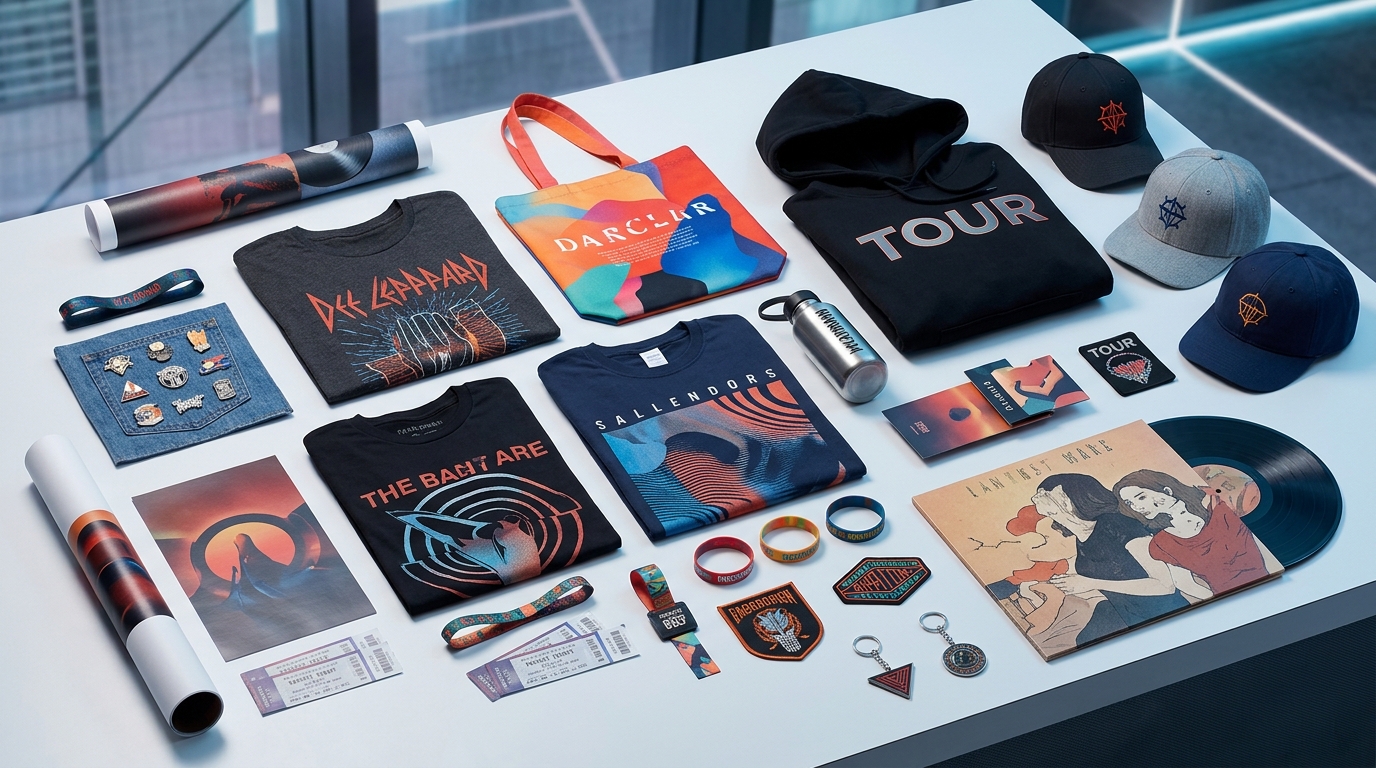
You’re standing in line at the merch booth, wallet ready, surrounded by dozens of options. The band just played your favorite song. You’re riding that post-show high. Everything looks amazing. But tomorrow morning, will you regret spending $150 on a hoodie you’ll wear twice?
Concert spending hits different than regular shopping. The energy, the FOMO, the limited edition hype. It all makes your brain do weird things with money. But some purchases are genuinely worth it, while others are straight-up traps designed to empty your bank account before you leave the venue.
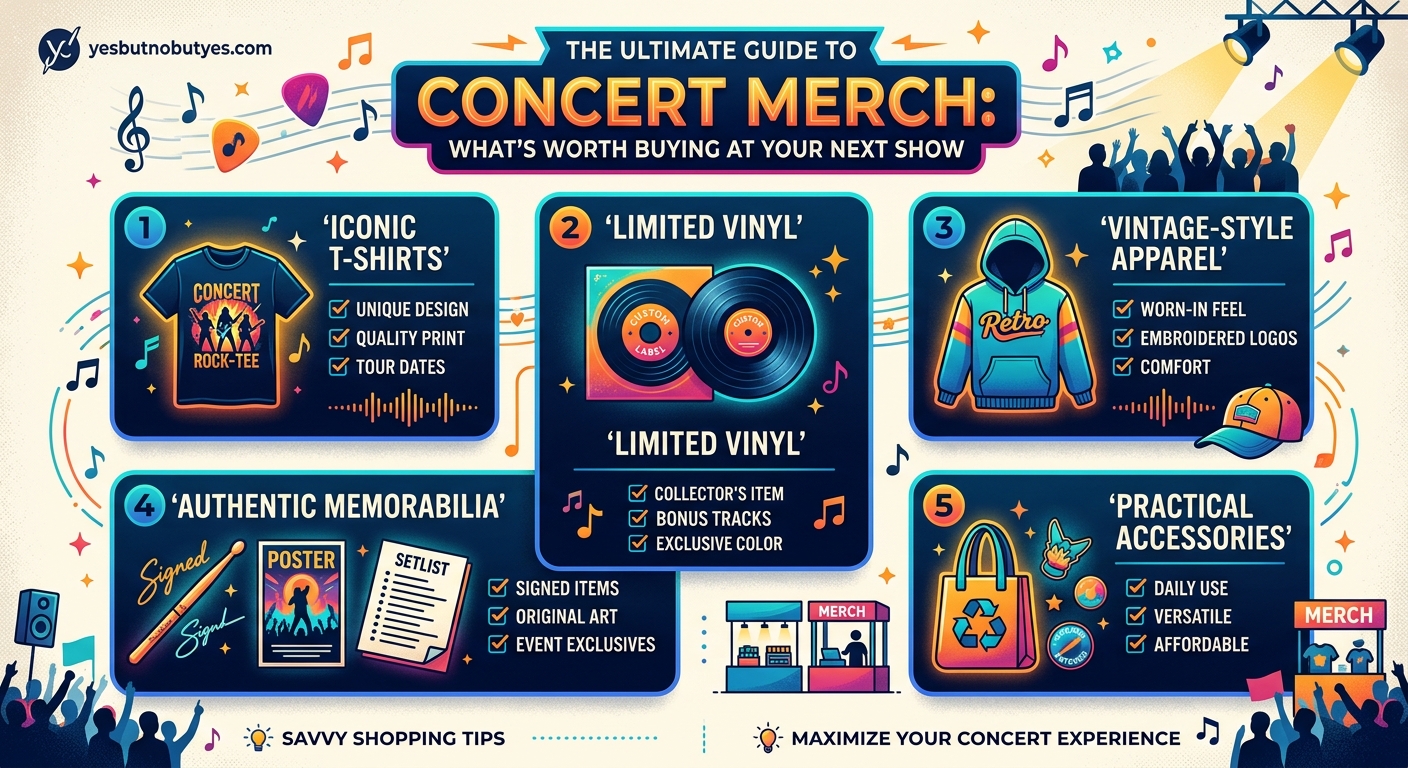
Smart concert shopping means prioritizing tour-exclusive merch, venue posters, and artist-specific items over generic gear. Skip overpriced drinks and food when possible. Buy early to avoid sold-out sizes. Check resale values before splurging. Most importantly, set a budget before the show starts and stick to it, because that post-concert emotional high makes terrible financial decisions feel brilliant.
The merch worth your money
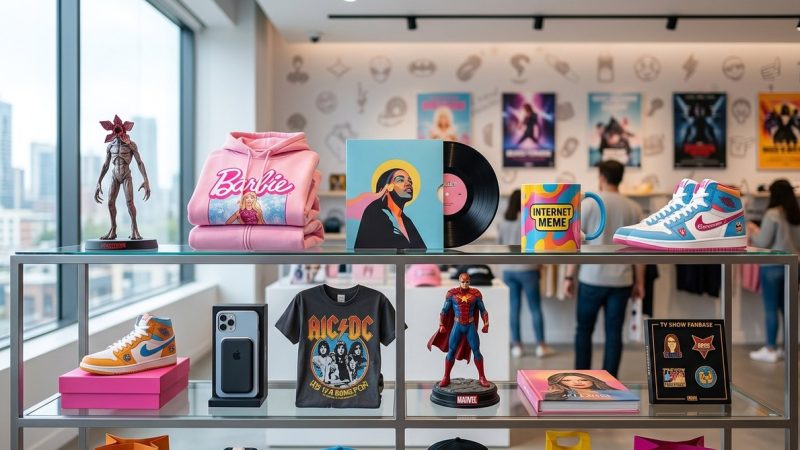
Tour-exclusive items are the golden ticket of concert purchases. These pieces only exist for that specific tour, making them genuinely collectible. Once the tour ends, they’re gone forever unless you want to pay triple on resale sites.
T-shirts from specific tour dates hold their value better than generic band tees. A shirt that says “Summer Stadium Tour 2024” with the city list on the back becomes a time capsule. You can’t fake being there. That authenticity matters, especially if the artist is someone whose career you’ve followed for years.
Vinyl records sold at shows often include exclusive variants. Different colored pressings, special artwork, bonus tracks. These versions never hit regular stores. If you collect records anyway, show-exclusive variants are actually smart purchases. They appreciate in value and serve as both music and memorabilia.
Concert posters are criminally underrated. They’re affordable, easy to transport if you roll them properly, and they make killer wall art. Plus, many venues hire local artists to create unique designs for each show, making them actual art pieces rather than mass-produced merchandise.
What to skip without regret
Drinks at concert venues follow airport pricing logic. A bottle of water costs $7. Beer runs $15 minimum. Mixed drinks can hit $20. Unless you’re genuinely dehydrated or need alcohol to enjoy the show, these purchases add up to nothing but a lighter wallet and more bathroom trips during the best songs.
Generic merchandise without tour dates or specific show information rarely holds value. A basic logo tee that could be from any era of the band’s career? You can probably find the same thing online for half the price next week. The emotional purchase feels important in the moment, but loses its magic fast.
Glow sticks, light-up jewelry, and other venue-sold accessories are pure impulse buys. They die after one use. They’re made from the cheapest materials possible. That $10 LED bracelet will be in your junk drawer by next month, batteries dead, never to light up again.
Food at venues deserves its own warning. A $14 slice of pizza or $18 chicken tenders might seem necessary when you’re hungry, but the quality rarely justifies the cost. Eat before the show. Seriously. Your stomach and your bank account will thank you.
Smart shopping strategies that actually work
Timing matters more than most people realize. Here’s how to shop strategically at shows.
-
Hit the merch booth before the concert starts if possible. Popular sizes sell out fast. The line is usually shorter. You can stash your purchase and enjoy the show without carrying bags through the crowd.
-
Check the artist’s online store before the show. Sometimes the exact same items are available online for less, without the venue markup. If it’s not tour-exclusive, you might save money ordering later.
-
Bring exact cash amounts for what you plan to buy. Credit cards make overspending too easy. Physical cash creates a hard limit. When it’s gone, you’re done shopping.
-
Take photos of everything at the merch booth. Walk away. Watch some of the show. If you still want that item an hour later, go back and buy it. Most impulse purchases fail this test.
-
Compare prices between the official booth and venue vendors. Sometimes the venue sells band merch at different prices. Sometimes opening acts have better deals. Always scope out all your options before committing.
The resale reality check
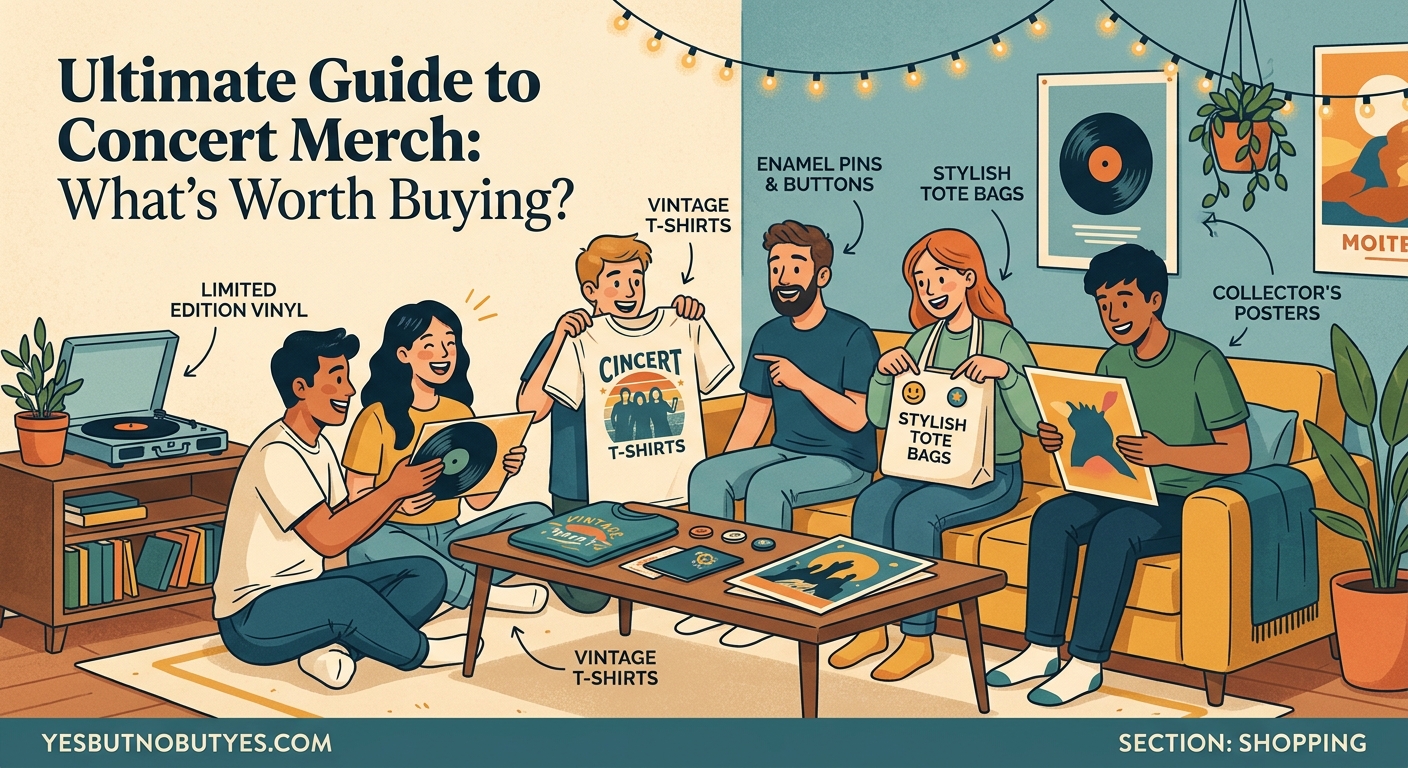
Some concert purchases become investments. Others become expensive closet clutter. Understanding which is which saves money and regret.
| Item Type | Resale Potential | Best For |
|---|---|---|
| Tour-dated tees | High if artist is popular | Fans who attended |
| Generic band tees | Low to medium | Daily wear |
| Signed items | Very high | Serious collectors |
| Venue posters | High with local artists | Art lovers |
| Vinyl variants | High for limited runs | Record collectors |
| Hoodies | Medium | Cold climates |
| Hats | Low | People who wear hats |
| Accessories | Very low | Nobody |
Limited edition items with numbered prints or certificates of authenticity hold value better than mass-produced merchandise. If you’re spending serious money, make sure you’re getting something genuinely limited, not just marketed as special.
Artist signatures multiply value instantly. If you have the chance to get something signed, prioritize items with flat surfaces. Posters, vinyl sleeves, and guitar picks work better than fabric. A signed poster can be worth 10 times what you paid for it, especially if the artist’s career takes off later.
The drink and food calculation
Let’s do the actual math on venue refreshments because the numbers are wild.
A typical concert might last three hours. If you buy two beers at $15 each and one water at $7, you’ve spent $37 on drinks. That’s nearly the cost of another ticket to some shows. That’s a whole album on vinyl. That’s three months of a streaming service.
The markup on venue alcohol averages 400% compared to retail prices. That $15 beer costs the venue maybe $3. You’re paying $12 for the privilege of drinking it in that specific building. Sometimes that’s worth it for the experience. Usually, it’s not.
Pre-gaming before the show makes more financial sense. Eating a full meal beforehand eliminates the temptation to buy overpriced venue food. Bringing an empty water bottle and filling it at water fountains saves $7 every time you’re thirsty. These small decisions add up to significant savings over multiple concerts.
Some venues allow you to bring in sealed water bottles. Check the policy before you go. One $2 bottle from outside saves you $7 inside. That’s basic math that too many people ignore.
Size and fit mistakes to avoid
Buying concert merch means dealing with sizing chaos. Different manufacturers, different cuts, different shrinkage rates. Here’s what actually matters.
Band tees typically run larger than normal retail clothing. That medium might fit like a large. If you’re between sizes, go smaller. If you plan to wash and dry it normally, definitely go smaller because cotton shrinks.
Hoodies are the opposite problem. They often run small, especially around the shoulders and length. If you want a relaxed fit, size up. If you want to layer it, size up twice. A too-small hoodie is unwearable. A too-large one still works.
Women’s cuts vary wildly by band and manufacturer. Some are genuinely fitted. Others are just smaller men’s sizes. If possible, try before you buy. If not, ask the merch person about the fit. They’ve heard this question 500 times tonight and usually know the answer.
Always check the return policy, though most venues don’t accept returns on merchandise. Once you buy it, you own it. This makes getting the size right crucial. When in doubt, go bigger. You can shrink things. You can’t unshrink them.
What makes merch actually valuable
Scarcity drives value in concert merchandise. Limited runs, specific dates, special collaborations. These factors turn regular items into collectibles.
Tour merchandise from an artist’s breakthrough moment becomes valuable later. That small club show before they got huge? That merch is gold now. Nobody knew to save it then. Very few pieces survived. High demand, low supply, big prices.
Collaboration items with other brands or artists create unique value. When a band partners with a streetwear company or a visual artist, those pieces exist in two collecting worlds. Fans of both sides want them. That competition drives up prices.
Tragedy and controversy also affect merch value, though it feels gross to mention. Final tour items, canceled show merchandise, pieces from before a band broke up. These become historical artifacts. The market for them exists whether we like it or not.
Condition matters enormously for resale. Unworn, tags-still-on merchandise sells for multiples of worn items. If you’re buying something as an investment, buy two. Wear one, save one. The sealed one will appreciate while you enjoy the other.
The budget strategy that works
Set your spending limit before you even park the car. Decide what you’re willing to spend on the entire night including tickets, parking, food, drinks, and merchandise. Stick to that number like your financial future depends on it, because over time, it does.
Break your budget into categories:
– Essential: One tour-exclusive item (shirt or poster)
– Optional: Additional merch if something special catches your eye
– Emergency: Money for unexpected necessities only
The essential category gets funded first. If you can only afford one purchase, make it count. Tour-exclusive, your size, something you’ll actually use or display. Everything else is bonus.
Track your concert spending over a year. Most people severely underestimate how much they spend at shows. Three concerts at $50 merch spending each is $150. Ten concerts is $500. That’s real money that could go toward better tickets, more shows, or literally anything else.
Consider the cost per wear calculation. A $45 tour shirt you wear 50 times costs $0.90 per wear. A $75 hoodie you wear five times costs $15 per wear. The cheaper item is actually more expensive. Buy things you’ll genuinely use, not things that seem cool in the moment.
Making the most of your concert budget
Smart concert shopping means balancing emotion with logic. The experience matters. The memories matter. But so does not being broke the next morning.
Prioritize experiences over objects when possible. The show itself is the main event. Merchandise is a souvenir. If choosing between better tickets and more merch, better tickets win every time. You can’t buy back a better view of the stage.
Share costs with friends strategically. Split parking. Eat together before the show. Designate one person to buy drinks and rotate who pays. These small collaborations make everyone’s budget stretch further. Plus, you might be able to justify that slightly nicer merch item when you’ve saved $20 on everything else.
Follow artists on social media after the show. Many sell leftover tour merchandise online after tours end, often at lower prices. If you skipped something at the venue, you might get a second chance without the pressure and markup.
Document your purchases. Take photos of yourself wearing the shirt at the show. Those photos become as valuable as the merchandise itself. The memory of being there, wearing that, feeling that energy. That’s what you’re really buying. The physical item is just a reminder.
Your money, your show, your choice
Concert spending sits at this weird intersection of passion and commerce. Nobody wants to feel like they’re being taken advantage of, but nobody wants to miss out either. The sweet spot is knowing what actually matters to you.
Some people genuinely love collecting tour merchandise and have the budget for it. Others prefer spending on tickets to more shows. Neither approach is wrong. What matters is being intentional about your choices instead of letting venue energy make decisions for you.
Next time you’re at a show, remember that the best purchase is often the one you don’t make. Save that money for the next concert, the next tour, the next chance to see live music. The experiences stack up faster than the merchandise ever could, and they take up way less space in your closet.