15 Slang Terms Your Parents Use Wrong and How They Actually Started
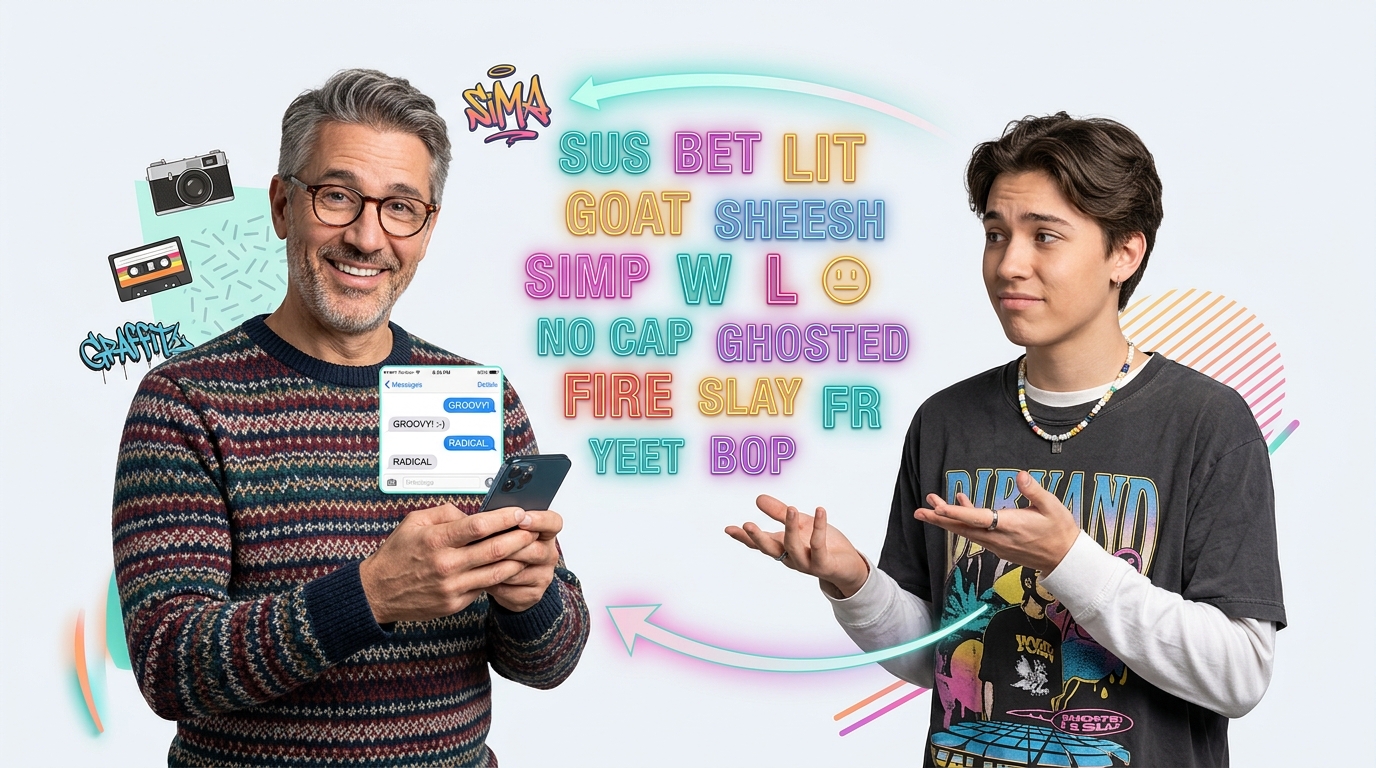
Your mom just texted “That’s so lit fam!” with three fire emojis and you physically cringed. Your dad called something “sus” at Thanksgiving dinner and everyone under 30 died a little inside. Parents adopting modern slang is like watching someone try to use chopsticks for the first time. Technically they’re holding them, but something is very, very wrong.
Parents frequently misuse modern slang by applying terms in the wrong context, using outdated versions, or completely misunderstanding their meaning. From “ghosting” used for actual ghosts to “slay” meaning murder, these linguistic mishaps reveal generational gaps in digital culture. Understanding the correct origins and usage helps you gently correct them while appreciating their effort to connect with younger generations through evolving language.
Why parents get slang wrong in the first place
Language moves faster than ever. A term can go from TikTok obscurity to mainstream usage in weeks. Parents learned slang from TV shows, magazines, and actual conversations. That process took months or years. Now slang evolves on platforms they barely use, in contexts they don’t see, with nuances that require cultural immersion.
Most parents encounter slang terms secondhand. They hear it from you, see it in a news article about “what the kids are saying,” or catch it in a sitcom trying to be relevant. By the time they try using it, the term has either shifted meaning or gone out of style entirely.
Context matters more than definition. Slang isn’t just about knowing what a word means. It’s about understanding when, where, and how to use it. Parents miss the cultural context because they weren’t there when the term was born, didn’t see it evolve, and don’t participate in the spaces where it lives.
The most common slang mistakes parents make
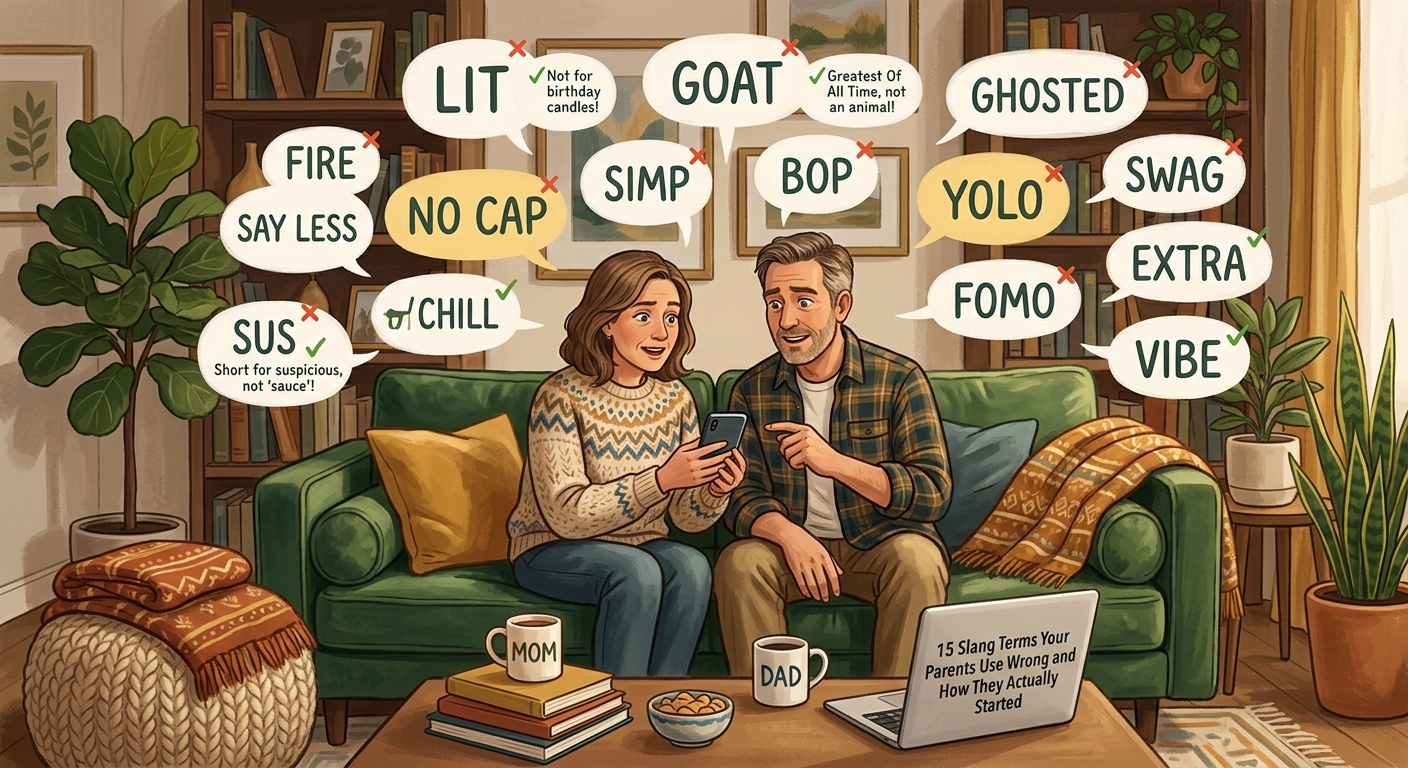
“Ghosting” for actual disappearing
Your dad says he’s “ghosting” to the store. Your mom talks about “ghosting” her book club meeting. They think it means leaving or disappearing in general. It doesn’t.
Ghosting specifically means cutting off all communication with someone without explanation, usually in a romantic or social context. It originated in online dating culture around 2015, describing the phenomenon of someone vanishing from your life like a ghost. No texts back. No explanations. Just gone.
When parents use it for physically leaving a location, they’re technically correct about the “disappearing” part but missing the entire emotional and social dimension that makes the term meaningful.
“Slay” as actual violence
“I’m going to slay this chicken for dinner!” No, mom. Please stop.
Slay means to do something exceptionally well, to absolutely crush it, to perform with such excellence that you metaphorically kill the competition. It came from Black and LGBTQ+ ballroom culture in the 1980s and 90s, particularly through drag performance. When someone slayed, they dominated the runway or performance so completely that nothing else mattered.
Parents hear the word and revert to its literal, medieval meaning. They’re thinking knights and dragons when they should be thinking Beyoncé and red carpets.
“Lit” for things that are literally on fire
“The fireplace is so lit tonight!” Technically true. Contextually wrong.
Lit means exciting, excellent, or amazing. It evolved from earlier slang meaning intoxicated, which itself came from “lit up” in the 1910s. The modern usage exploded around 2015, describing parties, events, songs, or experiences that were incredibly fun or hype.
When parents use it exclusively for things that are actually illuminated or burning, they’re about 100 years behind on the evolution.
“Ghosted” and “lit” comparison table
| Term | What parents think | What it actually means | Correct usage example |
|---|---|---|---|
| Ghosting | Leaving a place | Cutting off communication without explanation | “He ghosted me after three dates” |
| Slay | Kill or murder | Perform exceptionally well | “She slayed that presentation” |
| Lit | On fire or illuminated | Exciting or excellent | “That concert was lit” |
| Fam | Only blood relatives | Close friends or community | “Going out with the fam tonight” |
| Sus | Suspicious looking | Untrustworthy or questionable behavior | “That excuse sounds sus” |
Terms parents use a decade too late
Some slang has an expiration date. Parents finally learn a term right as it’s dying, then use it enthusiastically while younger generations have moved on.
“On fleek” peaked in 2014. If your parent is still saying it in 2026, they’re using slang that’s old enough to be in middle school. Same with “bae,” which dominated 2013-2016 but now sounds dated.
“YOLO” suffered a similar fate. It exploded in 2011 thanks to Drake, became overused by 2013, and was ironically dead by 2015. Parents discovered it around 2014 and never got the memo that it had become uncool.
The lifecycle of slang terms:
- Birth in a specific community or platform
- Spread to broader youth culture
- Peak popularity and mainstream adoption
- Overuse and corporate co-opting
- Death or ironic revival
Parents usually enter at stage 4, right when the term is becoming cringe.
The “trying too hard” category
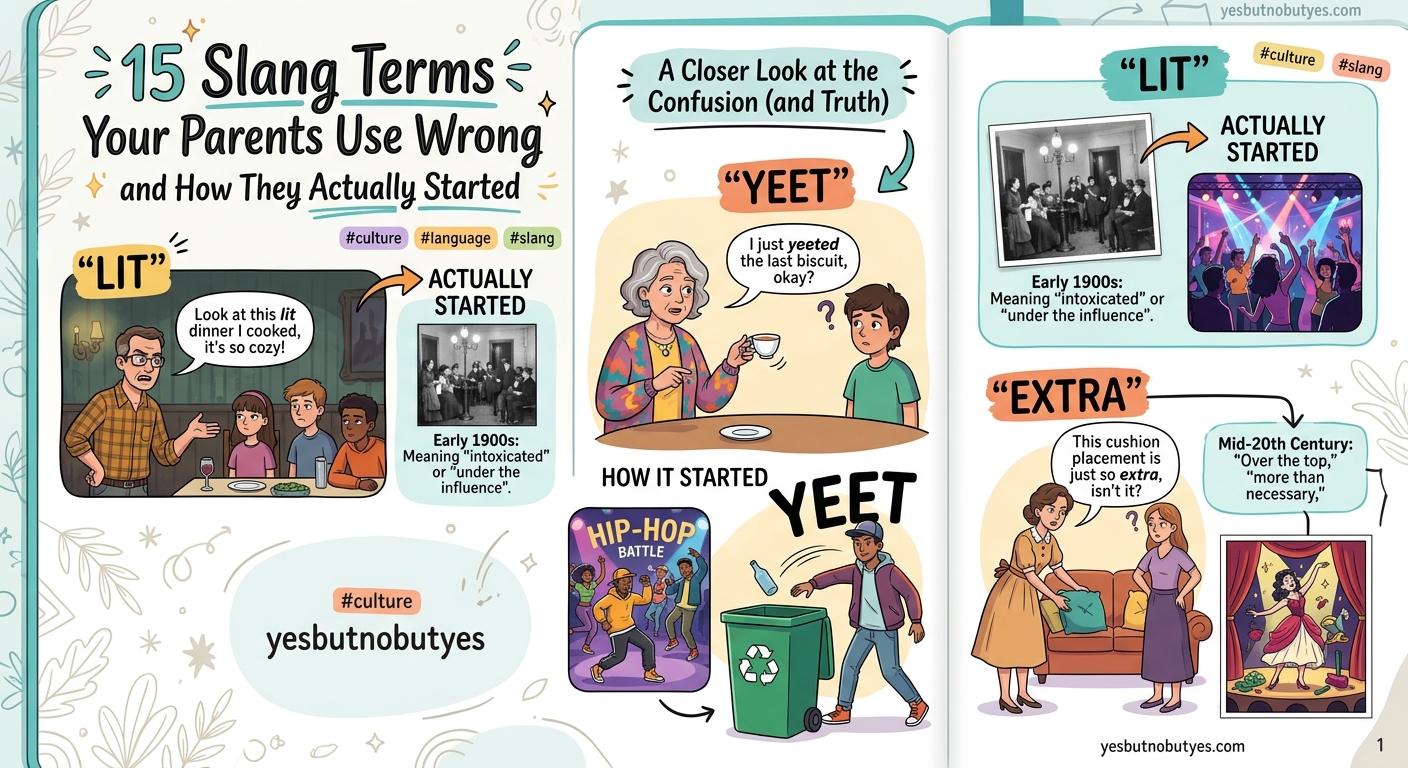
Nothing makes a slang term die faster than a parent using it with excessive enthusiasm. When your mom says “no cap” with finger guns, that term is officially over.
Common signs of trying too hard:
- Using multiple slang terms in one sentence
- Adding unnecessary emphasis or hand gestures
- Explaining the slang after using it
- Using it in formal contexts like work emails
- Combining slang from different eras
Your dad saying “That’s totally tubular and lit, fam!” is mixing 1980s surf slang with 2015 and 2020 terms. It’s a linguistic disaster that somehow makes all three terms feel wrong.
Context crimes that make everyone uncomfortable
Some parents understand the definition but completely miss when it’s appropriate to use. “Vibing” is a perfect example. It means relaxing, enjoying the atmosphere, or connecting with someone on a wavelength. Your parent using it to describe their colonoscopy appointment is not it.
“Lowkey” and “highkey” trip up parents constantly. Lowkey means somewhat or secretly. Highkey means very much or obviously. Parents use them randomly as filler words, like “I’m lowkey going to the dentist” when there’s nothing low-key about a scheduled appointment.
“No cap” means “no lie” or “for real.” It came from the phrase “capping” meaning lying, which has roots in Black slang from the early 1900s. Parents say “no cap” after completely mundane statements that nobody would question anyway. “I’m wearing socks today, no cap!” Nobody thought you were lying about your socks, dad.
When parents create entirely new meanings
Sometimes parents hear a term, completely misunderstand it, and create their own definition that spreads through their friend group. This is how you end up with entire communities of parents using slang wrong in the exact same way.
“Stan” means to be an extremely devoted fan, originating from Eminem’s 2000 song about an obsessed fan named Stan. Some parents think it means “to stand for” or support something casually. “I stan hydration!” sounds like you’re a superfan of water, which is technically possible but probably not what they meant.
“Salty” means bitter or upset, particularly about losing or being criticized. Parents sometimes use it to mean literally salty, like food. “These chips are so salty!” is just… describing chips. Unless the chips personally offended you, that’s not slang.
The generational translation guide
Understanding why parents get these wrong helps you correct them gently. They’re not trying to embarrass you (mostly). They’re trying to connect, stay relevant, or just understand what you’re saying.
“Slang is the poetry of everyday life, constantly being rewritten by each generation. When parents try to speak it, they’re attempting to cross a linguistic border without a passport. The effort matters more than the accuracy.” (Linguist Dr. Maria Chen, 2024)
How to help your parents use slang correctly
Teaching parents proper slang usage requires patience and humor. Shaming them makes them defensive. Gentle correction with context works better.
The correction process:
- Acknowledge their effort first
- Explain the actual meaning with examples
- Show them the context where it’s used naturally
- Suggest when it’s appropriate (and when it’s not)
- Accept that they might never get it perfect
Some parents will never naturally use modern slang, and that’s fine. The goal isn’t to turn them into fluent slang speakers. It’s to help them understand what you’re saying and maybe reduce the cringe factor when they try.
Share examples from media they actually consume. If they watch a show where slang is used correctly, point it out. Context beats definition every time. Sometimes the best approach is simply explaining that certain terms are generational and sound awkward when older people use them, just like “groovy” or “radical” sound weird coming from teenagers now.
When misused slang actually becomes endearing
There’s a sweet spot where parent slang mistakes cross from cringe into genuinely funny and charming. When your parent commits so fully to using a term wrong that it becomes their thing, it can actually be endearing.
Your mom calling everything “bussin” including her tax return? That’s her brand now. Your dad ending every text with “and that’s on period”? Technically wrong, completely dad, somehow perfect.
The key difference between annoying and endearing is self-awareness. Parents who know they’re probably using it wrong but commit to the bit anyway are fun. Parents who confidently misuse slang while thinking they’re nailing it are the ones who make you want to hide at family dinner.
Regional and cultural slang complications
Slang doesn’t just vary by generation. It varies by region, culture, and community. Terms that are common in one area might be completely unknown in another. Parents moving between these contexts get doubly confused.
AAVE (African American Vernacular English) is the origin of much modern slang. When these terms go mainstream, they often get stripped of cultural context and misused. Parents adopting AAVE terms without understanding their origins can be particularly awkward.
Regional terms add another layer. “Jawn” is Philadelphia slang for any person, place, or thing. “Hella” is Northern California. “Deadass” is New York. Parents using regional slang outside its home territory sound like tourists trying to blend in.
The corporate adoption problem
Nothing kills slang faster than corporations using it in advertising. When brands start saying “yeet” in commercials, the term is already on life support. Parents often learn slang from these corporate sources, which means they’re learning it at its cringiest moment.
Companies hire marketing teams to research youth slang, then deploy it in ways that feel calculated and fake. Parents see these ads, think “this is how young people talk,” and adopt the same forced usage. It’s slang filtered through two layers of misunderstanding.
Celebrities trying to be relatable often make the same mistakes, giving parents even more bad examples to learn from.
Why some parents nail it and others don’t
Some parents actually use slang correctly and naturally. What’s their secret? They’re usually active on the same platforms where slang evolves. They see terms in context repeatedly before trying to use them. They understand the culture producing the language.
Parents who treat slang like vocabulary words to memorize will always sound off. Parents who absorb it through genuine participation in digital culture have a better shot. The difference is immersion versus study.
Age isn’t the only factor. Plenty of young people misuse slang from communities they’re not part of. It’s about cultural proximity, not just generational proximity.
Making peace with parent slang fails
Your parents will probably never use slang exactly right. That’s okay. Language is about connection, and even clumsy attempts to speak your language show they’re trying to understand your world.
The slang terms parents use wrong today will be the terms you use wrong in 20 years when the next generation creates their own linguistic shortcuts. Every generation goes through this cycle. Your kids will cringe at you the same way you cringe at your parents now.
Appreciating the effort while gently correcting the execution is the sweet spot. Let them know what terms mean, share a laugh about the mistakes, and remember that their willingness to try matters more than perfect execution. Language evolves, generations shift, and somewhere in the middle, families find ways to communicate across the gaps.