15 Times Celebrities Tried to Be Relatable and It Backfired Spectacularly

You know that feeling when someone rich complains about their mansion being too big? That’s exactly the vibe we get when celebrities try to connect with regular people and miss the mark by a mile. Time and time again, famous folks attempt to show us they’re “just like us,” only to remind everyone they live on a completely different planet.
When celebrities try to appear relatable, they often reveal how disconnected they are from everyday life. From complaining about private jet problems to posting mansion quarantine videos during a pandemic, these attempts backfire spectacularly. The disconnect stems from genuine privilege blindness, poor PR advice, and a fundamental misunderstanding of what regular people actually experience. These failures remind us that authenticity cannot be manufactured, especially when you’re worth millions.
Why Famous People Keep Getting It Wrong
The pattern repeats itself constantly. A celebrity posts something they think makes them seem down to earth. The internet explodes with mockery. Apologies get issued. Everyone moves on until the next disaster.
But why does this keep happening?
Most celebrities surround themselves with yes-people who never challenge their perspective. Their daily reality involves private jets, personal chefs, and assistants who handle basic tasks. When you haven’t pumped your own gas in fifteen years, you lose touch with what normal life looks like.
Social media amplifies this disconnect. Platforms give celebrities direct access to fans without PR filters. That sounds great in theory. In practice, it means more opportunities to showcase how out of touch they really are.
The pandemic made everything worse. While regular people worried about rent and job security, celebrities complained about being stuck in their mansions. The contrast couldn’t have been more stark.
The Classic Blunders That Never Get Old
Certain types of relatable fails pop up again and again. Here are the most common categories:
- Complaining about wealth problems that sound like humble brags
- Posting from luxury locations while discussing “hard times”
- Comparing minor inconveniences to actual struggles
- Using activism as a photo opportunity without real commitment
- Pretending to do normal activities badly for attention
- Sharing tone-deaf advice about saving money
- Acting surprised by basic tasks most people do daily
Each category reveals a different flavor of privilege blindness. The money complaints show they’ve forgotten what financial stress feels like. The luxury location posts prove they don’t understand optics. The bad advice demonstrates they have no idea what regular budgets look like.
Breaking Down the Anatomy of a Failed Relatability Attempt
Understanding why these moments crash so hard requires looking at the mechanics. Here’s how a typical disaster unfolds:
- Celebrity has a thought they believe makes them seem humble or relatable
- They post it without considering how it will land with regular people
- The internet immediately spots the disconnect and responds with mockery
- Media outlets pick up the story and amplify the criticism
- The celebrity either doubles down or issues a defensive apology
- Everyone remembers it as another example of celebrity cluelessness
The problem starts at step one. The initial thought comes from a warped perspective. When your baseline is extreme wealth and privilege, your idea of relatable is already skewed.
Step two compounds the error. A good PR team might catch the problem. But celebrities increasingly bypass traditional gatekeepers and post directly. That immediacy feels authentic but removes the safety net.
The internet’s response in step three happens fast. Social media users are incredibly skilled at spotting phoniness. They’ve seen enough celebrity content to recognize patterns. When something feels off, they pounce immediately.
The Money Talk Disasters
Nothing exposes the celebrity bubble faster than discussions about finances. Regular people budget for groceries. Celebrities complain about only having one private jet.
The contrast creates instant backlash. Someone earning minimum wage doesn’t want to hear a millionaire complain about taxes. A person struggling with rent has zero sympathy for mansion maintenance costs.
| Celebrity Money Mistake | Why It Failed | What They Missed |
|---|---|---|
| Complaining about high taxes | Showed no awareness of actual poverty | Most people would gladly pay those taxes |
| Discussing “budget” renovations costing millions | Completely different definition of budget | Regular renovations cost thousands, not millions |
| Advice to “just save more” | Ignored systemic economic issues | Many people have nothing left to save |
| Posting expensive purchases as “treats” | Treats cost $5, not $5000 | The scale difference is enormous |
These failures share a common thread. The celebrity genuinely doesn’t understand the gap. They’re not usually trying to be cruel. They simply cannot comprehend life without their level of wealth.
That lack of comprehension makes the failures worse. At least intentional rudeness acknowledges the difference. This obliviousness suggests they truly believe their experience is universal.
The Pandemic Proved Everything
Nothing in recent history exposed celebrity disconnect like the early pandemic months. While millions lost jobs and feared for their health, celebrities posted singing videos from their estates.
The “Imagine” video became the poster child for tone-deaf celebrity behavior. Famous people singing about having no possessions from their multimillion dollar homes. The irony was too perfect.
Other pandemic fails followed the same pattern. Celebrities complained about quarantine boredom from houses with pools, gyms, and acres of land. They posted about their struggles while regular people crammed families into small apartments.
The backlash was swift and brutal. People were genuinely suffering. They didn’t need lifestyle inspiration from mansions. They needed rent money and healthcare.
Some celebrities learned from this. Others doubled down, insisting their struggles were valid too. The doubling down made everything worse.
When you’re isolated in a mansion with every amenity, complaining about it to people in studio apartments shows a stunning lack of awareness. The pandemic didn’t create celebrity disconnect. It just made it impossible to ignore.
The Performative Activism Problem
Another major category involves celebrities jumping on social causes without real understanding or commitment. They post about issues for clout, then move on when the next trend arrives.
This performative activism feels especially hollow because it commodifies real struggles. Actual activists work for years with little recognition. Celebrities parachute in for a photo op and get praised for “using their platform.”
The relatability attempt here involves positioning themselves as fellow activists or concerned citizens. But their approach reveals they’re tourists in the cause. They don’t understand the issues deeply. They just want the positive association.
Regular people see through this immediately. They notice when celebrities post about causes but take no real action. They observe the pattern of jumping from trend to trend without sustained commitment.
The backlash to performative activism has grown stronger over time. People increasingly demand substance over symbolism. A single Instagram post doesn’t count as activism anymore.
When “Normal” Activities Go Wrong
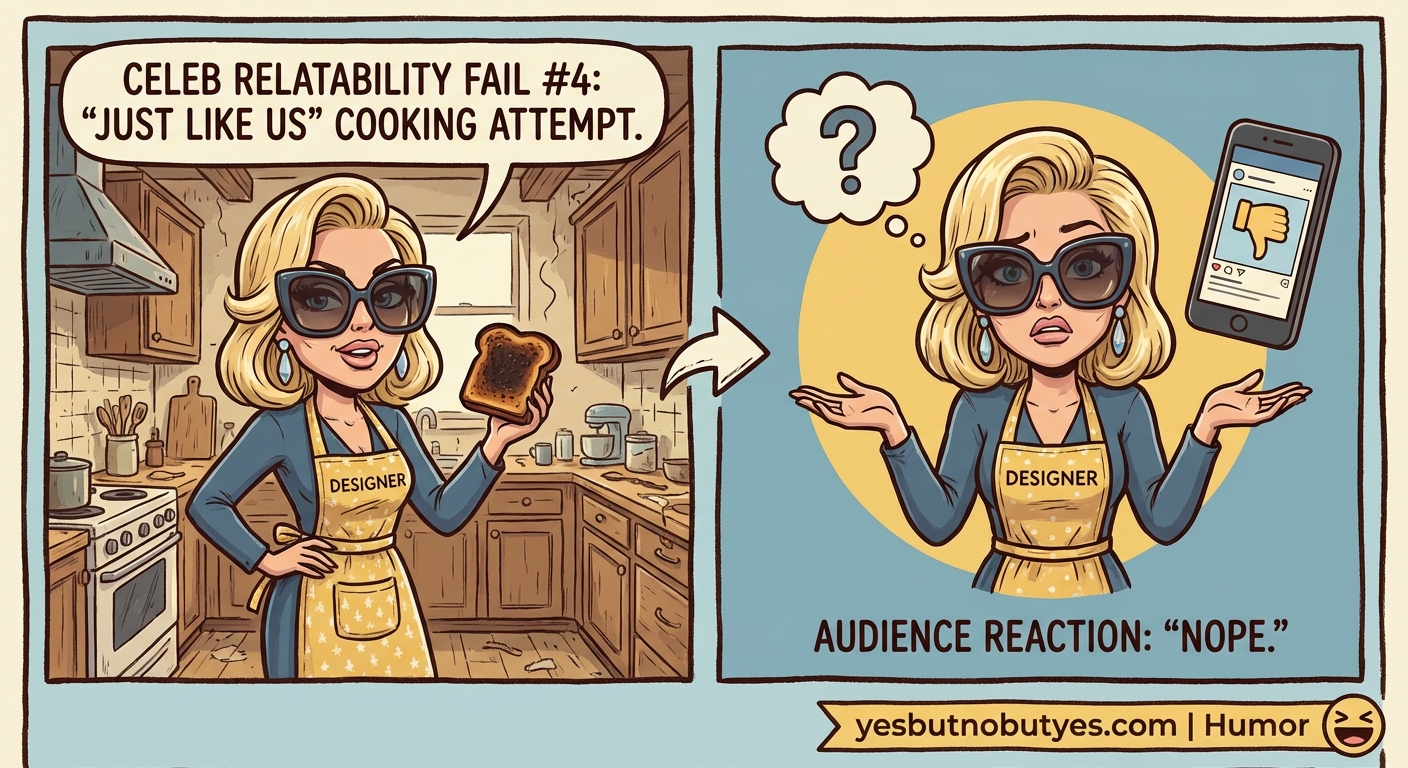
Some celebrities try relatability by posting themselves doing everyday tasks. This almost always backfirds because they do these tasks wrong in ways that reveal how rarely they actually do them.
Cooking videos show kitchens that cost more than houses. Shopping trips involve shutting down entire stores. “Casual” outfits cost thousands of dollars. Every attempt to seem normal highlights how abnormal their life really is.
The problem isn’t doing these activities. The problem is framing them as relatable when the context screams privilege. Shopping at a regular grocery store sounds relatable until you show up with bodyguards and film crew.
These moments create a weird uncanny valley effect. The activity is familiar but everything surrounding it feels alien. That disconnect makes people uncomfortable rather than creating connection.
The Apology Tour That Makes It Worse
After a relatable attempt fails, celebrities often issue apologies that compound the original error. These apologies follow predictable patterns:
- Claiming they were “taken out of context”
- Insisting their intentions were good
- Pointing out they’re human too
- Asking for grace and understanding
- Sometimes adding they’ve “learned and grown”
Each of these responses misses the point. The issue isn’t bad intentions. The issue is fundamental disconnect from regular life. No amount of apologizing fixes that gap.
The best response would involve genuine reflection and changed behavior. But that requires acknowledging privilege in uncomfortable ways. Most celebrities aren’t willing to go there.
Instead, they issue defensive statements that feel more like damage control than actual understanding. The apology becomes another PR move rather than genuine growth.
What Actual Relatability Looks Like
A few celebrities manage authentic connection without trying too hard. The difference is obvious. They don’t perform relatability. They simply are relatable in specific ways.
These celebrities typically:
- Acknowledge their privilege directly rather than hiding it
- Share genuine struggles that aren’t about wealth
- Show self-awareness about their unusual circumstances
- Avoid comparing their problems to regular people’s issues
- Use their platform to amplify others rather than center themselves
- Demonstrate consistency between public statements and private actions
The key is authenticity without performance. They’re not trying to convince anyone they’re regular people. They’re just being honest about who they are, privilege included.
This approach works because it respects the audience’s intelligence. People can handle celebrities being wealthy. They can’t handle celebrities pretending they’re not.
The Social Media Trap
Platforms like Instagram and Twitter make these failures more frequent and more public. The immediacy encourages posting without thinking. The format rewards constant content over thoughtful content.
Celebrities feel pressure to stay relevant through regular posting. That pressure leads to quantity over quality. They share thoughts that should stay private. They post content without considering how it reads.
The algorithm rewards engagement, including negative engagement. A controversial post gets more attention than a boring one. This creates perverse incentives for tone-deaf content.
Meanwhile, the comment section provides instant feedback. Celebrities can see in real time when something lands wrong. Some learn from this. Others get defensive and make it worse.
The platform design itself encourages comparison. When you’re scrolling through your feed, the contrast between celebrity posts and regular life is stark. That makes the disconnect more obvious and more irritating.
Why We Keep Watching These Failures
There’s something satisfying about celebrity relatable fails. They confirm what we already suspect. Famous people really do live differently. The gap is real and wide.
These moments also provide entertainment value. The absurdity is genuinely funny. Someone complaining about their yacht problems while regular people worry about car payments is objectively ridiculous.
Beyond entertainment, these failures serve a social function. They remind everyone that wealth doesn’t equal wisdom or awareness. Being famous doesn’t make you better or smarter. It just makes you richer.
The schadenfreude element can’t be ignored either. There’s satisfaction in watching privileged people face consequences for tone-deaf behavior. It feels like a tiny bit of accountability in a system that rarely holds celebrities responsible.
Learning to Spot the Warning Signs
You can usually predict when a celebrity post will backfire. Certain red flags appear consistently:
The post starts with “Just like everyone else” or similar phrasing. This signals they’re about to describe something decidedly not like everyone else.
They’re posting from an obviously luxurious location while discussing struggle or hardship. The visual contradiction is too stark.
The content involves giving advice about topics they clearly don’t understand from personal experience. Rich people telling poor people to budget better never goes well.
They’re jumping on a trending cause or topic without demonstrated prior interest or knowledge. The bandwagon jumping is transparent.
The post includes humble bragging disguised as complaint or observation. Any sentence starting with “I know I’m lucky but” is probably heading somewhere bad.
The Role of PR Teams and Handlers
Professional publicists usually prevent the worst failures. They understand optics and audience perception. They know what will play well and what will crash.
But celebrities increasingly bypass their PR teams for direct social media access. This feels more authentic and allows faster response times. It also removes the filter that catches tone-deaf content.
Some celebrities fire or ignore PR professionals who tell them hard truths. They surround themselves with people who only say yes. This creates an echo chamber where bad ideas go unchallenged.
The best PR approach involves honest feedback and genuine understanding of public perception. But that requires celebrities willing to hear criticism and adjust accordingly. Not everyone has that humility.
When the Bubble Finally Pops
Every so often, a celebrity has a genuine moment of realization about their disconnect. These moments are rare but notable. Something breaks through the bubble and they see how different their life really is.
These realizations sometimes come from major life changes. Having kids can provide perspective. Serious illness reminds people of mortality. Personal loss creates empathy.
More often, though, the bubble stays intact. The incentives favor staying disconnected. Wealth provides comfort and insulation. Acknowledging privilege requires uncomfortable self-reflection.
The system itself encourages continued disconnect. Celebrity culture rewards the lifestyle that creates the problem. Changing would mean questioning the entire structure.
Why This Pattern Will Continue
As long as extreme wealth inequality exists, celebrities will keep failing at relatability. The gap is too wide to bridge with a few social media posts.
New celebrities will make the same mistakes previous ones did. They’ll think they’re different or smarter. They’ll believe their attempt will land better. It won’t.
The audience will keep calling out these failures. Social media makes that easier and more public. The cycle will continue.
Some celebrities will learn and adjust. Most won’t. The ones who do will stand out precisely because they’re exceptions.
Making Peace With the Disconnect
Maybe the solution isn’t trying to be relatable at all. Maybe celebrities should just own their unusual circumstances honestly.
Regular people don’t actually need celebrities to be relatable. We need them to be entertaining, talented, or interesting. Relatability isn’t required for any of those things.
The failed attempts at relatability are more annoying than simple honesty about privilege would be. Just acknowledge the difference and move on.
When celebrities stop trying to convince us they’re regular people, everyone can relax. They can be who they are. We can appreciate their work without the pretense of connection.
The best celebrity-audience relationship involves mutual understanding of the gap. They’re not like us. That’s fine. We can still enjoy their movies, music, or whatever they do. No false relatability required.
These spectacular failures will keep happening because the fundamental disconnect remains. But at least they provide entertainment value and important reminders about wealth, privilege, and the gaps in our society. Sometimes the lesson is simply that some people really do live in a different world, and no amount of Instagram posts will change that reality.