7 Airport Hacks That Went Viral for Actually Working
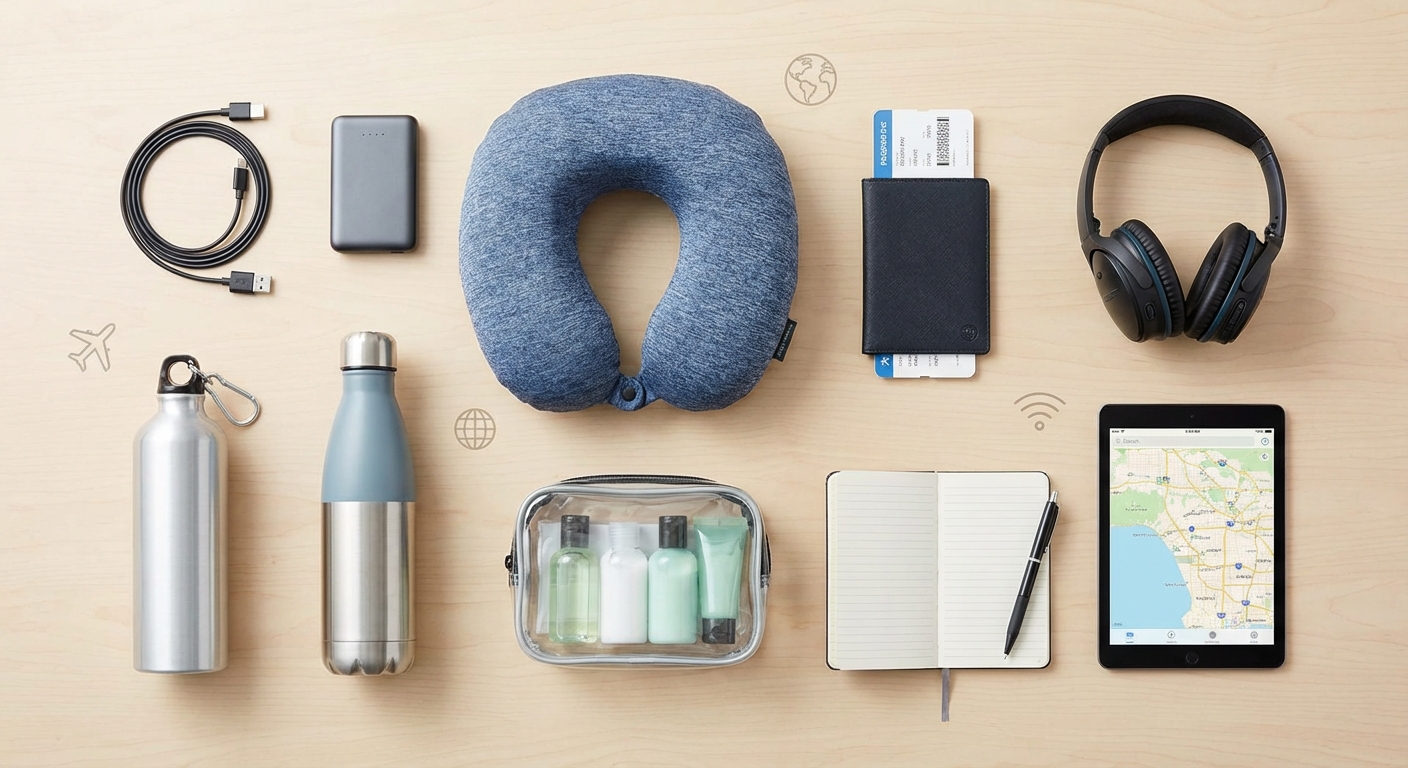
Flying doesn’t have to be a stress fest. Between long security lines, confusing gate changes, and overpriced airport food, travel can feel like an obstacle course designed to drain your wallet and patience. But here’s the good news: travelers have cracked the code. These airport hacks that work come from real people who’ve tested them in the wild, not from some corporate travel blog that’s never seen a delayed flight.
Smart travelers use proven strategies to breeze through airports with less stress and more money in their pockets. From security line shortcuts to luggage tricks, these tested hacks help you navigate terminals like a pro. The best part? They work for both frequent flyers and occasional vacationers, requiring minimal effort but delivering maximum results at every stage of your journey.
Pack Your Carry-On Like You Mean It
Your carry-on is prime real estate. Most travelers treat it like a black hole where things disappear until they land. That’s a mistake.
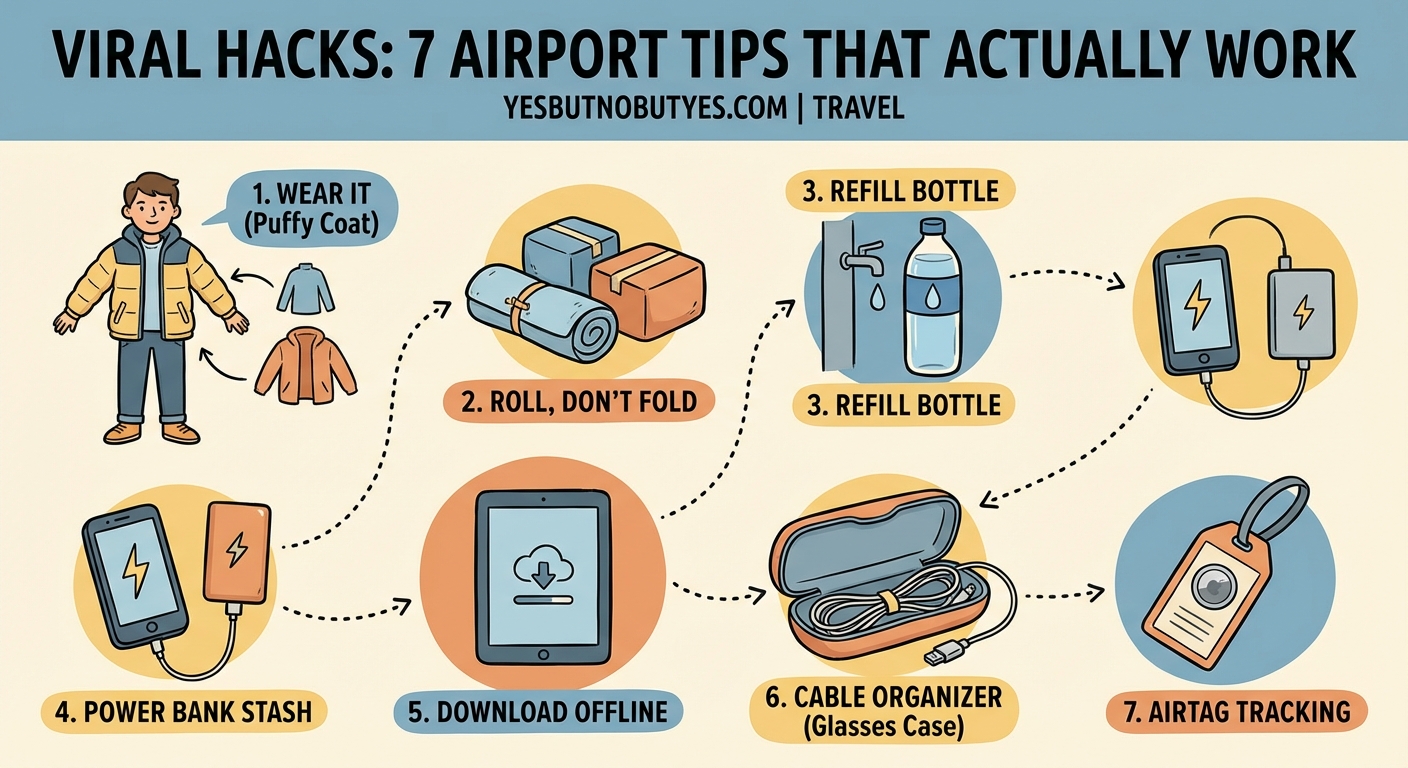
Roll your clothes instead of folding them. This isn’t just travel blog nonsense. Rolling creates more space and fewer wrinkles. You can fit about 30% more in the same bag.
Place shoes at the bottom near the wheels. Stuff socks and underwear inside those shoes. Every cubic inch counts when you’re trying to avoid checked bag fees.
Keep a change of clothes in your personal item. Airlines lose about 7 bags per 1,000 passengers. If your checked luggage goes on an unplanned vacation, you’ll have fresh clothes while you wait.
Here’s what belongs in your personal item versus your carry-on:
| Personal Item (Under Seat) | Carry-On (Overhead Bin) |
|---|---|
| Laptop and chargers | Rolled clothing |
| Medications | Toiletries in clear bag |
| Snacks and water bottle | Extra shoes |
| Wallet and passport | Jackets and bulky items |
| Change of clothes | Books or entertainment |
Beat Security Lines Without Breaking Rules
TSA PreCheck and Clear aren’t secrets, but combining them is. PreCheck costs $78 for five years. Clear runs $189 annually. Together, they shave 15 to 20 minutes off your airport time.
Can’t justify the cost? Check if your credit card covers it. Many travel cards reimburse the PreCheck fee. That’s free money sitting in your cardholder agreement.
Wear slip-on shoes. Lace-up boots look great but turn you into that person fumbling with knots while everyone behind you silently judges. Slip-ons get you through the metal detector in seconds.
Empty your pockets before you reach the conveyor belt. Don’t be the person discovering loose change, gum wrappers, and a forgotten lighter while the line backs up. Use the time you’re waiting to transfer everything into your bag.
“I started wearing the same outfit through security every time. Joggers, slip-on sneakers, no belt, no jewelry. I look like I’m going to yoga class, but I’m through security before people behind me have their laptops out.” — Sarah M., flight attendant with 12 years experience
Master the Boarding Process
Airlines board back to front because it looks organized. It’s actually slower. But you can use their system to your advantage.
Gate-check your bag for free. If you’re in a later boarding group and overhead space looks tight, ask the gate agent to check your carry-on. It’s free, unlike checking at the ticket counter. You’ll pick it up at the jetway when you land, not at baggage claim.
Board last on purpose. If you only have a personal item, there’s zero reason to stand in line for 20 minutes. Wait until the final boarding call. You’ll walk straight on while everyone else is already seated and stowing bags.
Sit near the front if you have a tight connection. Those five rows make a massive difference when you’re sprinting to another gate. Airlines won’t tell you this, but you can often move up at the gate if seats are available.
Here’s your boarding strategy based on your situation:
- Tight connection: Board early, sit as far forward as possible, tell the flight attendant you’re connecting.
- Checked bags: Board whenever. You’re waiting at baggage claim anyway.
- Carry-on only: Board last to avoid the overhead bin chaos.
Navigate Layovers Without Losing Your Mind
Long layovers are either torture or opportunity. Your choice.
Download the airport’s app before you land. Most major airports have apps showing real-time security wait times, gate locations, and restaurant options. Knowing there’s a 45-minute security line at your connection point changes your whole strategy.
Check if you’re eligible for airport lounge access. Your credit card might include it. Priority Pass memberships come with many premium cards. Free food, drinks, WiFi, and bathrooms that don’t make you question humanity. That’s worth checking your card benefits.
Set multiple alarms for boarding time. Phone batteries die. You get distracted. Set three alarms starting 30 minutes before boarding. Space them 10 minutes apart.
Map your connection route while you’re still in the air. Most airline apps show terminal maps. Screenshot your route from arrival gate to departure gate. Airport WiFi is notoriously terrible, so having that screenshot saved is clutch.
Eat Well Without Spending Your Rent Money
Airport food prices are criminal. A bottle of water costs more than a streaming service subscription. But you don’t have to starve or go broke.
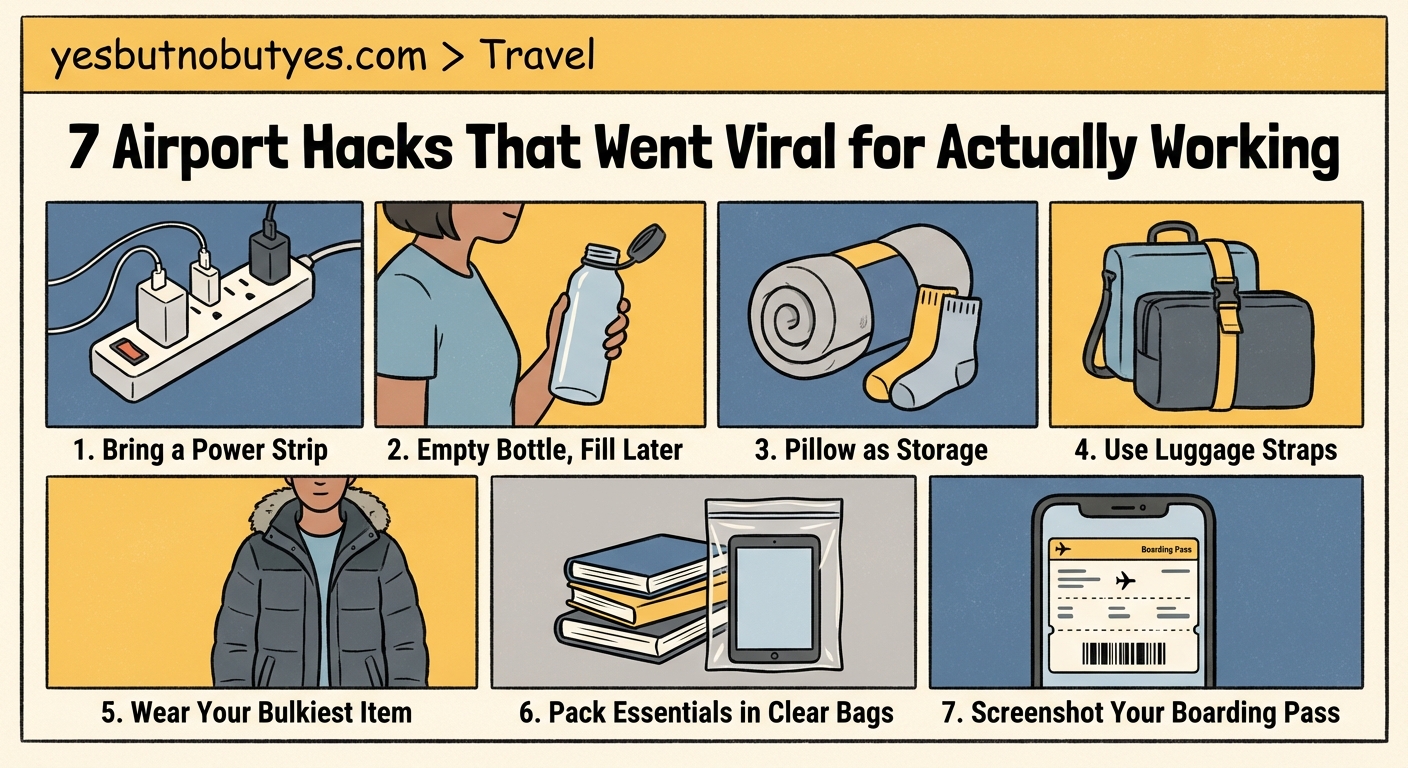
Bring an empty water bottle through security. Fill it at a fountain after you clear TSA. That’s $5 saved every single flight. Over a year of regular travel, that’s hundreds of dollars.
Pack substantial snacks. Protein bars, nuts, dried fruit, and sandwiches all clear security fine. Just avoid liquids over 3.4 ounces. A homemade sandwich beats a $14 airport wrap every time.
Order takeout to your gate. Apps like DoorDash and Uber Eats deliver to airports now. Order from a restaurant outside the airport, have them meet you at arrivals or a designated pickup spot. The food is better and cheaper.
Check if your layover is long enough to leave the airport. Some cities have great food within 15 minutes of the terminal. If you have three hours between flights, that’s plenty of time to grab real food and come back through security.
- Bring an empty water bottle (saves $5 per flight)
- Pack protein-rich snacks that won’t spoil
- Use food delivery apps for outside restaurant options
- Research nearby restaurants if you have a long layover
- Buy snacks at airport convenience stores, not restaurants
Handle Delays Like a Seasoned Traveler
Delays happen. Your reaction determines whether you’re miserable or just mildly inconvenienced.
Know your rights. If your flight is delayed more than three hours due to airline issues, you might be entitled to meal vouchers or hotel accommodations. Most passengers don’t ask. Ask.
Book the first flight of the day. Morning flights have fewer delays because the plane and crew are already there. They’re not waiting on an inbound aircraft that got delayed six airports ago.
Track your inbound aircraft. Apps like FlightAware show where your plane is coming from. If that flight is delayed, yours will be too. You’ll know before the gate agent announces it, giving you time to rebook.
Have the airline’s app downloaded with your confirmation number saved. When delays hit, everyone rushes to the gate agent or calls customer service. Rebook through the app instead. You’ll have a new flight while others are still waiting in line.
Gate agents have more power than you think. Be genuinely nice. They can put you on flights that don’t show as available in the app. They can upgrade you if they like you. They deal with angry passengers all day. Being the one person who’s pleasant makes you memorable.
Protect Your Stuff and Your Sanity
Airports are crowded. Crowded places attract thieves. Don’t make yourself a target.
Use a luggage tracker. AirTags cost $29 and work anywhere. Tile trackers are another option. Slip one in your checked bag and one in your carry-on. If your bag goes missing, you’ll know exactly where it is while the airline tells you they’re “looking into it.”
Take a photo of your luggage before checking it. If it arrives damaged, you have proof of its original condition. Airlines love to claim that dent was already there.
Keep valuables in your personal item, not your carry-on. Your personal item stays under the seat in front of you. Your carry-on goes overhead where you can’t see it. Laptops, tablets, and expensive headphones belong under your seat.
Screenshot your boarding pass. Phone batteries die at the worst times. A screenshot works even when your phone is dead or offline. Keep it easily accessible.
Charge your devices at the gate, not at random charging stations. USB charging stations can have data skimmers. Use your own charging block plugged into a regular outlet. If you must use a USB port, use a data blocker adapter.
Making Travel Actually Enjoyable
These hacks work because they’re based on how airports actually function, not how we wish they functioned.
The travelers who breeze through terminals aren’t lucky. They’re prepared. They understand the system and use it to their advantage. They pack strategically, move efficiently, and don’t waste energy on things they can’t control.
Start with two or three of these strategies on your next trip. See what works for your travel style. Build from there. Before long, you’ll be the person other travelers watch and think, “How do they make it look so easy?” The answer is simple: you stopped fighting the airport and started working with it.