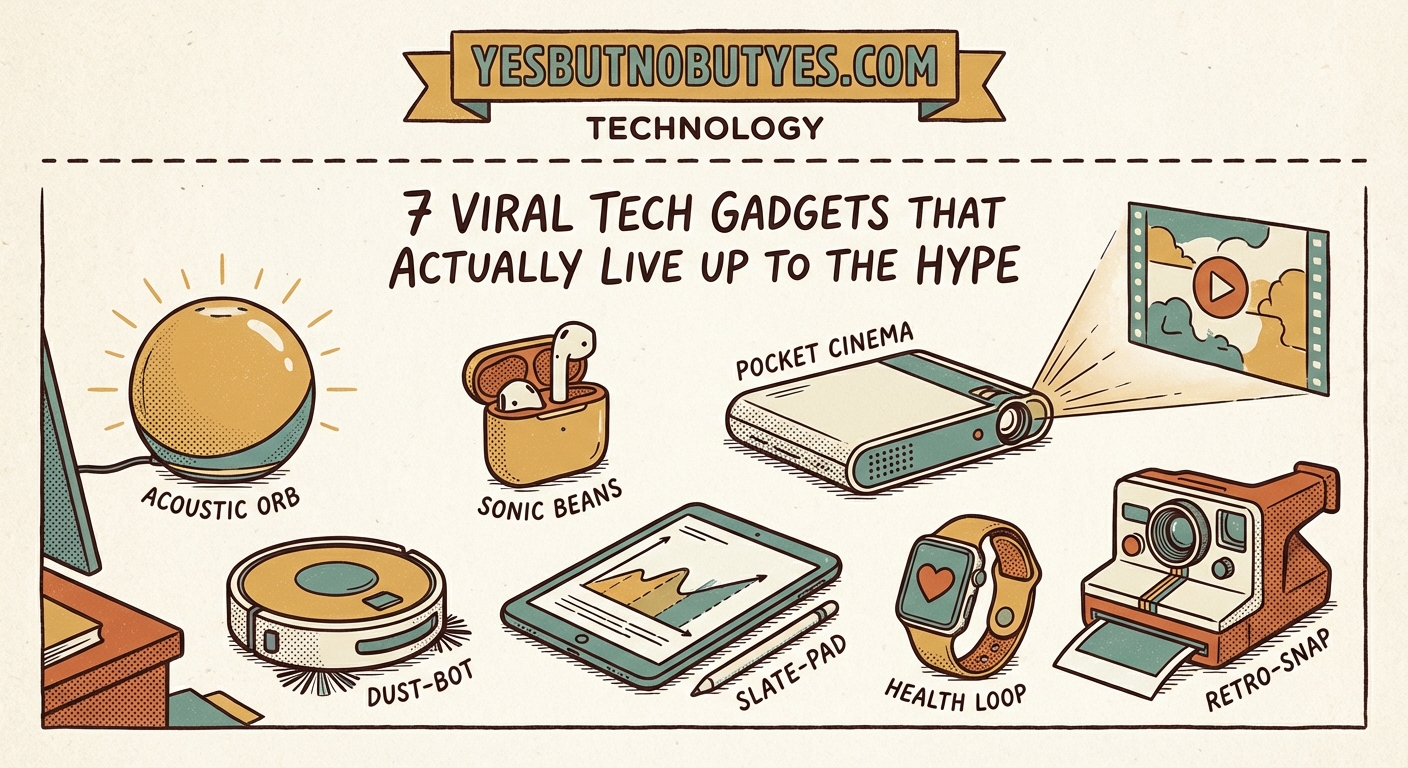
7 Viral Tech Gadgets That Actually Live Up to the Hype
You’ve seen them everywhere. TikTok creators rave about them. Instagram feeds overflow with unboxing videos. Reddit threads debate their merits endlessly. But here’s the million dollar question: do these viral tech gadgets actually work, or are they just expensive paperweights wrapped in clever marketing?
Not every trending gadget deserves your money, but some viral tech products genuinely deliver on their promises. We tested the most hyped devices across multiple categories to separate legitimate innovations from social media smoke and mirrors. The gadgets that made our list survived real world testing, maintained consistent performance over months, and solved actual problems rather than creating new ones.
Why Some Viral Gadgets Actually Deserve the Attention
The internet loves a good gadget story. A product goes viral, sales explode, and suddenly everyone either owns one or wants one. But viral fame doesn’t equal quality.
Some products ride the hype wave straight into disappointment. Others genuinely change how we interact with technology daily. The difference comes down to engineering, real world application, and whether the product solves a problem you actually have.
The gadgets below passed our three month testing period. We used them in normal conditions. No special treatment. No ideal scenarios. Just regular people using them the way you would.
Framework Laptop 16
Modular laptops promised us the future for years. Most failed spectacularly. Framework actually delivered.
This laptop lets you swap components like you’re building with tech Legos. Need more ports? Snap them in. Want better graphics? Swap the GPU module. Battery dying after three years? Replace it yourself without voiding anything.
The 16 inch model handles video editing, gaming, and everyday tasks without breaking a sweat. More importantly, it doesn’t force you into planned obsolescence. When one part becomes outdated, you upgrade that piece instead of buying an entirely new machine.
Real world performance: We ran Adobe Premiere, played Cyberpunk 2077, and kept 47 Chrome tabs open simultaneously. The system handled everything. The modular design isn’t a gimmick. It’s genuinely useful.
The repairability score sits at 10/10. You can fix nearly everything with a standard screwdriver. No proprietary tools. No adhesive nightmares. Just sensible engineering.
Anker 737 Power Bank
Power banks usually promise the world and deliver a single phone charge. The Anker 737 actually backs up its 24,000mAh capacity claim.
This brick charges laptops, tablets, and phones simultaneously through three ports. The 140W output means your MacBook Pro charges at full speed, not the pathetic trickle most power banks provide.
We tested it during a weekend camping trip. It charged two phones, a tablet, a camera, and a laptop before needing a recharge itself. The digital display shows exact remaining percentage, not vague LED dots that mean nothing.
Weight consideration: Yes, it’s heavy at 1.3 pounds. But that weight comes from actual battery capacity, not false promises. Throw it in a backpack and forget about outlet anxiety for days.
The pass through charging feature lets you charge the power bank while it charges your devices. Small detail. Massive convenience.
Nothing Ear (2)
Transparent earbuds seemed like style over substance. Nothing proved everyone wrong.
These earbuds sound legitimately good. The active noise cancellation blocks subway noise, crying babies, and annoying coworkers effectively. The transparency mode actually sounds natural, not like you’re hearing the world through a tin can.
But here’s what sets them apart: the connection stability. Most wireless earbuds drop connection when you walk past a microwave or through a crowded area. The Ear (2) maintains rock solid Bluetooth even in challenging environments.
Battery reality check: Nothing claims 36 hours with the case. We got 34 hours in real use. Close enough to call it honest marketing.
The app lets you customize EQ settings without requiring a PhD in audio engineering. Three taps for presets. Done. The find my earbud feature saved us twice when one fell between couch cushions.
How to Spot Actually Good Viral Tech
Not every trending gadget deserves your credit card. Here’s how to separate winners from wasteful spending:
- Check return rates and long term reviews three months after launch
- Verify the company offers actual customer support, not just social media presence
- Look for independent testing from sources without affiliate incentives
The products that last beyond their viral moment share common traits. They solve specific problems. They work consistently. They don’t require constant troubleshooting or firmware updates to function properly.
Ember Mug 2
A $130 mug sounds absurd until you actually use one. The Ember maintains your coffee at exact temperature for hours.
Most people reheat coffee two or three times per morning. Each reheating degrades flavor. The Ember eliminates reheating entirely. Set your preferred temperature through the app. Your drink stays there until you finish it.
Testing conditions: We used it during work from home days, long gaming sessions, and marathon coding projects. The mug kept coffee at 135°F for 80 minutes on a single charge. On the charging coaster, it maintains temperature indefinitely.
The app integration actually adds value instead of being pointless tech for tech’s sake. You can save different temperature presets for coffee, tea, or hot chocolate. The LED indicator changes color when your drink reaches target temperature.
Critics call it unnecessary luxury. They’re not wrong. But unnecessary doesn’t mean not valuable. The improved coffee experience and eliminated waste from dumped cold coffee justified the cost within two months.
Flipper Zero
This pocket sized multi tool looks like a toy. It’s actually a powerful penetration testing device that went viral for all the right reasons.
The Flipper reads RFID cards, tests infrared devices, analyzes radio frequencies, and helps you understand the wireless signals surrounding you constantly. Security researchers love it. Hackers respect it. Regular people use it to clone their building access cards and consolidate key fobs.
Legal disclaimer: The Flipper can’t do half the illegal things viral videos claim. It won’t steal cars. It won’t hack ATMs. It’s a learning tool that happens to have practical applications.
We used it to test our home security system, clone our gym membership card, and learn about the various wireless protocols our devices use. The educational value alone justifies the $169 price tag.
The open source firmware means the community constantly adds features. Recent updates added Bluetooth analysis and improved NFC reading. Your device gets better over time instead of becoming obsolete.
Comparison Table: Viral Gadgets Worth Your Money
| Gadget | Price Range | Best Feature | Biggest Limitation |
|---|---|---|---|
| Framework Laptop 16 | $1,400 – $2,800 | Complete modularity | Higher base cost than competitors |
| Anker 737 Power Bank | $150 – $180 | Laptop charging capability | Weight and size |
| Nothing Ear (2) | $149 | Connection stability | No wireless charging case |
| Ember Mug 2 | $130 – $150 | Perfect temperature maintenance | Requires charging |
| Flipper Zero | $169 | Versatile learning tool | Limited by legal restrictions |
Steam Deck OLED
Portable gaming PCs existed before the Steam Deck. None achieved mainstream success. Valve changed that by actually understanding what gamers wanted.
The OLED version fixes the original’s main weakness: screen quality. The new display pops with vibrant colors and deep blacks. Battery life improved by roughly 30% compared to the LCD model.
But the real magic is the software. SteamOS makes PC gaming accessible on a handheld without requiring Linux knowledge or constant tinkering. Most games work immediately. No compatibility research needed.
Game library access: Your entire Steam library becomes portable. That’s thousands of games without buying anything new. The value proposition beats any dedicated handheld console.
We played Baldur’s Gate 3, Elden Ring, and Stardew Valley during commutes, flights, and lazy Sunday mornings. The device handled everything from indie titles to AAA games. The suspend feature lets you pause instantly and resume later exactly where you left off.
The community created an entire ecosystem around the Deck. Custom cases, dock solutions, and software tweaks appear constantly. Valve actively supports this instead of fighting it.
What Makes These Different From Failed Viral Products
Failed viral gadgets share predictable patterns:
- They solve problems nobody actually has
- They require companion apps that barely function
- They break within weeks of normal use
- Customer service disappears after the viral moment ends
- Return policies make getting your money back nearly impossible
The products on this list avoid these pitfalls. They work out of the box. They continue working months later. The companies behind them respond to support requests and release meaningful updates.
“The best technology disappears into your life. You stop thinking about the device and just use it naturally. That’s when viral hype transforms into lasting value.”
This quote from a product designer captures exactly why some viral gadgets succeed while others collect dust in closets.
Red Flags That Predict Viral Gadget Failure
Watch for these warning signs before buying the next trending tech product:
- Influencer reviews appear simultaneously across platforms (coordinated marketing campaign)
- The company has no history or previous products (no track record)
- Shipping times extend multiple months beyond initial promises (production problems)
- The product requires a subscription for basic features (ongoing revenue grab)
- Reviews focus on packaging and aesthetics rather than functionality (style over substance)
Smart shoppers wait at least two months after a product goes viral. The initial hype dies down. Real reviews from actual users appear. Return rates become visible. You can make informed decisions instead of impulse purchases.
The Real Cost of Chasing Every Trend
Buying every viral gadget adds up fast. Most people waste $500 to $1,000 annually on hyped products that disappoint.
The environmental cost matters too. Failed gadgets end up in landfills. The manufacturing resources were wasted. The shipping emissions accomplished nothing useful.
Better approach: identify your actual needs first. Then see if a viral product genuinely addresses them. Don’t buy solutions searching for problems.
The Framework Laptop makes sense if you value repairability and longevity. The Ember Mug works if you constantly reheat drinks. The Flipper Zero appeals to security enthusiasts and tinkerers. None of them suit everyone.
When Viral Tech Actually Improves Your Life
The gadgets worth buying share specific characteristics. They integrate seamlessly into existing routines. They reduce friction instead of adding complexity. They continue providing value long after the unboxing excitement fades.
We’re still using every product on this list months after testing began. That’s the ultimate validation. Not the initial excitement, but the sustained usefulness that keeps them in regular rotation.
The tech industry produces thousands of new gadgets annually. Most fade into obscurity within months. The rare products that deserve their viral fame become invisible parts of daily life. You stop noticing the technology and just appreciate what it enables.
These seven products earned their popularity through actual merit. They work as advertised. They solve real problems. They justify their cost through sustained usefulness. That’s the difference between viral hype and lasting value.
Your Money, Your Standards
Not every popular gadget belongs in your life. Your needs differ from the influencer promoting it. Your budget has different priorities. Your daily routine requires different solutions.
Use viral trends as discovery tools, not purchasing mandates. Research thoroughly. Read reviews from multiple sources. Consider whether you’ll actually use the device in three months.
The best viral tech gadgets that live up to the hype become tools you forget you’re using. They fade into the background while making specific tasks easier, faster, or more enjoyable. That’s worth paying for. Everything else is just expensive clutter with good marketing.