How to Spot a Micro-Trend Before It Blows Up Your Feed
You see the same color pop up three times in one day. First, it’s on a random girl’s story — a lime green bag. Then, your favorite influencer posts a lime green manicure. Later, a boutique you follow drops a “limited edition” lime green dress. That is not a coincidence. You just witnessed the birth of a micro trend.
Micro trends move fast. They flicker, catch fire, and fade before most people even notice. But once you learn how to spot micro trends, you stop being the last to know. You become the friend everyone texts asking, “Where did you find that?”
Spotting a micro trend early comes down to noticing patterns across three layers: the algorithm, the early adopters, and the signals from pop culture. You do not need to track every hashtag. You need to know where to look, what to ignore, and when to trust your gut. This guide gives you a repeatable method so you can catch the next big thing before it blows up your feed.
What Makes a Micro Trend Different
A macro trend lasts years. Think skinny jeans or athleisure. A micro trend burns through a season, sometimes a month. They are born on social media, amplified by creators, and then abandoned as soon as the next dopamine hit appears.
Remember the “red nail theory”? It started as a TikTok observation, then it became a thing. Nail techs reported a spike in cherry red requests. Brands restocked. Then, just as fast, “glazed donut” nails took over. That is a micro trend cycle in action.
To spot these before they explode, you need to understand the feeding pattern: algorithm pushes a niche look, early adopters test it, a creator with critical mass picks it up, and the rest of us scramble to recreate it.
The Three Layer Detection Method
Here is a practical system you can run every week. Think of it like scanning the horizon for smoke before the fire.
-
Watch the fringe creators, not the top 1%. The largest influencers are already late to the party. Instead, follow accounts with 5,000 to 50,000 followers who post about niche aesthetics (Y2K revival, quiet luxury, dark cottagecore). Those creators experiment first. When you see the same unusual style appear on three of those small accounts in 48 hours, you have a signal.
-
Check the comment section of brand posts. Scroll past the sponsored content and read the replies. People ask, “Where can I find this top?” or “Does this come in another color?” If the same question pops up repeatedly, that product or look is about to spike. Brands also monitor those comments and restock accordingly.
-
Use Pinterest’s “saved” counts, not likes. TikTok likes are cheap. Pinterest saves show actual intent. When a new aesthetic (like “mermaidcore” or “romantic goth”) starts racking up saves in the hundreds of thousands, you are seeing the demand side of a micro trend forming.
Signals That Tell You It Is Real
Not every random outfit is a trend. You need to distinguish between a one-off and a wave.
| Signal | What to Look For | Red Flag |
|---|---|---|
| Cross-platform presence | Same style appears on TikTok, Instagram, and Pinterest within a week | Only shows up on one platform, usually from the same creator |
| Early adopters are not paid | Small creators wear it naturally, without a hashtag or sponsorship | Every post is tagged #ad or uses a brand’s affiliate link |
| Visual distinctiveness | The style has a clear name (e.g., “tomato girl summer”) or a signature color | It is too generic to describe in one phrase |
| Real world sightings | You see it at a coffee shop, a concert, or a friend’s party | Only exists on screen, never in physical life |
| Retail response | Fast fashion stores (Zara, H&M) start stocking similar items within two weeks | Only available from niche, hard to find sellers |
When three out of five signals line up, you have a real micro trend. If only one signal is present, it might just be a blip.
The Mistakes That Keep You Two Steps Behind
Most people fail to spot micro trends because they look in the wrong place. They follow the biggest creators and assume if it is not on their feed, it does not exist. But by the time a trend reaches an influencer with 10 million followers, it is already peaking.
Another mistake is thinking a trend has to be original. Micro trends are almost always remixes. The “mob wife aesthetic” borrowed from 90s mafia movies. “Office siren” drew from 2000s corporate style. Learn to recognize the remix pattern: take a familiar reference, add a modern twist, and give it a catchy name.
“The most reliable way to predict the next micro trend is to pay attention to what people are already doing, not what brands are selling. Watch the streets, the flea markets, and the comments. The algorithm follows culture, not the other way around.” — A trend analyst who prefers to stay behind the scenes.
Do not fall for the hype of “limited edition” or “almost sold out.” That urgency is often manufactured. True micro trends feel organic. They bubble up from a subculture, not a press release.
Putting the Method Into Practice
Now that you know the signals and the steps, start building a small trend watch. Pick one platform (TikTok or Pinterest works best) and spend ten minutes a day scanning the fringe.
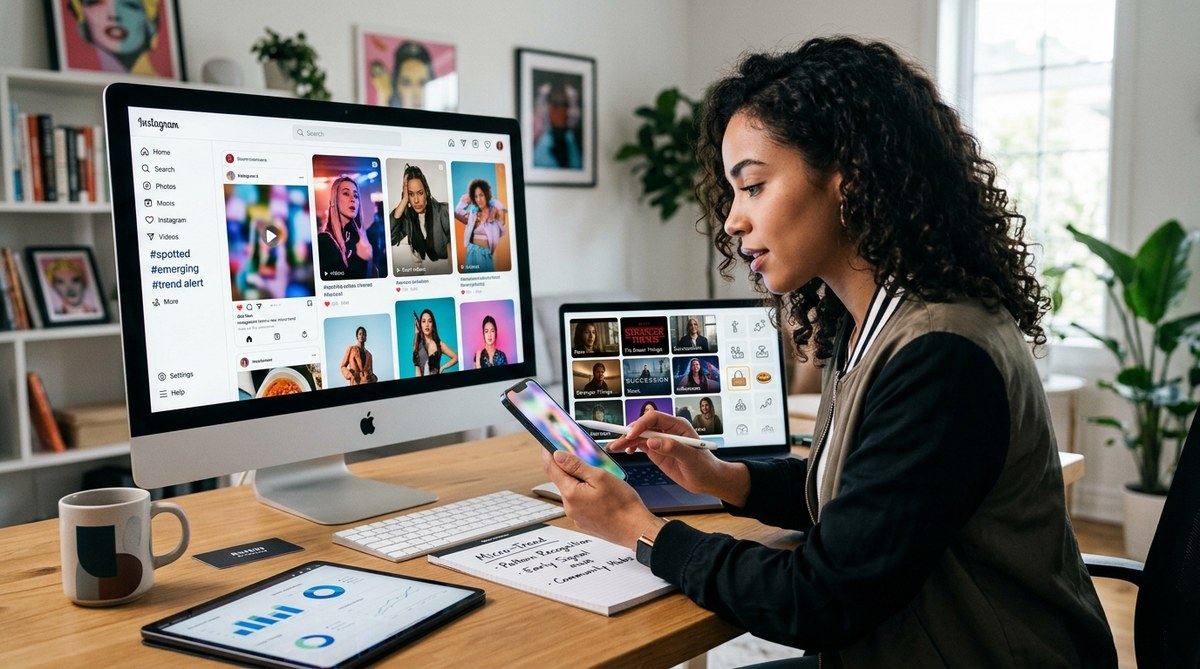
Keep a note in your phone with three categories: “Watch,” “Confirmed,” “Pass.” When you see a potential micro trend, drop it in “Watch” and check the signals from the table above. If it crosses the threshold, move it to “Confirmed.” If it disappears in a week, archive it.
You can also look at why Gen Z is bringing back Y2K fashion and everyone else is confused for a case study on how micro trends pull from nostalgic sources.
The Reward of Being Early
Catching a micro trend early is not just about looking cool. It saves you money. When you buy into a trend after it peaks, you pay premium prices and end up with something that feels dated in a month. When you catch it early, you can thrift, swap, or buy from small makers before the mass market inflates the cost.
Plus, there is a certain thrill in spotting something before the algorithm confirms it. It makes you feel like you still have a say in culture instead of letting the feed decide for you.
So, next time you see that lime green bag on three different people, do not scroll past. Pause. Open your note. Start watching. You already know how to spot micro trends now. The only thing left is to trust your eyes.