We Spent a Week With the New Apple Vision Pro – Here’s the Unvarnished Truth
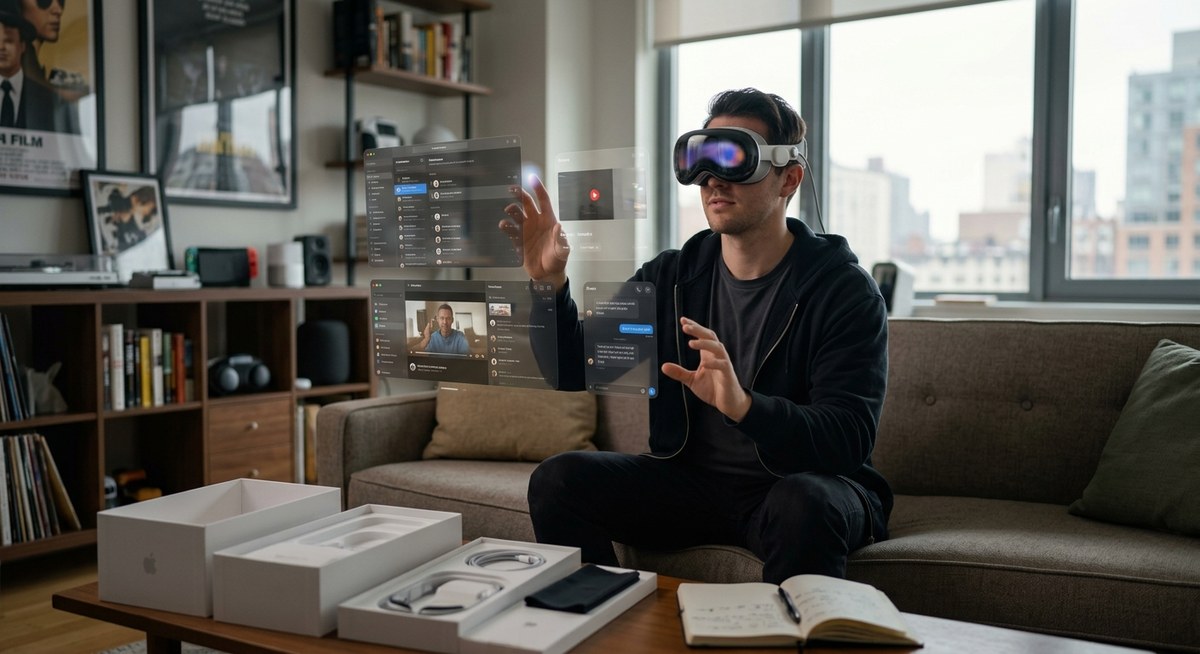
You’ve seen the polished demos on YouTube and the carefully timed press shots. But what happens when you actually strap Apple’s Vision Pro to your face for seven straight days? No white gloves. No curated apps. Just real life: coffee spills, cat interruptions, and a desperate search for a movie that doesn’t feel like a science experiment. We did the dirty work so you don’t have to. Here is the raw, unfiltered truth about what it’s like to live with a $3,500 headset in 2026.
Apple Vision Pro is a marvel of engineering that delivers the best mixed reality experience available today, but it’s still a first-generation product with real compromises. Comfort, weight, and social isolation are the biggest hurdles. Unless you’re a developer, a digital nomad with deep pockets, or someone who truly needs a private cinema, wait for the next version.
## The Setup: Fitting a $3,500 Computer to Your Face
The unboxing is an event. The box itself could double as a luxury watch case. The Light Seal attaches magnetically, the Solo Knit Band stretches like a memory foam pillow, and the Dual Loop Band looks suspiciously like the straps on a high end yoga mat. Apple wants you to believe this is a piece of clothing, not a gadget.
But here’s the thing: getting the perfect fit is an exercise in patience. You’re supposed to scan your face with an iPhone using the Apple Store app, which generates a custom fit code. Our code was “13W” (narrow width, deep bridge). That got us 80 percent of the way there. The remaining 20 percent involved swapping between the two bands every day and adjusting the strap tension by millimetre increments.
1. **Start with the Solo Knit Band** (the one that looks like a fabric strap). Wear it for an hour. If you feel pressure on your cheekbones, switch to the Dual Loop Band.
2. **Use the Digital Crown to adjust fit** after every 15 minutes of use. The headset settles over time.
3. **Try the Zeiss optical inserts** if you wear glasses. They clip in magnetically and don’t fog up. But ordering them adds five days to the delivery.
The weight is always present. At 650 grams, it’s heavier than the Quest 3 (515g) and far heavier than a pair of ski goggles. After 90 minutes, you feel it. After two hours, you’re adjusting constantly. The Solo Knit Band spreads the weight better than the Dual Loop, but neither eliminates the “headset dent” you’ll see in the mirror afterwards.
## What Actually Works (Surprisingly Well)
When everything lines up, the Vision Pro delivers moments that feel like science fiction. The micro OLED displays are simply unmatched. Pixels vanish. Text is razor sharp. Watching a movie like *Dune* in the virtual cinema mode makes you forget you’re in your living room. The immersive environments (a desert vista, a moonlit lake) are so detailed you might try to reach out and touch the leaves.
Eye tracking is the killer feature. You look at an icon, pinch your fingers together, and the system responds faster than a mouse click. After a day, it feels like telepathy. The worst thing about going back to a regular laptop is having to move a cursor again.
– Passthrough video quality: almost real time, with minimal warping. You can read your phone screen through the headset.
– Spatial audio: tracks your head movement perfectly. Sound comes from the direction of objects on screen.
– macOS screen mirroring: you can beam a 100 inch virtual display into your space. For productivity, this is game changing.
During the week we tested it with real work tasks: writing emails, editing photos, and even a Zoom call (using the Persona). The productivity potential is real. If Apple can shave 100 grams off the weight in version two, this could replace a laptop for many people.
## The Daily Grind: Where the Magic Fades
The Vision Pro is not a device you can wear all day. And that’s fine for a movie. Not so fine for a workday that’s supposed to replace your monitor.
Battery life is the first crack. You get about two and a half hours of mixed use before the external battery pack (which is the size of a small phone) dies. The battery clip to your pocket is awkward when you sit down. And the cable is only long enough to let you tuck the pack into a back pocket, not a front one.
Then comes the heat. The headset gets warm after 45 minutes. Not uncomfortable warm, but warm enough that you notice it. In a room without air conditioning, you’ll start to sweat.
Comfort ratings over the week (1-10):
| Use case | Solo Knit Band | Dual Loop Band |
|———-|—————-|—————-|
| Movies (2 hours) | 7 | 6 |
| Work (4 hours) | 4 | 5 |
| Gaming (1 hour) | 6 | 7 |
| Fitness (15 min) | 2 | 3 |
The table tells the real story: nothing is comfortable for extended work sessions. The weight distribution just isn’t there yet.
## The Loneliness Factor (and the Persona Problem)
A mixed reality headset is inherently isolating. You’re wearing a device that obscures your eyes. The EyeSight external display (which shows a rendering of your eyes to people nearby) is the answer Apple came up with. In practice, it’s dim, low resolution, and looks like a screen door. Your friends won’t know if you’re looking at them or at a floating spreadsheet.
Then there’s the Persona. If you want to FaceTime someone while wearing the headset, Apple creates a 3D avatar of your face. It’s unsettling. The facial tracking captures your blinks and smiles, but the skin texture looks like a video game character from 2015. We showed our Persona to a friend and they laughed uncomfortably for ten seconds.
> “It’s like looking at a very good wax sculpture that’s alive but not quite human,” said our colleague Jamie after our first Persona call. “I’d rather you just use the audio only.”
The social sacrifice is real. During the week, we found ourselves using the Vision Pro mostly alone, at night, after the family had gone to bed. That might be fine for a single person, but for anyone living with others, it creates a barrier.
## Who Should Actually Buy This?
Let’s be honest: the Vision Pro is not for everyone. Here’s a quick checklist.
– **You’re a developer**: you need to understand the platform to build for it.
– **You have a home office with zero distractions**: you value a private cinema and giant monitor more than human contact.
– **You’re a sim racer or flight sim fanatic**: the immersion is second to none.
– **You have $3,500 burning a hole in your pocket**: and you know this is first gen hardware.
If you fall into none of those groups, wait for the cheaper version that’s rumored for late 2026 or 2027. Apple’s ecosystem is powerful, but the Vision Pro is still in beta for everyday use.
If you’re still curious about wearable tech in general, check out our thoughts on [viral tech gadgets that actually live up to the hype](https://yesbutnobutyes.com/7-viral-tech-gadgets-that-actually-live-up-to-the-hype/). Alternatively, if you’re trying to decide between this and a new TV, our ranking of [every major streaming service by actual value in 2026](https://yesbutnobutyes.com/every-major-streaming-service-ranked-by-actual-value-in-2026/) might help.
## The Verdict After Seven Days
We wanted to love the Vision Pro. And in short bursts, we did. The display quality, the eye tracking, and the feeling of being inside your own private world are genuinely impressive. But the weight, the battery, the heat, and the social weirdness are too much for daily life.
Apple’s first generation products usually find their footing by generation three. The iPhone was amazing but had no copy and paste. The iPad needed a Smart Cover to stand up. The Apple Watch was slow until Series 2. The Vision Pro follows that same pattern: it’s a stunning preview of what’s coming, but not yet a finished painting.
If you have the money and the curiosity, rent one for a weekend. If you’re on the fence, save your cash for the lightweight version that’s surely on the way. The future is here. It just weighs a pound and a half.