Are You Following a Bot? How AI Influencers Are Taking Over Social Media
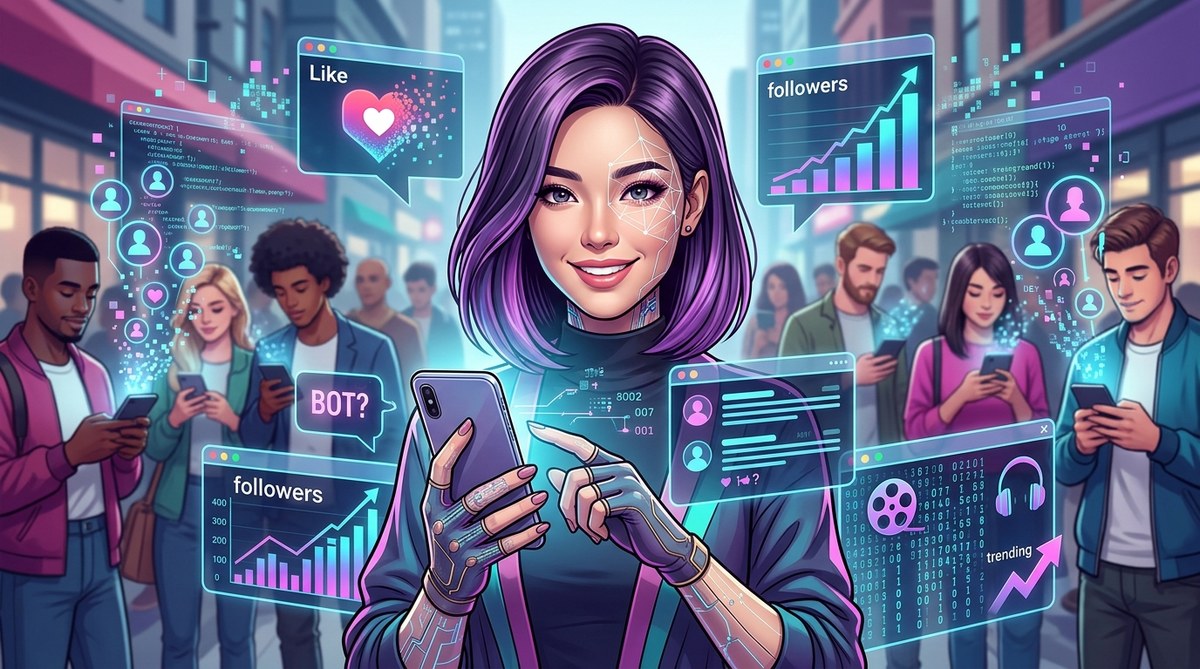
You scroll through your feed and see a gorgeous person with perfect skin, an enviable vacation, and a flawless outfit. The comments are full of praise. But something feels off. The account posts at weird hours. The captions sound like a marketing script. And the face? It’s just a little too symmetrical. Welcome to the world of AI influencers, where the person you’re following doesn’t exist.
AI influencers are computer-generated characters that mimic real humans on social media. They post photos, engage with fans, and even promote products. By 2026, millions of accounts are bots or virtual models. This guide explains how they work, why they’re so popular with brands, and most importantly, how you can tell if you’re following a bot instead of a real person.
What Exactly Is an AI Influencer?
An AI influencer is a digital character created by a team or a company using artificial intelligence tools. Unlike a parody account or a fictional character played by an actor, an AI influencer has no physical body. Every photo, video, and voice is generated or heavily edited by software.
Some of the most famous names include Lil Miquela, who has 2.5 million followers on Instagram and even released music. There’s Aitana Lopez, a pink-haired model from Spain with over 200,000 fans. And then there are the anonymous bots that flood comment sections pretending to be real people. The difference between a “virtual influencer” (openly AI) and a “bot account” (deceptive) often comes down to disclosure.
Brands love these digital stars because they never age, never get into scandal, and can be programmed to say exactly what the sponsor wants. But for regular users, the rise of AI influencers raises a big question: who are you actually talking to?
How AI Influencers Are Made in 2026
Creating a convincing AI influencer is not as hard as you think. Here’s a step by step look at the process, simplified for anyone who isn’t a tech wizard.
- Design the appearance. Artists use programs like Unreal Engine, Blender, or even AI image generators like Midjourney to create a photorealistic 3D model. They tweak every feature: skin texture, hair strands, eye reflection.
- Build a personality profile. The team writes a backstory, a tone of voice, and even favorite foods. This helps the AI generate captions that feel authentic. Some influencers have entire “lore” like a childhood in Tokyo.
- Train the AI to generate content. Using machine learning, the model is fed thousands of examples of real influencer posts. Over time, it learns what kinds of photos get likes and what captions lead to comments.
- Automate posting and engagement. Tools like Later or custom scripts schedule posts at optimal times. Chatbots respond to DMs and comments using prewritten scripts or generative AI like GPT.
- Monitor and tweak. The team watches analytics. If a post underperforms, they adjust the style. They might even run A/B tests on different facial expressions.
This process allows a single person or a small agency to run dozens of fake accounts simultaneously. It’s a full time job, but one that pays well when brands pay thousands for a single sponsored post.
Why Brands Are Obsessed with AI Influencers
Companies love AI influencers for several reasons, and those reasons explain why you’re seeing more of them every day.
- Total control. No temper tantrums, no controversial tweets, no bad behavior. The influencer will never post something that hurts the brand.
- Cost effective. A single real influencer can charge $10,000 or more for a post. An AI influencer costs money to build, but once created, the marginal cost per post is close to zero.
- Always available. Need a post at 3 AM on Christmas? The AI influencer is ready. They don’t sleep, take vacations, or get sick.
- Global reach. AI can generate content in any language, any accent, any cultural context. One character can be “local” in Tokyo, Paris, and New York simultaneously.
- Perfect engagement metrics. Bots can be programmed to like, comment, and share, making the influencer look more popular than they really are. This attracts real followers who think the account is trending.
But there’s a dark side. When AI influencers are not disclosed, they deceive people. They can spread misinformation, promote unsafe products, and manipulate public opinion. That’s why 2026 has seen growing calls for regulation.
How to Know If You’re Following a Bot
The line between human and AI is blurring. But there are still telltale signs. Use this table to compare a real influencer with a bot.
| Feature | Real Human Influencer | AI Influencer Bot |
|---|---|---|
| Reply style | Replies vary in tone, have typos, show personality | Replies are generic, always polite, never ask personal questions |
| Posting schedule | Irregular, sometimes miss days, post at all hours | Perfectly timed, often at the same minute each day |
| Photo backgrounds | Real places, sometimes messy rooms, natural lighting | Too perfect, no clutter, lighting looks synthetic |
| Engagement patterns | Real comments are mixed: some praise, some criticism | Comments are mostly generic (cool, nice, wow) or bot spam |
| Disclosure | Some may use “sponsored” tags, but not all | Often no disclaimer, or buried in bio (AI generated) |
| Life events | Birthdays, sick days, vacation with friends | Never gets sick, never has bad hair days, no embarrassing stories |
If an account matches three or more signs from the AI column, you might be following a bot. Trust your gut. If the profile feels too perfect, it probably is.
The Ethical Trap We’re All In
People are starting to speak out. Here’s what one digital ethics researcher told us:
“The problem isn’t that AI influencers exist. It’s that they’re designed to deceive. When a brand uses a non disclosed AI character to sell you something, they’re violating your trust. We need clear labels on every virtual influencer post, like a watermark that says ‘simulated.’ Until then, the burden falls on users to stay skeptical.”
The researcher points out that young teens are especially vulnerable. They might form emotional bonds with a bot, share personal information, or be influenced into buying things they don’t need. In 2026, several consumer groups are pushing for laws that require AI influencers to be tagged with a permanent label.
But the platforms aren’t always helping. Instagram and TikTok have policies, but enforcement is weak. Many AI accounts slip through the cracks, especially when they mimic real people by stealing photos and adding filters.
The Future: More Real, More Sneaky
By the end of 2026, AI influencers will be even harder to spot. New tools can generate realistic video in real time, complete with lip sync and emotional expressions. Soon, you’ll be able to have a FaceTime style call with a bot that looks like your favorite influencer.
The industry is also moving toward “hybrid” influencers: real people who use AI to enhance their looks, voice, or content. This blurs the line even more. Are you still following a human if 80% of their posts are AI generated?
For now, the best defense is awareness. Check bios for phrases like “virtual being” or “AI generated.” Reverse image search profile pictures. Look at engagement ratios. And if an account seems too good to be true, it’s probably a bot.
You can also read our guide on how to tell if that viral video is AI-generated or real for more specific tips.
Staying Human in a Bot World
AI influencers aren’t going away. They’re getting better, faster, and more integrated into our daily feeds. But that doesn’t mean you have to accept being fooled.
Next time you double tap a perfect selfie, pause for a second. Look at the background. Read the comments. Check the bio. Ask yourself: Is this a real person, or a clever simulation?
You have the power to choose who you follow. Make it count. And if you want to laugh at how ridiculous some of these bot accounts are, check out our list of 10 internet trends from 2010 that would flop today for a dose of nostalgia.
Keep your eyes open, stay curious, and don’t let the bots win your attention.