The 7 Most Absurd Conspiracy Theories That Actually Went Viral in 2026
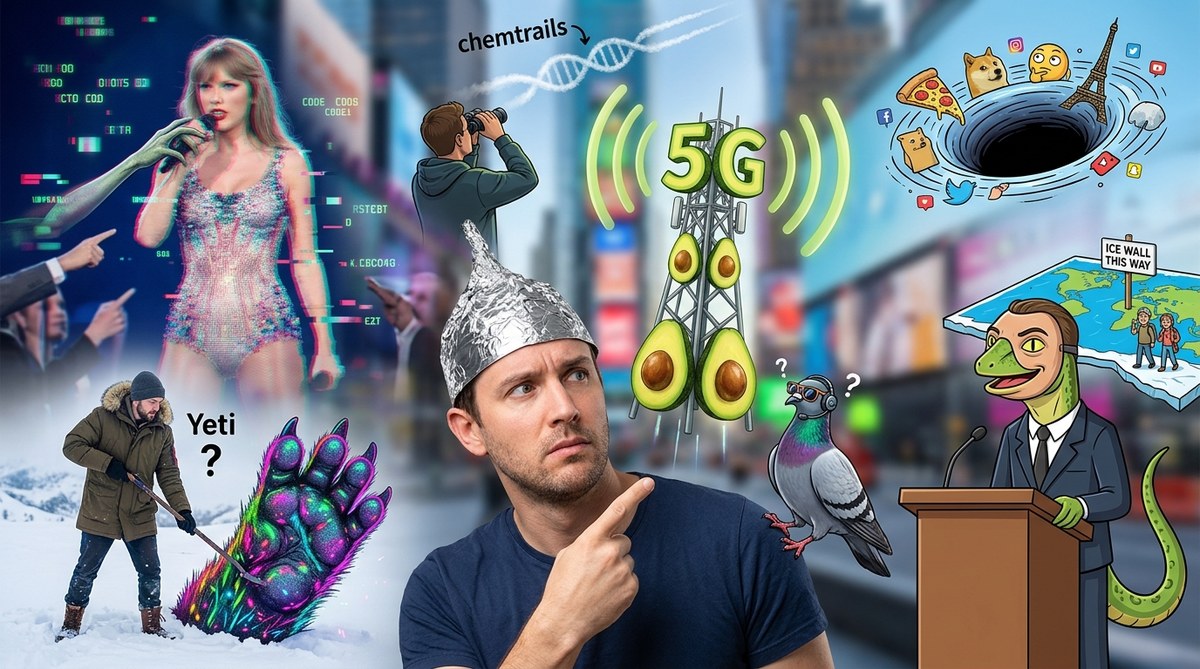
The internet loves a good mystery. But in 2026, the line between “good mystery” and “absolute chaos” got blurrier than ever. We saw theories pop up that were so bizarre, so delightfully unhinged, that they didn’t just trend for a day. They became full-blown cultural events. You probably saw them on your For You Page. Maybe you even double-tapped a few. Don’t worry, we’re not here to judge. We’re here to take a fun, slightly baffled stroll through the seven most absurd viral conspiracy theories that actually took over the web this year.
The most successful viral conspiracy theories of 2026 share a strange recipe: a dash of plausible tech paranoia, a sprinkle of celebrity drama, and a whole heap of visual evidence that falls apart under two seconds of scrutiny. From squirrels that seemed too coordinated to a ring around the moon that felt too perfect, these stories reveal how easily our brains connect dots that aren’t there. The real takeaway? Always pause before you share.
The Great Squirrel Uprising of 2026
It started with a single video. A man in Central Park claimed he saw a group of squirrels moving in a perfect grid pattern. The clip went nuclear. Within days, people across the country were posting their own “evidence” of squirrel coordination. A squirrel on a fire escape seemed to be signaling to another squirrel below. A pair of them appeared to “stand guard” outside a subway grate. The theory? Squirrels were not wild animals. They were a distributed surveillance network, planted by a tech giant to map every inch of urban green space.
The absurdity peaked when a TikTok user with a massive following claimed to have reverse-engineered one of the “drone squirrels.” She took apart a stuffed animal and showed a circuit board that she said was “clearly” the control unit. It was, in fact, the squeaker from a dog toy. But the damage was done. People were genuinely afraid to feed the pigeons, worried they might be informants. The whole thing was a masterclass in how a compelling visual and a lack of context can create a monster. For a fun look at other things that aged poorly, check out our piece on 10 Internet Trends From 2010 That Would Flop Today.
The “Moon Ring” Was a Secret Space Station
In late summer, a spectacular lunar halo appeared over the Midwest. It was a standard atmospheric phenomenon caused by ice crystals. But the internet decided it was something else. The theory claimed the ring was not a ring of light, but a massive, invisible space station orbiting Earth. The halo, believers argued, was the station’s outer shield reflecting sunlight.
The theory got a boost when a grainy photo from a backyard telescope appeared to show “struts” within the ring. The photo was later proven to be a hoax, but not before the hashtag #MoonStation2026 trended for a full weekend. People started claiming they could see blinking lights. Others said their Wi-Fi got slower when the ring was visible. It was a classic case of confirmation bias. You saw what you wanted to see. The irony? The real space station, the ISS, was probably flying overhead while everyone was staring at the moon.
The “Dead Internet” Theory Got a Sequel
You remember the Dead Internet theory, right? The idea that most online activity is bots talking to bots. In 2026, that theory got a terrifying upgrade. The new version claimed that you were a bot. Specifically, that anyone who posted a certain kind of “low-effort” content was actually an AI designed to keep the platform running. The trigger? Posting a screenshot of a text conversation with the caption “this is so real.”
It started as a joke. People would reply to a friend’s post with “nice try, bot.” But then it spiraled. An influencer with 2 million followers posted a video crying, and the comments were flooded with accusations that her tears were “algorithmically generated.” The theory became a weapon used to dismiss anyone you disagreed with. It was a perfect example of how a viral conspiracy theory can warp genuine human connection. If you want to see how this compares to other tech panics, read our breakdown of Why Your Phone Knows What You Want Before You Do.
The “Quiet Quitting” of the Weather
This one was pure pop culture gold. A series of bizarre weather events in the spring led to a theory that the weather itself was “quiet quitting.” A sunny day in Seattle that lasted a record 12 hours? That was the atmosphere “doing the bare minimum.” A thunderstorm that started and stopped exactly at 5:00 PM on a Friday? Clearly, the weather was clocking out early.
The theory was fueled by a viral video essay that used dramatic music and clips of clouds moving slowly. The narrator argued that “the climate is disengaged.” It was a perfect parody of corporate burnout culture, but many people took it literally. They started posting “weather review” videos, rating the day’s performance. Some even called their local news stations to complain that the weather wasn’t “trying hard enough.” It was absurd, but it also showed how we personify everything, even the sky.
The “Famous Foot” Conspiracy
A-list celebrity drama met deepfake paranoia in this one. A blurry photo of a foot appeared on a gossip account. The account claimed the foot belonged to a famous actress, and that it proved she was secretly dating a rival actor. The actress denied it. Her team issued a statement. But the internet had already decided.
The theory then evolved. Believers claimed the photo was not a leak, but a “breadcrumb” planted by the actress’s own PR team to distract from a different scandal. They called it a “controlled foot drop.” The phrase was everywhere. People started analyzing the shape of the actress’s toes in old red carpet photos. They compared the angle of the ankle. It was a complete circus. The actress eventually leaned into the joke, posting a photo of her feet in a bathtub with the caption “I have no comment.” It was a rare moment where a celebrity managed to laugh at the absurdity of it all. For more on how stars handle the spotlight, see our list of 15 Times Celebrities Tried to Be Relatable and It Backfired Spectacularly.
The “Silent Alarm” Panic
This one was genuinely unsettling. A theory spread that phone alarms were being remotely triggered by a government agency to test a new “mind control” frequency. The evidence? A surge of people waking up at exactly 3:33 AM for no reason. They checked their phones, and their alarms were set for that time, even though they swore they never set them.
The truth was much simpler. A bug in a popular iOS update caused alarms to reset to a default time after a software glitch. But the conspiracy version was way more exciting. People posted videos of themselves screaming at their phones. Others claimed they had headaches when the alarm went off. It was a perfect storm of tech anxiety and sleep deprivation. The bug was patched in a week, but the paranoia lingered. People started wrapping their phones in aluminum foil “to block the signal.”
The “Vibe Shift” Conspiracy
This was the meta-theory of the year. It claimed that the entire “vibe” of the internet was being artificially manipulated by a single, shadowy group of influencers. The theory said that every time you felt a “shift” in online culture, it was not organic. It was a coordinated campaign to make you buy something.
The evidence was flimsy but compelling. A sudden wave of “sad girl” playlists on Spotify. A coordinated push for a specific shade of green in home decor. A viral dance that everyone seemed to learn overnight. Believers argued these were not trends. They were “vibe injections.” The theory was popular because it felt true. The internet does feel manufactured sometimes. But the idea that it’s all controlled by a single cabal is pure fantasy. It’s more like a thousand small cabals all yelling at each other. For a deeper look at how these cultural moments happen, check out our article on The Rise of Deinfluencing and What It Says About Our Relationship with Consumerism.
How to Spot a Viral Conspiracy Theory Before You Share It
It’s easy to laugh at these now. But in the moment, they feel real. Here is a simple checklist you can use the next time you see something that makes you say “wait, what?”
| Red Flag | What It Looks Like | What You Should Do |
|---|---|---|
| Too perfect | A photo or video that looks exactly like a movie scene. | Look for shadows, reflections, and repeating patterns. |
| Single source | Only one account is posting the “evidence.” | Wait for at least two unrelated sources to confirm. |
| Emotional bait | The post makes you feel angry, scared, or smug. | Pause. Strong emotions are a shortcut around logic. |
| No timeline | The theory claims something happened “recently” but gives no date. | Search for the event with a specific date range. |
| Celebrity connection | A random event is linked to a famous person with zero proof. | Assume it’s fake until the celebrity’s team confirms. |
“The most effective viral conspiracy theories are not the ones that are most logical. They are the ones that are most satisfying to believe. They give you a simple answer to a complex question, and they make you feel like you are part of a secret club.” Dr. Elena Rossi, media psychologist at NYU.
Why We Love to Believe
So why do we fall for this stuff? It’s not because we are dumb. It’s because our brains are wired for pattern recognition. We see a squirrel move in a weird way, and we look for a reason. The internet gives us a reason, even if it’s a bad one. The theories in this list all share a common thread. They turn a boring, random universe into a world where everything happens for a reason. A world with secret squirrel spies and moon stations is way more interesting than a world with a simple bug in an app update.
The best defense is not cynicism. It is curiosity. Ask yourself: “What is the simplest explanation?” If the answer is “a software glitch” or “a weather phenomenon,” you are probably safe. If the answer involves a shadowy cabal controlling the weather, you are probably looking at a viral conspiracy theory.
The Final Word on 2026’s Wildest Theories
The internet in 2026 was a beautiful, chaotic mess. We argued about squirrels. We analyzed a celebrity’s foot. We accused the weather of being lazy. It was exhausting, but it was also kind of fun. These theories are a reflection of our collective anxiety and our endless desire for a story. The next time a wild theory lands in your feed, take a breath. Look at the list above. And remember: sometimes, a ring around the moon is just a ring around the moon. Stay curious, stay skeptical, and keep scrolling.