How to Make Restaurant-Quality Pasta at Home Without Breaking a Sweat
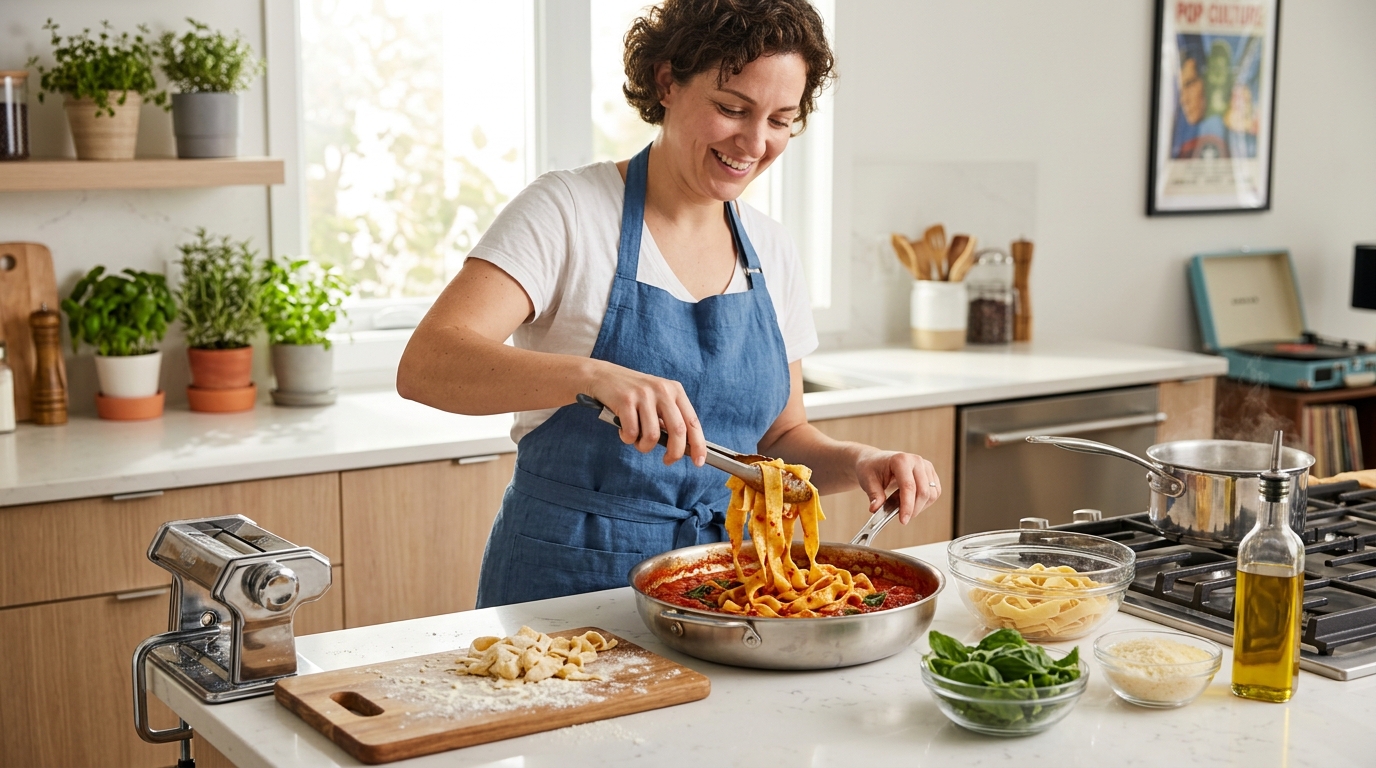
You know that moment when you twirl pasta at a fancy Italian spot and think “I could never make this at home”? That’s exactly what chefs want you to believe. The truth is, restaurant pasta isn’t the result of magic or years at culinary school. It’s about understanding a handful of techniques that anyone can master in their own kitchen.
Restaurant quality pasta comes down to five essential elements: properly salted boiling water, finishing pasta in the sauce, reserving starchy pasta water for emulsification, using high-quality ingredients, and timing everything to serve immediately. Master these fundamentals with basic kitchen equipment, and you’ll create dishes that rival your favorite Italian restaurant without expensive tools or complicated techniques that intimidate home cooks.
The Water Makes All the Difference
Professional kitchens treat pasta water like liquid gold. They salt it generously and use it as a secret ingredient that transforms good pasta into something extraordinary.
Your water should taste like the ocean. Not literally, but close. For every pound of pasta, add at least two tablespoons of salt to your boiling water. This seasons the pasta from the inside out, something you can’t fix later with sauce.
The starch that pasta releases while cooking turns that water into a binding agent. When you add a ladle of pasta water to your sauce, it helps everything come together in a silky coating that clings to every strand. Professional chefs always keep a cup of this starchy water nearby before draining.
Never rinse your pasta after cooking unless you’re making a cold salad. That starch on the surface helps sauce adhere. Rinsing washes away the very thing that makes restaurant pasta taste better than the home-cooked version.
Finish Cooking in the Sauce
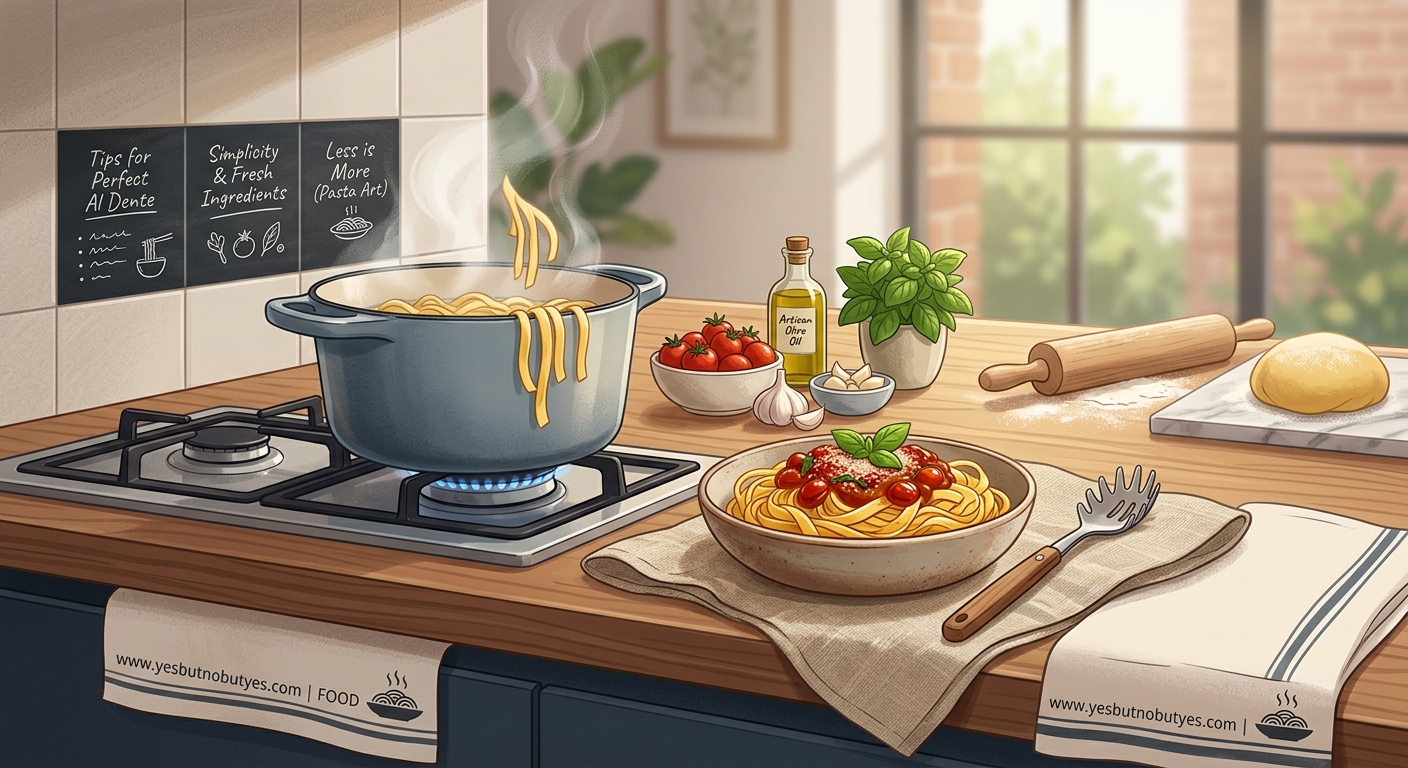
Here’s where most home cooks miss the mark. Restaurants don’t fully cook pasta in water, then dump sauce on top. They finish cooking it directly in the pan with the sauce.
Pull your pasta from the water when it’s about two minutes shy of al dente. It should still have a firm, almost chalky center. Transfer it directly to your pan of simmering sauce using tongs or a spider strainer. Let the pasta finish cooking in the sauce for those final two minutes.
This technique allows the pasta to absorb the flavors of your sauce while releasing more starch to help everything bind together. The pasta becomes part of the sauce rather than just a vehicle for it.
Add splashes of pasta water as needed. The sauce should coat the pasta glossily, not pool at the bottom of the bowl. If things look dry, add more pasta water. If it’s too loose, let it simmer longer.
The Right Tools Don’t Need to Be Expensive
You don’t need a kitchen full of fancy equipment to make restaurant quality pasta at home. A few affordable essentials will get you there.
- Large pot that holds at least six quarts of water
- Spider strainer or tongs for transferring pasta
- Wide sauté pan or skillet with high sides
- Wooden spoon for tossing
- Ladle for pasta water
- Microplane for fresh cheese and garlic
The wide sauté pan is your most important tool. It gives you enough surface area to toss pasta with sauce properly. A standard saucepan with tall sides makes this nearly impossible.
Your pot needs to be big enough that pasta can move freely while cooking. Cramped pasta sticks together and cooks unevenly. Think of it like a dance floor. Nobody has fun when it’s too crowded.
Ingredient Quality Actually Matters Here
You can’t fake your way through pasta with low-quality ingredients. The dish is too simple. Everything shows.
Start with good dried pasta made from 100% durum wheat semolina. Bronze-cut pasta has a rougher surface that holds sauce better than smooth, Teflon-cut varieties. You’ll see the difference on the package. Bronze-cut pasta looks matte and textured, not shiny.
Use real Parmigiano-Reggiano, not the pre-grated stuff in a green can. Freshly grated cheese melts into your sauce and adds a nutty, complex flavor that transforms simple dishes. The same goes for Pecorino Romano if your recipe calls for it.
Extra virgin olive oil should taste like something. If your oil is flavorless, it’s not doing its job. Good oil adds a peppery, fruity note that rounds out your dish. You don’t need the most expensive bottle, but skip the generic supermarket brand.
Fresh garlic beats pre-minced every single time. Jarred garlic has a tinny, harsh flavor that screams “home cooking” in the worst way. A microplane makes fresh garlic easy to work with.
Timing Everything Like a Pro
Restaurants serve pasta immediately after it’s done. That’s not always realistic at home, but getting close makes a huge difference.
Start your sauce before you drop your pasta in the water. Most simple sauces take less time than pasta needs to cook. Your sauce should be warm and ready when the pasta finishes.
Have everything prepped before you start cooking. Garlic minced. Cheese grated. Herbs chopped. Wine measured. Once pasta hits the water, things move fast. You won’t have time to hunt for ingredients or grate cheese.
Warm your serving bowls. This seems fussy, but it keeps your pasta hot longer. Run them under hot water or stick them in a low oven for a few minutes while you cook.
Serve immediately. Pasta continues to absorb liquid as it sits. What looks perfect in the pan will be dry and clumpy ten minutes later. Call everyone to the table before you start tossing.
Common Mistakes That Give You Away
| Mistake | Why It Fails | The Fix |
|---|---|---|
| Adding oil to pasta water | Creates a slick coating that prevents sauce from sticking | Salt the water generously instead |
| Breaking long pasta to fit the pot | Ruins the eating experience and looks amateur | Use a bigger pot or push pasta down as it softens |
| Drowning pasta in sauce | Masks the pasta itself and creates a soupy mess | Use just enough sauce to coat, not drown |
| Cooking everything on high heat | Burns garlic and breaks sauces | Medium heat for most pasta sauces |
| Skipping pasta water | Sauce won’t emulsify properly or coat pasta | Always reserve at least a cup before draining |
The Five-Step Formula That Works Every Time
Follow this process for any pasta dish, from simple garlic and oil to more complex sauces.
-
Bring a large pot of water to a rolling boil. Add salt until it tastes noticeably salty. Drop in your pasta and stir immediately to prevent sticking. Set a timer for two minutes less than the package directions.
-
While pasta cooks, prepare your sauce in a wide pan. Get it to the point where it just needs the pasta added. If using garlic, don’t let it brown. If using tomatoes, let them break down. If making a cream sauce, have it simmering gently.
-
Reserve pasta water before draining. Use a measuring cup to scoop out at least one cup of the starchy water. This is your insurance policy for a perfect sauce consistency.
-
Transfer pasta directly to the sauce pan. Use tongs or a spider strainer. Don’t drain it completely. A little extra water clinging to the pasta helps. Let everything cook together for two minutes, tossing frequently.
-
Adjust consistency with pasta water and finish with fat. Add pasta water by the tablespoon until the sauce coats pasta glossily. Turn off the heat. Add a pat of butter or drizzle of olive oil and toss vigorously. The fat emulsifies with the starchy water to create a silky coating.
Building Flavor Like Professional Kitchens Do
Restaurants layer flavors instead of dumping everything in at once. This creates depth that makes you wonder what their secret is.
Bloom your dried spices in oil before adding liquid ingredients. Red pepper flakes, for example, release more flavor when they sizzle in oil for 30 seconds before anything else goes in the pan.
Toast your garlic gently in oil until it’s fragrant but not colored. This takes about one minute over medium heat. Burned garlic tastes bitter and ruins everything.
Use anchovy paste or whole anchovies even in non-seafood dishes. They dissolve into the sauce and add a savory depth without tasting fishy. This is the umami boost that makes restaurant food taste more complex.
Finish with fresh herbs, not dried. Torn basil, chopped parsley, or fresh oregano added at the very end taste vibrant and bright. Dried herbs belong in the sauce while it cooks, not as a garnish.
“The difference between good pasta and great pasta is usually just pasta water, proper seasoning, and the confidence to serve it immediately. Most home cooks overthink the recipe and underthink the technique.” – Professional chef advice that changed everything
The Cheese Situation Needs Addressing
Cheese isn’t just a topping. It’s an ingredient that needs to be handled correctly.
Grate cheese fresh every time. Pre-grated cheese contains anti-caking agents that prevent it from melting smoothly. Those additives make your sauce grainy instead of creamy.
Add cheese off the heat. If your pan is too hot, the cheese will clump and separate instead of melting into a smooth sauce. Turn off the burner, add your cheese, and toss vigorously.
Use the right cheese for your dish. Parmigiano-Reggiano is nutty and sweet. Pecorino Romano is sharp and salty. Don’t substitute one for the other unless you understand how it will change the flavor profile.
Save the good stuff for finishing. If your recipe calls for cheese in the sauce and as a garnish, use slightly older cheese in the sauce and your freshest wedge for topping. The subtle difference matters.
Temperature Control Separates Amateurs from Pros
Heat management is where most home cooks struggle. Too high, and you burn garlic. Too low, and nothing develops flavor.
Medium heat works for most pasta sauces. Your pan should be hot enough that garlic sizzles gently when it hits the oil, not so hot that it browns in seconds.
Let tomato-based sauces simmer at a gentle bubble. Aggressive boiling breaks down the tomatoes too much and makes the sauce taste flat. A lazy simmer concentrates flavors without destroying texture.
Cream-based sauces need even lower heat. Cream can break if it boils too hard. Keep it at a bare simmer, just a few bubbles breaking the surface.
When you add pasta to the sauce, the temperature will drop. That’s fine. You want a gentle simmer while everything finishes cooking together. If it’s bubbling violently, turn the heat down.
Making Simple Sauces Taste Complex
You don’t need twenty ingredients to make pasta taste like it came from a restaurant. You need to treat a few ingredients really well.
Aglio e olio (garlic and oil) is the ultimate test of technique. It’s just pasta, garlic, olive oil, red pepper flakes, parsley, and pasta water. That’s it. The magic is in how you handle those six things.
Cacio e pepe (cheese and pepper) has even fewer ingredients but demands precision. Toast the black pepper in a dry pan first. Use mostly pasta water to create the sauce base. Add cheese off heat while tossing constantly. Mess up any step, and you get clumpy cheese instead of silky sauce.
Pasta al pomodoro (tomato sauce) shows whether you understand how to develop flavor. Good canned tomatoes, garlic, olive oil, basil, and salt become something special when you let them simmer together properly.
These simple dishes force you to get the fundamentals right. Master them, and you can handle anything. Much like viral food hacks that actually work, sometimes the simplest approaches deliver the best results.
Why Your Pasta Doesn’t Taste Like the Restaurant Version
Most home cooks make the same few mistakes without realizing it. Fix these, and you’re 90% of the way there.
You’re not using enough salt. Seriously. Restaurant pasta water is aggressively salted. Your pasta should taste properly seasoned before sauce even touches it.
You’re cooking pasta completely in water, then adding sauce. This is the biggest difference between home and restaurant cooking. Finishing pasta in the sauce changes everything.
You’re not moving fast enough. Pasta waits for no one. The window between perfectly coated and dry and clumpy is about three minutes. Have everything ready and serve immediately.
You’re using too much sauce. American restaurants often drown pasta in sauce, but Italian restaurants and serious chefs use just enough to coat. You should see the pasta, not swim in sauce.
You’re cooking for one but using techniques that work better in quantity. Some methods, like finishing in the sauce, work better when you’re cooking at least two portions. Scale up slightly if you’re cooking solo.
The Equipment You Already Have Is Probably Enough
Stop waiting to buy the perfect pasta pot or that expensive pan you saw on a cooking show. Your current kitchen likely has everything you need to make restaurant quality pasta at home.
A basic stainless steel or aluminum pot works fine for boiling pasta. Non-stick isn’t necessary here. You just need something big enough.
Any wide pan with sides works for finishing pasta. A 12-inch skillet, a sauté pan, or even a wok will do the job. The key is having enough surface area to toss pasta without it flying everywhere.
Regular tongs work better than special pasta tongs. Get the spring-loaded kind with scalloped edges. They grip pasta securely and don’t cost much.
Your existing colander is fine, but you might not even need it. Transferring pasta directly from pot to pan with tongs or a spider strainer is actually better. You keep more starchy water clinging to the pasta.
When to Break the Rules
Once you understand the fundamentals, you’ll know when breaking rules makes sense.
Some Asian-inspired pasta dishes work better with rinsed noodles. If you’re making a cold sesame noodle dish or something with a light, brothy sauce, rinsing prevents clumping.
Baked pasta dishes need slightly different handling. You want pasta even more undercooked since it continues cooking in the oven. Pull it when it’s barely bendable.
Pasta salads are the exception to almost every rule. Cook pasta fully, rinse it to stop cooking, and toss with dressing while it’s still warm so it absorbs flavor.
Stuffed pasta like ravioli can’t finish in the sauce the same way. The filling is already cooked, so you’re just heating everything through. Gentle handling matters more than technique here.
Your Pasta Game Just Leveled Up
Making restaurant quality pasta at home isn’t about having professional equipment or secret recipes. It’s about understanding why restaurants do what they do, then applying those same principles in your kitchen.
Salt your water like you mean it. Finish cooking in the sauce. Keep pasta water handy. Use good ingredients. Move fast and serve hot. These five things will transform your pasta from acceptable weeknight dinner to something your friends ask you to make again.
The best part? Once you nail these techniques, they become second nature. You’ll stop following recipes word-for-word and start cooking by feel. That’s when pasta stops being intimidating and starts being fun. Now get in the kitchen and show that box of spaghetti who’s boss.