The Funniest Plot Holes in Popular Movies That Will Ruin Them Forever
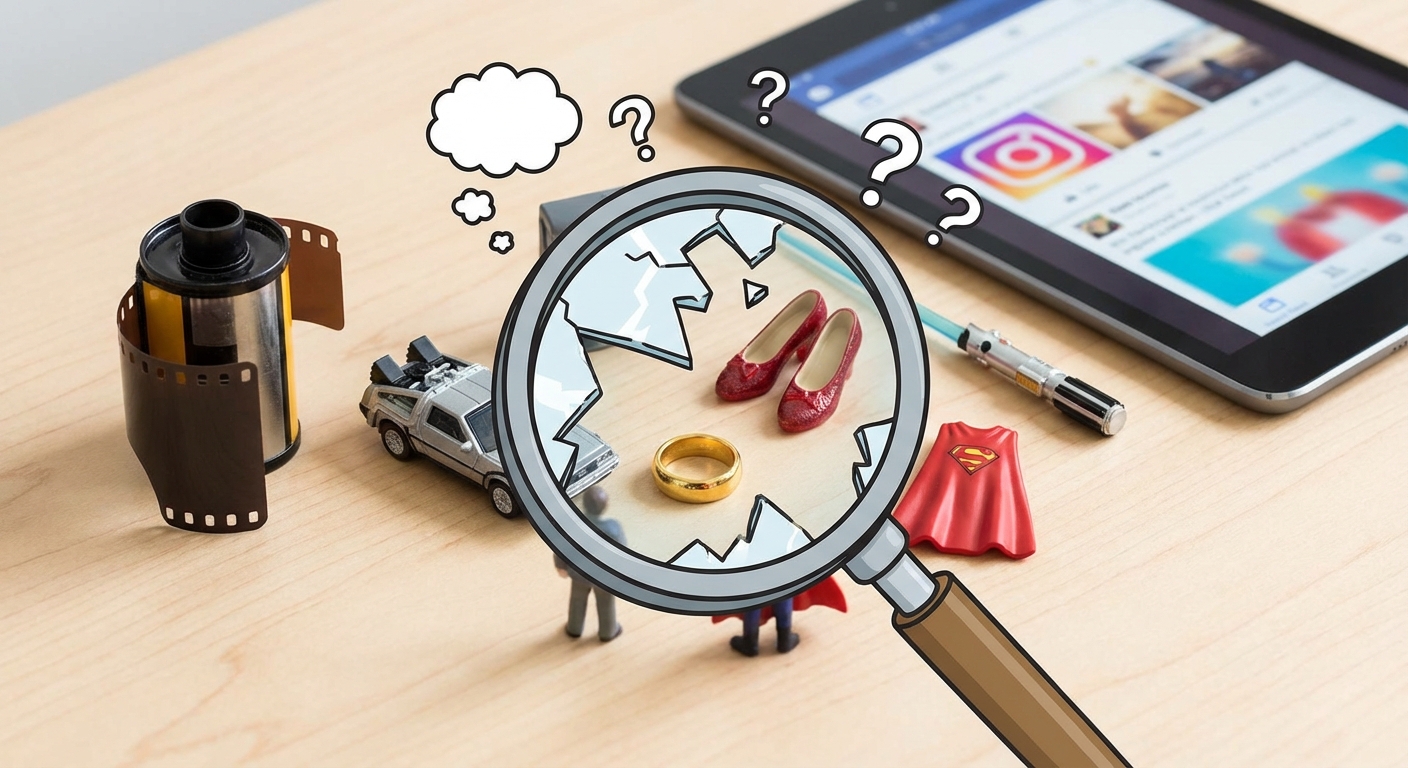
You know that moment when you’re watching a beloved movie for the tenth time and suddenly notice something that makes absolutely no sense? That tiny detail that unravels the entire plot like a loose thread on your favorite sweater? Welcome to the world of plot holes, where logic goes to die and screenwriters hope you’re too distracted by explosions to notice.
Plot holes in popular movies range from minor continuity errors to massive logical inconsistencies that undermine entire storylines. These gaps appear when filmmakers prioritize spectacle over coherence, forget their own rules, or simply hope audiences won’t notice. Understanding common types like timeline contradictions, character knowledge gaps, and impossible physics helps you spot them and appreciate both filmmaking challenges and storytelling failures.
What Actually Counts as a Plot Hole
Not every weird moment in a film qualifies as a genuine plot hole. There’s a difference between something you don’t like and something that actually breaks the story’s internal logic.
A real plot hole contradicts established facts within the movie’s universe. It’s not about realism. Nobody cares that superheroes defy physics. We care when a superhero forgets they have powers that would solve the entire conflict in five seconds.
Unanswered questions aren’t always plot holes either. Sometimes filmmakers intentionally leave gaps for sequels or interpretation. The line gets blurry, but here’s a simple test: does this inconsistency make the story impossible based on its own rules?
The difference between nitpicking and legitimate problems
Some fans confuse minor continuity errors with actual plot holes. A character’s shirt changing colors between shots? That’s a continuity mistake. The same character being in two places at once without explanation? That’s a plot hole.
Budget limitations and production constraints create visual inconsistencies that don’t affect the story. But when a character’s entire motivation disappears halfway through the film, that’s a writing problem worth discussing.
Common Types of Plot Holes You’ll Start Seeing Everywhere
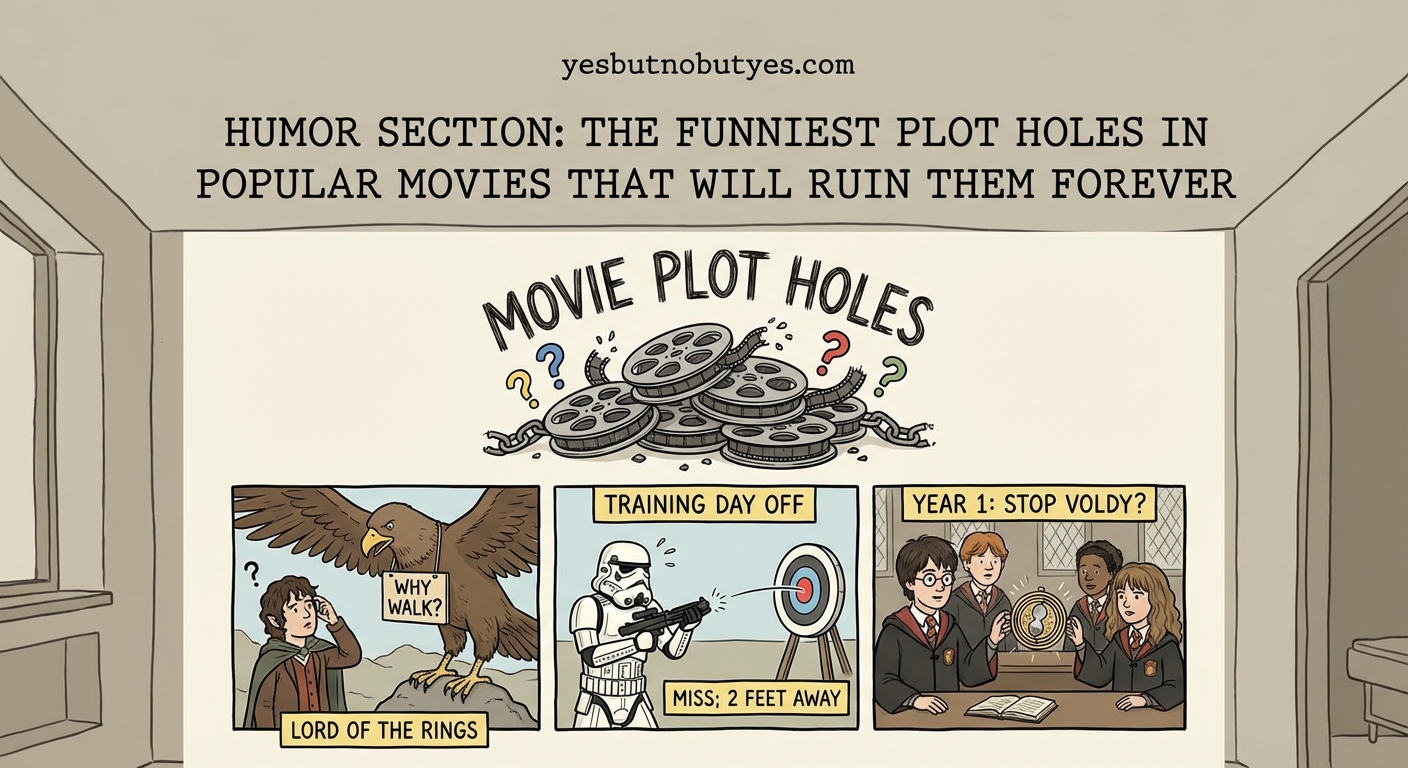
Once you learn these categories, you’ll spot them constantly. Sorry in advance for ruining movie night.
Timeline contradictions happen when the movie can’t keep track of its own chronology. Characters age incorrectly, events happen in impossible sequences, or the film forgets how much time has passed.
Character knowledge problems occur when someone knows information they couldn’t possibly have learned. The villain somehow knows the hero’s secret plan despite never being present when it was discussed.
Motivation vanishing acts leave characters abandoning their goals for no reason. Someone spends half the movie seeking revenge, then just… stops caring without explanation.
Here’s a breakdown of how these issues typically manifest:
| Plot Hole Type | What It Looks Like | Why It Happens |
|---|---|---|
| Timeline Issues | Events occur in impossible order | Multiple rewrites lose track of chronology |
| Knowledge Gaps | Characters know things they shouldn’t | Information needed for plot convenience |
| Forgotten Powers | Abilities disappear when needed most | Writers forget their own character abilities |
| Impossible Geography | Locations closer/farther than possible | Prioritizing pacing over spatial logic |
| Rule Breaking | Established laws suddenly don’t apply | Dramatic moments trump consistency |
How Screenwriters Accidentally Create These Messes
Most plot holes aren’t intentional. They’re the result of complex production processes where dozens of people make changes over months or years.
Script rewrites create the majority of problems. A writer removes a scene that explained something important, but forgets to add that explanation elsewhere. Now the audience is missing crucial information.
Multiple writers working on different drafts can contradict each other. Writer A establishes that magic doesn’t work on Tuesdays. Writer B never reads that draft and has the climax happen on a Tuesday using magic.
Production changes force last-minute adjustments. An actor becomes unavailable, a location falls through, or the budget gets cut. Solutions to these problems often create logical inconsistencies.
The best way to catch plot holes during writing is to track every character’s knowledge, location, and abilities on a timeline. If you can’t explain how they got from point A to point B with what they know, you’ve found your problem before audiences do.
Famous Examples That Will Change How You Watch These Films
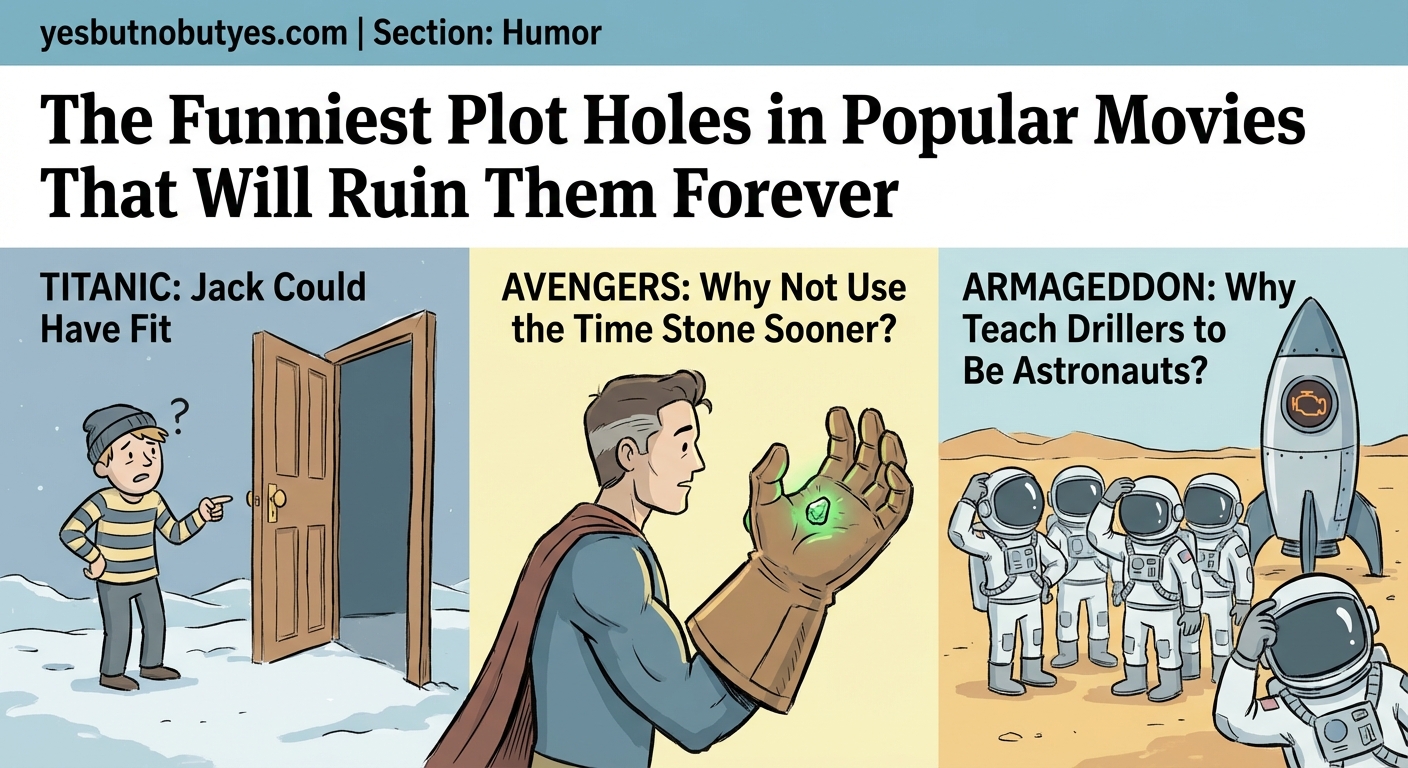
Let’s talk about some beloved movies with glaring issues that somehow made it past hundreds of professionals.
Back to the Future asks us to believe that Marty’s parents don’t recognize him as the teenager who got them together, despite him being involved in the most important week of their lives. Sure, it was 30 years ago, but he looks identical and has the same name.
The Dark Knight Rises features Bruce Wayne somehow traveling from a prison pit in an unspecified foreign location back to Gotham with no money, no resources, and no identification. The city is under complete lockdown with every bridge and tunnel monitored. He just… appears.
Armageddon would rather train oil drillers to be astronauts than train astronauts to drill. This bothered actual astronauts so much they’ve repeatedly pointed out how backward this logic is.
Indiana Jones and the Raiders of the Lost Ark has a famous one: Indy doesn’t actually affect the outcome. The Nazis would have found the ark, opened it, and died whether he was there or not. His entire adventure is technically pointless to the main plot.
These films remain entertaining despite their logical gaps. Sometimes the spectacle carries you past the inconsistencies. Sometimes you just don’t notice until someone points it out, and then you can never unsee it.
Why We Keep Watching Despite the Logic Fails
Plot holes don’t automatically ruin a movie. Some of the most beloved films have massive logical problems that audiences happily ignore.
Emotional engagement matters more than perfect logic. If you care about the characters, you’ll forgive a lot. If the action keeps you on the edge of your seat, you won’t pause to question the physics.
Suspension of disbelief has limits, but those limits vary by person. Some viewers can overlook almost anything if the movie entertains them. Others get pulled out of the story by tiny inconsistencies.
The difference between a forgivable plot hole and a movie-ruining one often comes down to how much the film asks you to invest in its internal logic. A silly comedy can get away with nonsense. A serious drama built on intricate plotting cannot.
Similar to why we laugh at things that shouldn’t be funny, our brains sometimes enjoy the disconnect between what should happen and what actually does.
How to Spot Plot Holes on Your First Watch
Developing an eye for inconsistencies doesn’t require film school. Just pay attention to a few key areas.
- Track character locations and timelines mentally, especially in movies with multiple storylines happening simultaneously
- Note when characters gain new information and ask yourself how they learned it
- Watch for established rules being broken, particularly in fantasy or science fiction settings
Listen for exposition that feels forced. When characters explain things to each other that they both already know, writers are often patching over a plot hole with clumsy dialogue.
Notice when conflicts resolve too easily. If the solution was always available, why didn’t characters use it earlier? There should be a reason they couldn’t access that option before.
Pay attention during action sequences. Filmmakers count on you being too distracted to notice logical problems during explosions and fight scenes.
The Art of Distinguishing Lazy Writing from Acceptable Shortcuts
Not every logical leap represents bad writing. Sometimes filmmakers make conscious choices to skip boring parts.
Acceptable shortcuts include:
– Characters arriving at destinations without showing the entire journey
– Time passing between scenes without accounting for every minute
– Background details that don’t affect the main story remaining unexplained
– Minor characters having thin motivations when they’re not central to the plot
Lazy writing shows up as:
– Major character decisions happening without motivation
– Central conflicts resolving through coincidence rather than character action
– Established rules being ignored when convenient
– Important information appearing from nowhere
The test is whether the shortcut serves the story or undermines it. Skipping a boring car ride makes sense. Having a character teleport to a location when teleportation isn’t possible in that universe does not.
What Filmmakers Could Do Better
Prevention beats correction. Catching these issues before cameras roll saves everyone headaches.
Script supervisors and continuity coordinators help, but they can’t fix fundamental story problems. Those need to be addressed at the writing stage.
Test screenings sometimes reveal plot holes that creators missed. Fresh eyes catch things that people too close to the project overlook. But by that point, fixes are expensive and limited.
Better communication between writers, directors, and editors would prevent many issues. When everyone understands the story’s internal logic and actively protects it, fewer contradictions slip through.
Some studios now employ “logic checkers” specifically to find plot holes during development. This role didn’t exist 20 years ago, showing that the industry recognizes the problem.
When Plot Holes Actually Improve the Experience
Counterintuitively, some plot holes become part of a film’s charm. Fans enjoy debating them, creating theories, and even celebrating the absurdity.
Cult classics often have massive logical problems that fans embrace rather than criticize. The room wouldn’t be nearly as entertaining if it made sense. The plot holes are part of the appeal.
Mystery boxes and ambiguous endings sometimes get accused of being plot holes when they’re actually intentional choices. Not explaining everything can be more satisfying than over-explaining.
Fan theories attempting to explain plot holes create engagement that lasts years beyond the film’s release. People still debate whether certain inconsistencies in classic movies were intentional or accidental.
The conversation around the most rewatchable movie scenes that never get old often includes moments that work despite not making perfect logical sense.
Separating Nitpicks from Deal Breakers
Your tolerance for plot holes is personal. What ruins a movie for one person barely registers for another.
Consider the genre and tone. A goofy comedy doesn’t need airtight logic. A complex thriller built on careful plotting does. Adjust your expectations accordingly.
Think about whether the hole affects the main story or just a minor detail. A background character’s impossible schedule matters less than the protagonist’s motivation disappearing.
Ask yourself if you noticed the problem while watching or only after reading about it online. Issues you catch in real time are more significant than ones you need pointed out.
Some viewers prefer catching plot holes because it makes them feel smart. Others prefer immersing themselves in the story. Neither approach is wrong.
Your New Superpower and Curse
Now that you understand how to identify plot holes in popular movies, you’ll notice them constantly. This knowledge is both a gift and a burden.
You’ll appreciate well-constructed stories more deeply when you recognize the effort required to avoid logical inconsistencies. You’ll also struggle to enjoy movies that you once loved but now see the flaws in.
The good news? You can choose how much to engage with this critical lens. Sometimes it’s fun to analyze and dissect. Other times you just want to enjoy the spectacle without thinking too hard.
Your viewing experience is yours to control. Use this knowledge when it enhances your enjoyment, and set it aside when it doesn’t. The best part about understanding storytelling mechanics is knowing when to appreciate the craft and when to just grab the popcorn and have fun.