Why Do We Laugh at Things That Shouldn’t Be Funny? The Science Behind Dark Humor
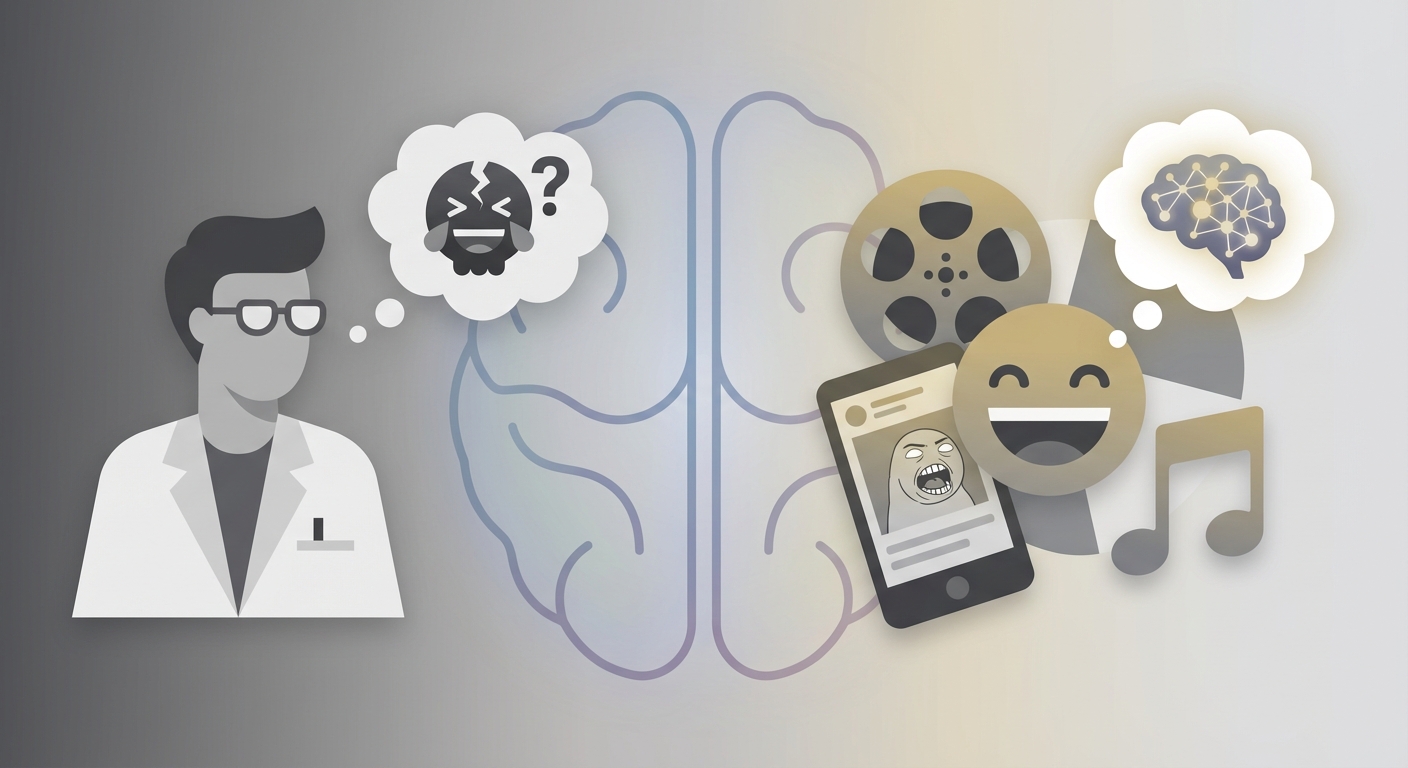
You’re scrolling through social media when a meme about tragedy pops up. Before you can stop yourself, you’re laughing. Then comes the guilt. What does it say about you that you found that funny? Are you a terrible person? The answer is more complicated and fascinating than you might think.
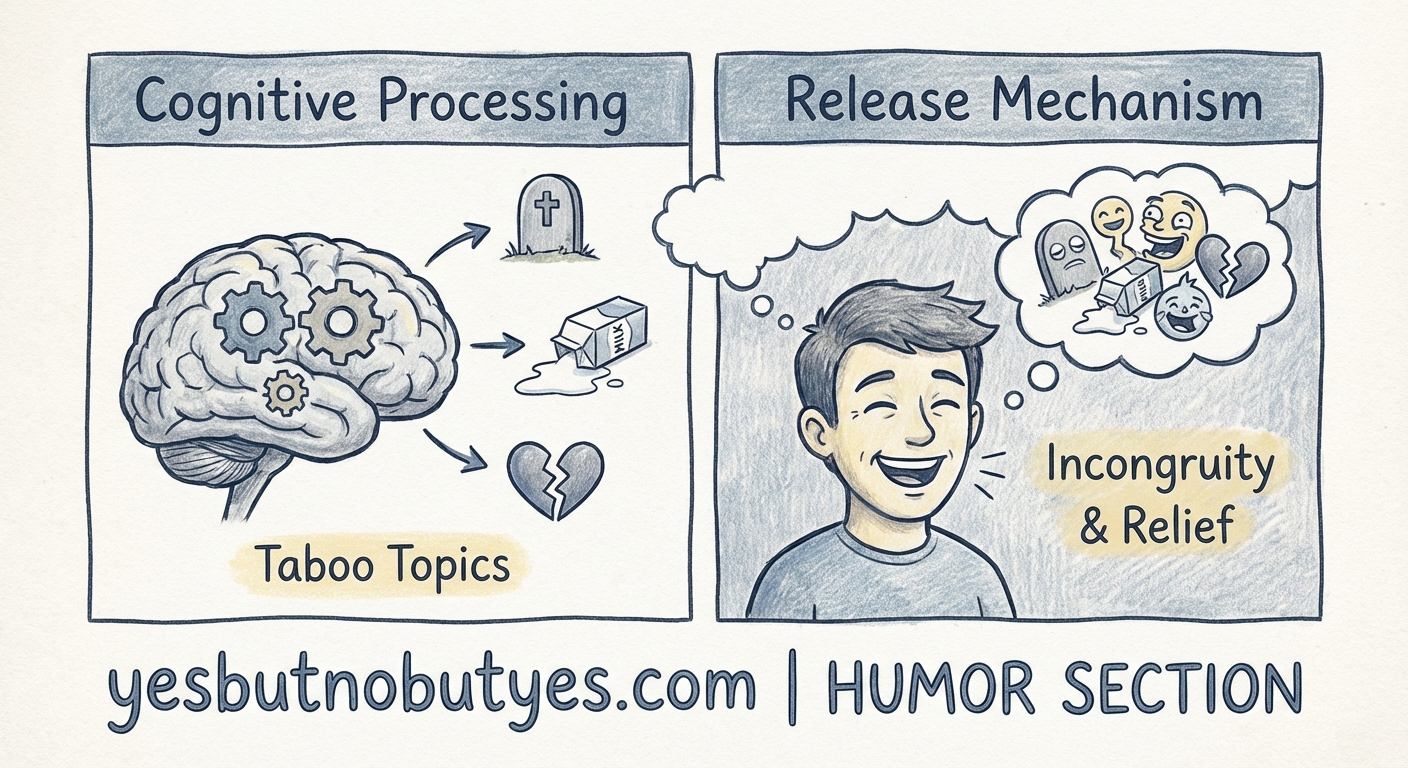
Dark humor activates our brain’s reward centers while simultaneously processing threatening content. We laugh at taboo topics because humor serves as a psychological defense mechanism, allowing us to confront difficult subjects from a safe emotional distance. This response involves complex interplay between cognitive processing, emotional regulation, and social bonding. Research shows that appreciating dark jokes correlates with higher intelligence and emotional stability, not moral deficiency.
Your Brain on Taboo Jokes
When you encounter dark humor, your brain performs a remarkable balancing act. The prefrontal cortex processes the incongruity between the setup and punchline. Meanwhile, the amygdala evaluates the threatening or taboo content. The nucleus accumbens, your brain’s reward center, lights up when you “get” the joke.
This neural juggling act happens in milliseconds. Your brain recognizes something is wrong or inappropriate. Then it reframes that wrongness as play rather than threat. The relief from that reframing triggers laughter.
Studies using fMRI scans show that people who enjoy dark humor display different activation patterns than those who don’t. Their brains show stronger engagement in areas associated with complex thinking and emotional regulation.
The key difference? People who laugh at dark humor can hold two contradictory ideas simultaneously. They recognize the tragedy while appreciating the comedic structure. This cognitive flexibility is actually a sign of sophisticated thinking.
The Benign Violation Theory
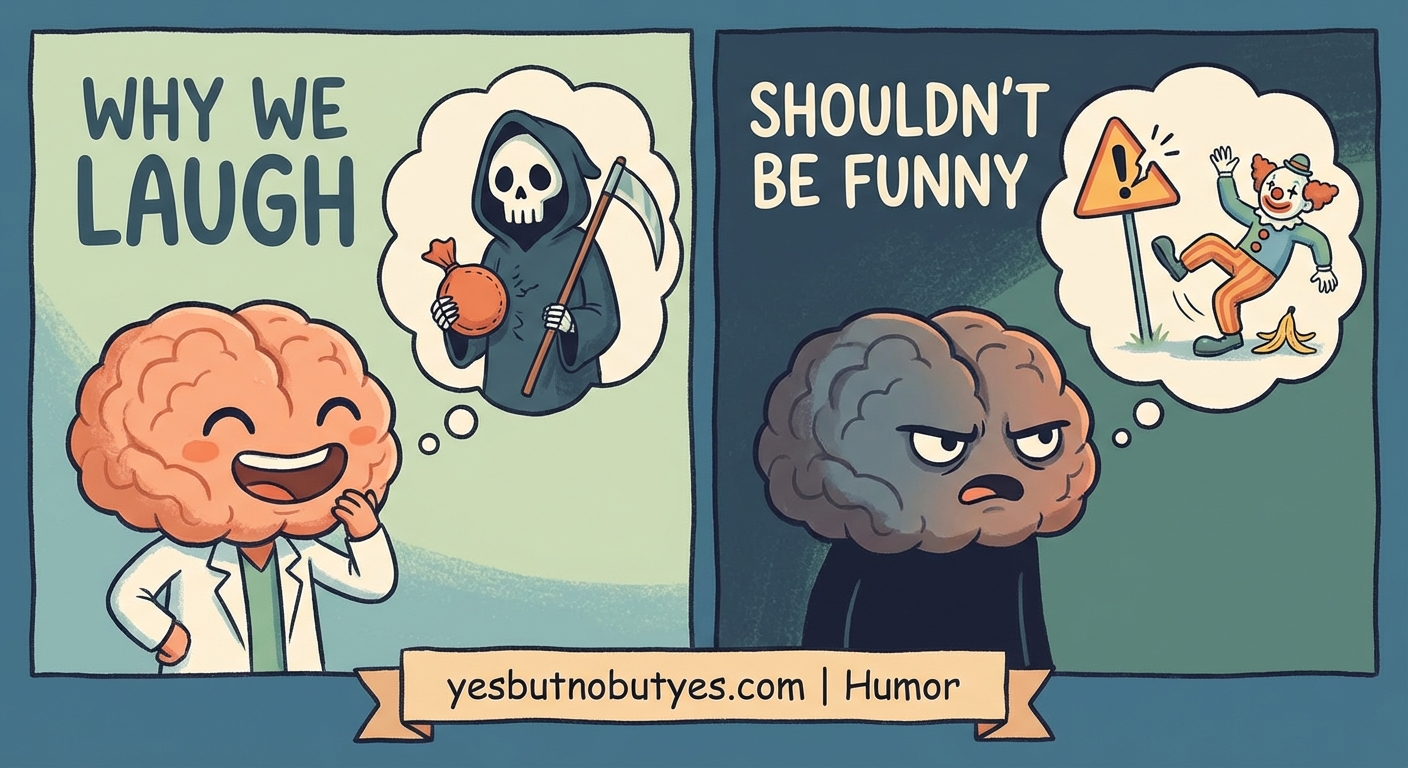
Psychologist Peter McGraw developed what he calls the benign violation theory. It explains why we find certain things funny and others offensive.
A violation is anything that threatens your sense of how the world should be. Death, disease, discrimination, all violations. But when a violation feels simultaneously wrong and okay, that’s where humor lives.
Dark humor works because it presents serious violations in a benign context. The joke format signals “this is play, not real threat.” Your brain can relax enough to find the pattern amusing.
Think about a comedian on stage making jokes about their own trauma. The stage creates psychological distance. The performance frame says “we’re safe here.” That distance transforms a genuine violation into a benign one.
The theory explains why the same joke can land differently depending on who tells it, where, and when. Context determines whether something crosses from benign violation into just plain violation.
Defense Mechanisms and Emotional Armor
Sigmund Freud argued that humor serves as a defense mechanism. Modern psychology backs this up with evidence.
When you laugh at something dark, you’re creating emotional distance from threatening material. This distance protects your psyche from being overwhelmed. Laughter becomes a pressure release valve for anxiety and fear.
Healthcare workers, first responders, and others in high stress professions often develop particularly dark senses of humor. They’re not callous. They’re coping.
Studies of emergency room staff show that those who use humor, including dark humor, report lower rates of burnout and compassion fatigue. The jokes help them process traumatic experiences without becoming emotionally paralyzed.
This coping mechanism isn’t limited to extreme professions. We all face mortality, illness, injustice, and loss. Dark humor lets us acknowledge these realities without drowning in despair.
“Humor is a socially acceptable way to discuss taboo topics. It allows us to confront our deepest fears in a framework that feels manageable. The laughter doesn’t mean we don’t care. It means we’re finding a way to care without breaking.” – Dr. Jennifer Aaker, Stanford University
Intelligence and Emotional Stability Markers
A 2017 study published in Cognitive Processing tested how people responded to dark humor cartoons. Researchers measured comprehension, appreciation, and emotional response.
People who both understood and enjoyed dark humor scored higher on verbal and nonverbal intelligence tests. They also showed lower aggression and negative mood scores.
The correlation makes sense. Understanding dark humor requires:
- Recognizing multiple layers of meaning
- Processing abstract concepts
- Maintaining emotional equilibrium while considering disturbing content
- Distinguishing between representation and endorsement
These are all markers of cognitive and emotional sophistication.
People with higher emotional stability can encounter dark topics without becoming destabilized. They don’t need to avoid or suppress uncomfortable ideas. This allows them to appreciate the comedic craft even when the subject matter is grim.
Conversely, the study found that people who understood dark jokes but didn’t find them funny often scored higher on aggression and bad mood scales. The comprehension without appreciation suggested different emotional processing.
Social Bonding Through Shared Transgression
Laughing at dark humor creates a unique social bond. You’re sharing a minor transgression. This builds trust and intimacy.
When someone tells a dark joke, they’re taking a social risk. If you laugh, you’re signaling that you’re on the same wavelength. You share similar boundaries and values about what can be discussed.
This bonding function explains why dark humor flourishes in tight knit groups. Military units, surgical teams, comedy writers’ rooms, all develop their own vocabularies of inappropriate jokes.
The shared laughter says “we understand each other in ways outsiders don’t.” It creates in-group cohesion.
But this same mechanism can become problematic. Dark humor can exclude or harm people who are the targets rather than the tellers. The line between bonding and bullying depends on power dynamics and consent.
The Superiority Theory Problem
Not all dark humor is created equal. Some operates on what philosophers call superiority theory. We laugh because we feel superior to the joke’s target.
This type of humor punches down. It mocks vulnerable groups or individuals in weaker positions. The laughter comes from feeling better than someone else.
Superiority based dark humor often masquerades as edgy or brave. But it’s actually the laziest form of comedy. It requires no clever construction, just cruelty.
Contrast this with dark humor that punches up or inward. Comedians who joke about their own trauma or challenge powerful institutions use darkness differently. They’re not asserting superiority. They’re creating solidarity or speaking truth.
The difference matters. One type of dark humor fosters empathy and resilience. The other reinforces harmful hierarchies.
When Dark Humor Becomes a Red Flag
Most people who enjoy dark humor are psychologically healthy. But sometimes dark humor can signal problems.
Using dark humor constantly, especially about your own life, might indicate avoidance. If someone only discusses their trauma through jokes, they might not be processing it properly.
Dark humor that consistently targets one group, especially a marginalized group, can reveal underlying prejudice. The “it’s just a joke” defense doesn’t hold when the pattern shows genuine hostility.
Inability to read social context is another warning sign. Someone who tells dark jokes at funerals or to people they just met isn’t demonstrating sophisticated humor. They’re showing poor social awareness.
Here’s a simple framework for evaluating dark humor:
| Healthy Dark Humor | Problematic Dark Humor |
|---|---|
| Creates emotional distance from universal fears | Targets specific vulnerable groups |
| Punches up or inward | Punches down consistently |
| Reads social context appropriately | Ignores audience discomfort |
| Balances with other emotional expressions | Only mode of discussing serious topics |
| Builds solidarity | Creates division or harm |
Cultural and Individual Differences
What counts as dark varies dramatically across cultures. Death jokes that seem morbid in one culture might be standard fare in another.
Mexican Day of the Dead celebrations include playful skeleton imagery and jokes about mortality. This reflects different cultural attitudes about death compared to cultures where death is more taboo.
British humor often skews darker than American humor. Scandinavian comedy frequently goes places that would shock other audiences. These aren’t defects. They’re cultural differences in how humor functions.
Individual variation matters too. Your personal history shapes what feels funny versus painful.
Someone who lost a parent to cancer might find cancer jokes unbearable. Or they might find them cathartic. There’s no universal rule. Personal experience creates unique sensitivities.
Age also plays a role. Younger people often find dark humor funnier. This might reflect less direct experience with tragedy. Or it might reflect different coping needs during identity formation.
The Neuroscience of Getting the Joke
Understanding why we laugh at dark humor requires looking at joke comprehension itself.
- Your brain encounters the setup and forms expectations
- The punchline violates those expectations in a surprising way
- Your brain rapidly reprocesses the information with the new context
- The successful reprocessing triggers a reward response
- Laughter emerges as the physical expression of that reward
With dark humor, step three includes an additional element. You’re not just reprocessing for logical incongruity. You’re also reframing emotional threat as play.
This extra cognitive step is why dark humor feels different from other joke types. Your brain is working harder. The payoff when you “get it” feels more significant.
Neurotransmitters flood your system. Dopamine creates pleasure. Endorphins reduce stress. Serotonin improves mood. You’re getting a chemical reward for successfully processing threatening information in a safe context.
This neurochemical response reinforces the behavior. Your brain learns that it can handle dark topics through humor. This builds psychological resilience over time.
Common Misconceptions About Dark Humor
Let’s clear up some myths:
- Myth: Laughing at dark humor means you lack empathy
-
Reality: Research shows no correlation between dark humor appreciation and reduced empathy
-
Myth: Dark humor is always inappropriate
-
Reality: Context determines appropriateness, not content alone
-
Myth: Only cynical or depressed people like dark humor
-
Reality: Dark humor appreciation correlates with emotional stability, not instability
-
Myth: Dark humor is a modern phenomenon
-
Reality: Gallows humor and dark comedy have existed throughout human history
-
Myth: Enjoying dark humor means endorsing the dark content
- Reality: Appreciating comedic structure is separate from agreeing with subject matter
Why Some People Don’t Find It Funny
Not everyone laughs at dark humor. That’s completely normal and doesn’t indicate a deficiency.
Some people have strong disgust responses that override the humor processing. Their brains prioritize the violation over the benign framing.
Others have personal experiences that make certain topics too raw. The emotional proximity prevents the psychological distance needed for humor.
Some individuals simply prefer different humor styles. They might enjoy wordplay, physical comedy, or observational humor more than transgressive jokes.
Cultural and religious backgrounds also shape humor preferences. If you’re raised in an environment where certain topics are strictly off limits, those boundaries often persist.
None of these reasons make someone less intelligent or sophisticated. They just reflect different cognitive and emotional wiring.
Practical Applications of Understanding Dark Humor
Knowing why we laugh at dark humor has real world benefits:
- Better self understanding: You can stop feeling guilty about your sense of humor
- Improved social navigation: You can better judge when dark humor is appropriate
- Enhanced empathy: You can understand why others react differently to the same joke
- Stress management: You can consciously use humor as a coping tool
- Creative expression: You can craft or appreciate comedy more thoughtfully
Understanding the mechanism also helps you identify when dark humor crosses into harmful territory. You can distinguish between sophisticated transgression and lazy cruelty.
The Evolution of Acceptable Darkness
What society considers acceptable dark humor constantly shifts. Jokes that killed in the 1970s might bomb today. Topics that were untouchable then might be fair game now.
This evolution reflects changing social values and power structures. As marginalized groups gain voice and visibility, humor that mocked them becomes less acceptable.
Meanwhile, previously sacred topics like religion or patriotism become more available for comedic treatment in increasingly secular, pluralistic societies.
The shifting boundaries don’t mean people are more or less sensitive. They mean the social contract around humor is renegotiating itself constantly.
Good comedians read these shifts and adjust. They find new edges to push without simply recycling old prejudices.
Making Peace With Your Dark Side
If you laugh at dark humor, you’re not broken. You’re human.
Your brain is doing exactly what evolution designed it to do. It’s processing threats, building resilience, and creating social bonds. The laughter is a feature, not a bug.
You can enjoy dark humor while still being a kind, empathetic person. The two aren’t mutually exclusive. In fact, the ability to laugh at darkness often indicates you’re psychologically healthy enough to confront it.
Pay attention to context. Consider impact. Think about who’s telling the joke and who might hear it. But don’t torture yourself with guilt over finding something funny.
Your sense of humor is part of how you navigate a world that includes genuine tragedy and loss. Laughter doesn’t mean you don’t care. Sometimes it means you care enough to keep going anyway.