Why Gen Z Is Bringing Back Y2K Fashion and Everyone Else Is Confused
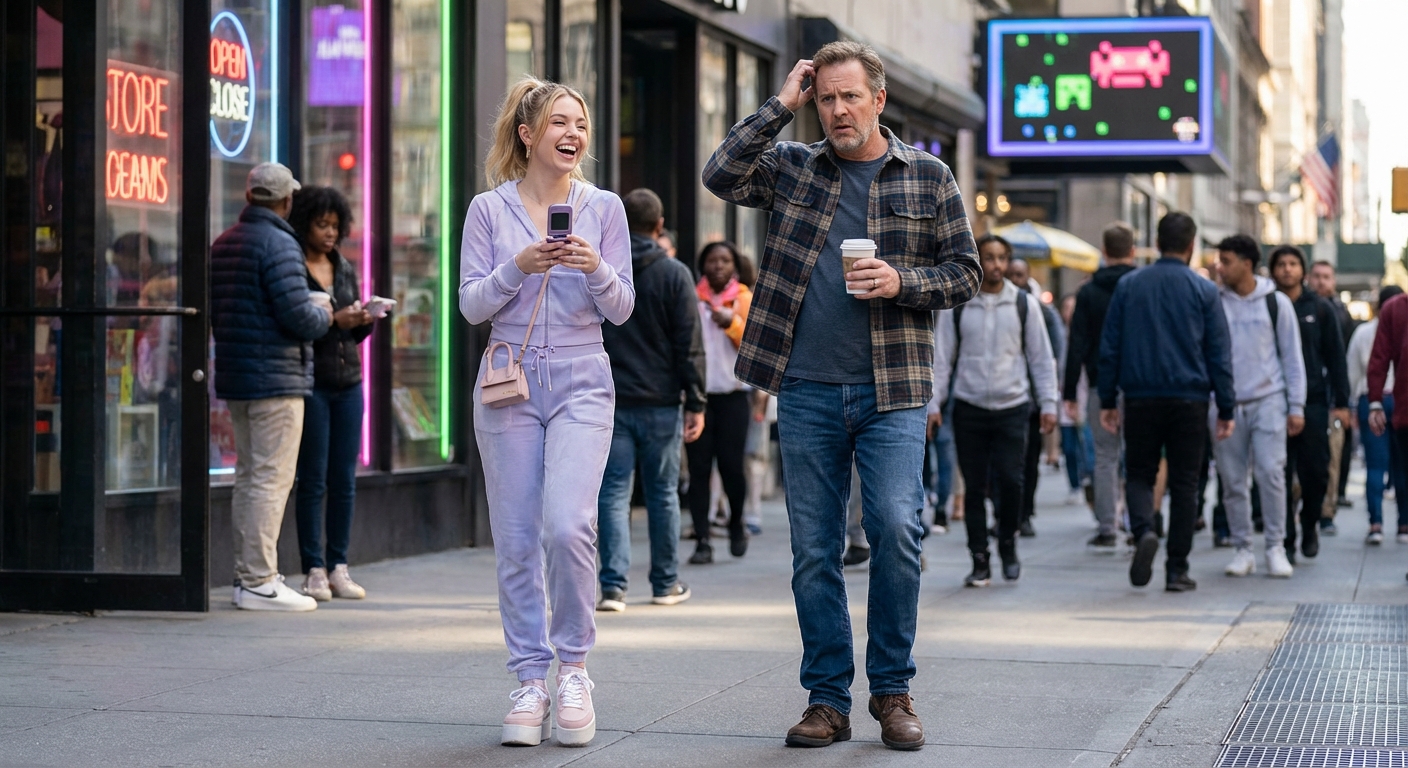
Low-rise jeans are back. Butterfly clips are everywhere. Velour tracksuits are selling out faster than you can say “Paris Hilton.” If you’re a millennial watching this unfold, you might be experiencing a strange mix of horror and déjà vu. The very styles you worked so hard to leave behind in 2009 are now the height of cool, and Gen Z is leading the charge with an enthusiasm that feels almost personal.
Gen Z’s Y2K fashion obsession combines nostalgia for an era they barely remember, the visual appeal of maximalist aesthetics on social media platforms, rejection of minimalist trends, and a desire to reclaim pre-recession optimism. The trend thrives because early 2000s styles photograph exceptionally well, offer affordable thrifting opportunities, and represent a rebellion against the corporate minimalism that dominated the 2010s.
Nostalgia for an era they never fully experienced
Here’s the paradox: most Gen Z kids wearing baby tees and cargo pants were either toddlers or not yet born during the actual Y2K era. Yet they’re drawn to it with an intensity that rivals any millennial’s 90s obsession.
This secondhand nostalgia isn’t random. The early 2000s represent the last moment before smartphones dominated every interaction, before social media anxiety became universal, and before the 2008 financial crisis reshaped economic expectations. For Gen Z, who grew up during economic uncertainty and constant digital connectivity, the Y2K era looks like a simpler, more optimistic time.
The fashion reflects that optimism. Bright colors, playful accessories, and unapologetic femininity defined the era. Everything felt possible, from bedazzled flip phones to trucker hats worn without irony. Gen Z is gravitating toward that energy because their formative years were marked by very different vibes: climate anxiety, political polarization, and pandemic isolation.
They’re not trying to recreate 2003 accurately. They’re cherry-picking the fun parts and remixing them through a modern lens. The result is Y2K aesthetics filtered through current sensibilities, creating something familiar yet distinctly new.
Social media made Y2K fashion go viral
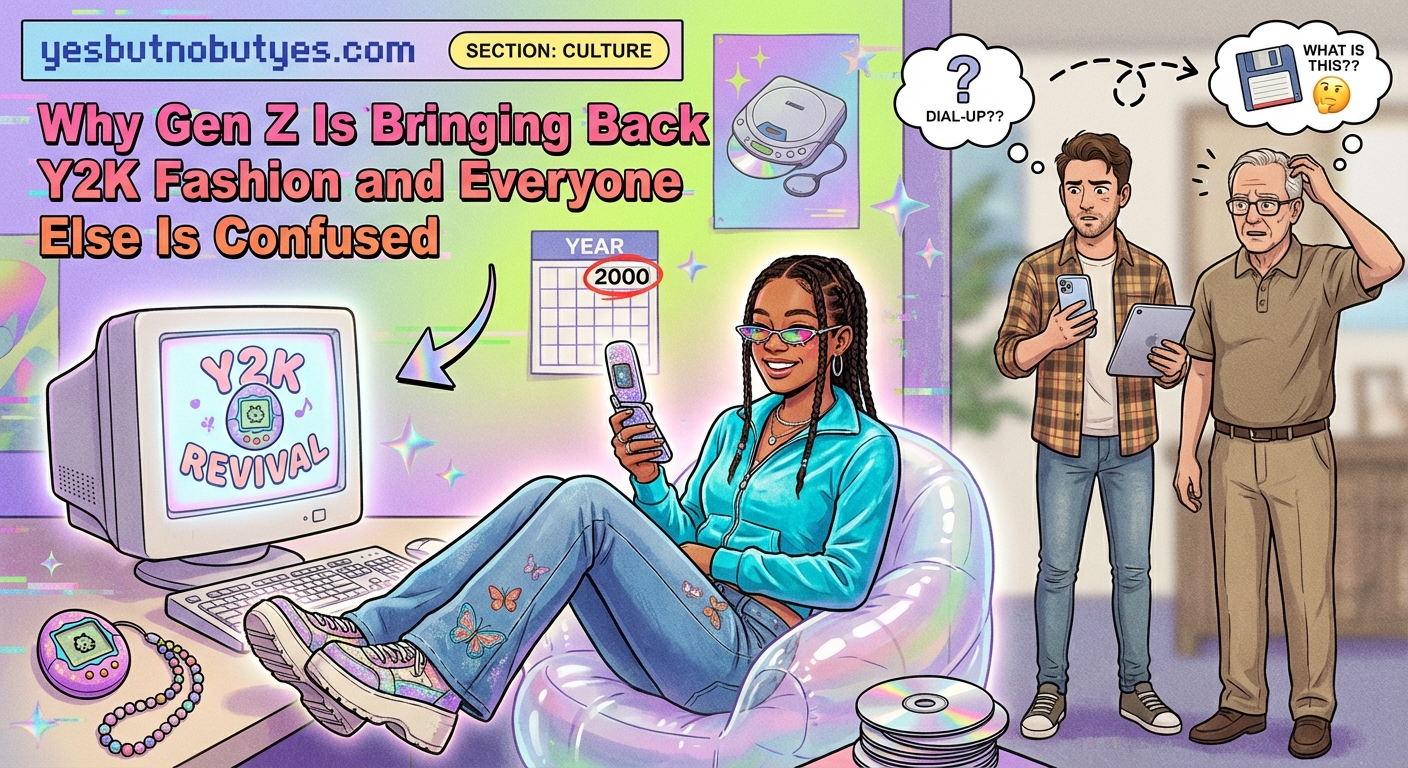
TikTok didn’t just amplify the Y2K trend. It fundamentally changed how fashion trends spread and who gets to dictate them.
Traditional fashion cycles used to take years. Designers would show collections, magazines would photograph them, retailers would produce cheaper versions, and eventually styles would trickle down to everyday consumers. That process took 18 to 24 months minimum.
Now a teenager can post a thrifted Von Dutch hat on TikTok Tuesday morning, and by Friday evening, thousands of people are searching for similar items. The algorithm rewards visually striking content, and Y2K fashion delivers exactly that.
Consider what photographs well on social media:
- Bold colors that pop against any background
- Distinctive silhouettes that read clearly in short videos
- Recognizable logos and graphics that signal specific aesthetics
- Playful accessories that add movement and personality
Early 2000s fashion checks every box. A pink Juicy Couture tracksuit is infinitely more visually interesting than the millennial uniform of skinny jeans and a plain tee. Chunky platform sandals create better content than minimalist white sneakers.
The virality creates a feedback loop. Someone posts Y2K content, it performs well, others create similar content, the algorithm pushes it further, and suddenly an entire generation is convinced they need low-rise jeans.
Rebelling against millennial minimalism
Gen Z didn’t just randomly choose Y2K fashion. They’re actively rejecting the aesthetic that dominated the 2010s, which millennials championed with religious fervor.
Millennial fashion became synonymous with minimalism: capsule wardrobes, neutral color palettes, “investment pieces,” and the idea that less is more. Brands like Everlane built entire business models around this philosophy. Instagram feeds became seas of beige, white, and gray.
For Gen Z, that minimalism feels boring, pretentious, and frankly, dishonest. Why pretend to be effortlessly chic when you could just have fun with fashion? Why spend $200 on a “timeless” white tee when you could thrift an entire outfit for $30?
Y2K fashion represents everything minimalism isn’t:
- Maximalist instead of restrained
- Playful instead of serious
- Accessible instead of aspirational
- Expressive instead of uniform
There’s also an element of generational rebellion. Every generation defines itself partly by rejecting what came before. Millennials rejected the corporate formality of Gen X. Gen Z is rejecting millennial good taste.
The backlash against “girlboss” culture plays into this too. The polished, professional minimalist aesthetic was tied to a specific kind of female ambition that Gen Z finds exhausting and inauthentic. Y2K fashion, with its embrace of hyper-femininity and frivolity, feels like a middle finger to that entire ideology.
The economics of thrifting and sustainability
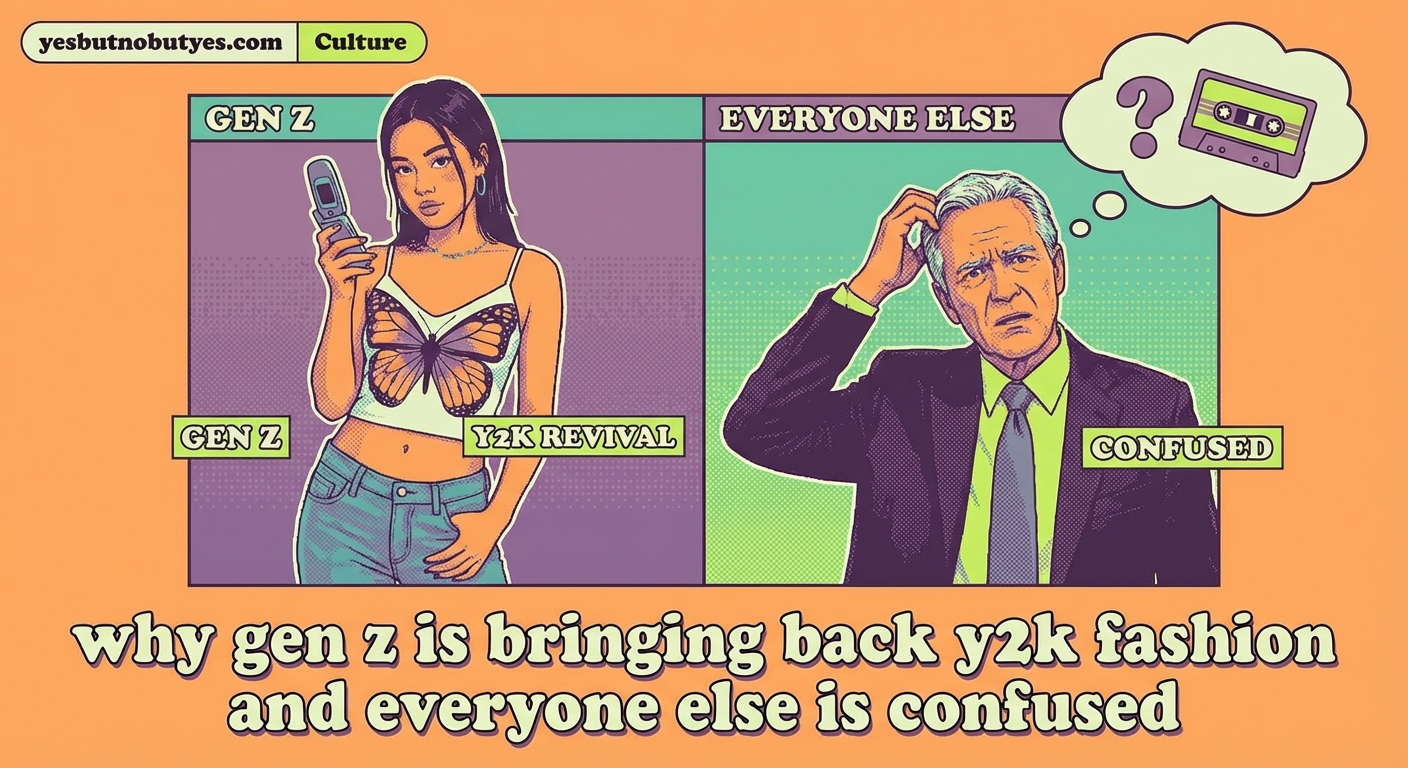
Y2K fashion revival coincides perfectly with Gen Z’s economic reality and environmental concerns. These aren’t separate factors; they’re deeply interconnected.
Actual Y2K pieces are abundant in thrift stores and online resale platforms. Millennials donated their early 2000s wardrobes years ago, creating a massive supply of affordable vintage options. A Gen Z kid can build an entire Y2K wardrobe for less than the cost of two pairs of trendy jeans from a fast fashion retailer.
This matters because Gen Z has less disposable income than millennials did at the same age. They’re also more skeptical of traditional retail and more comfortable with secondhand shopping. Thrifting isn’t a last resort; it’s a first choice.
The sustainability angle provides moral justification for the aesthetic preference. Buying vintage means not contributing to fast fashion’s environmental impact. It’s fashion activism that also happens to look cool on TikTok.
Here’s how the economics break down:
| Item Type | Fast Fashion Price | Thrifted Y2K Price | Value Proposition |
|---|---|---|---|
| Graphic tee | $25-40 | $5-15 | Unique designs, better quality |
| Low-rise jeans | $60-90 | $10-25 | Authentic vintage fit |
| Mini skirt | $35-50 | $8-20 | Better construction |
| Accessories | $15-30 each | $2-10 each | Distinctive, conversation starters |
The math makes sense even before you factor in the cool factor of wearing actual vintage pieces instead of reproductions.
Media representation and celebrity influence
Gen Z’s relationship with Y2K culture is heavily mediated through retrospective content. They’re not remembering the era; they’re discovering it through curated highlights.
YouTube video essays analyzing early 2000s pop culture rack up millions of views. Podcasts dissect the careers of Britney Spears, Paris Hilton, and Lindsay Lohan with academic seriousness. Netflix documentaries reexamine the media treatment of young female celebrities during that period.
This retrospective lens lets Gen Z appreciate Y2K aesthetics without the baggage that millennials carry. They see the fashion without remembering the problematic diet culture, the casual misogyny, or the relentless body shaming that accompanied it.
Celebrities who lived through the era are also reembracing it, but with more agency this time. Paris Hilton has reframed her persona from punchline to savvy businesswoman. Britney Spears’ conservatorship battle made her a symbol of autonomy and resistance. These narratives make Y2K fashion feel empowering rather than frivolous.
Current celebrities are leaning into the trend too. Bella Hadid wears low-rise jeans. Dua Lipa channels 2000s glamour. Olivia Rodrigo’s aesthetic pulls heavily from that era. When your favorite artists embrace a look, it becomes aspirational.
“Y2K fashion lets us play with femininity on our own terms. We can wear the baby tees and low-rise jeans without the toxic diet culture that came with them the first time around. We’re reclaiming the fun parts and leaving the rest behind.” – Fashion commentator analyzing Gen Z’s approach to vintage trends
The role of irony and sincerity
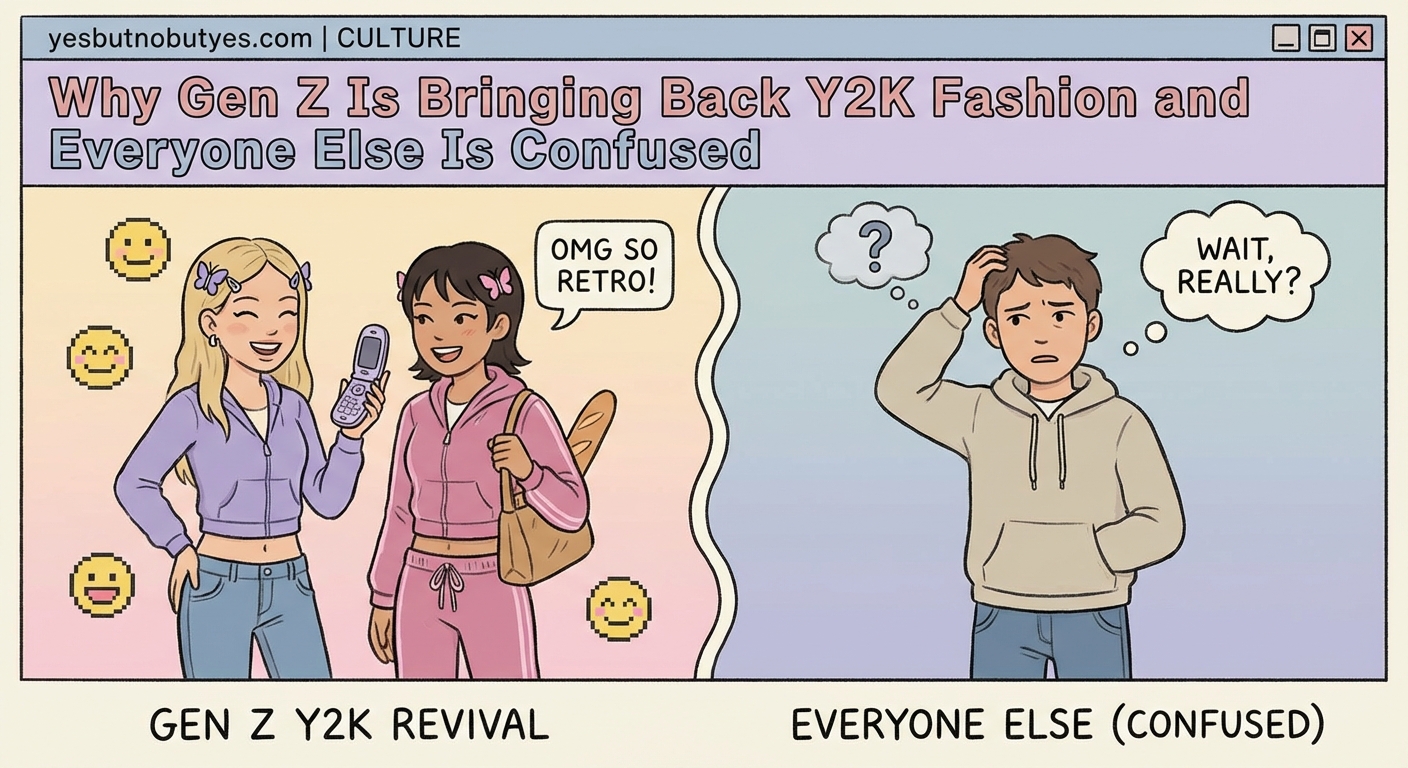
One of the most fascinating aspects of Gen Z’s Y2K obsession is how they navigate irony and sincerity simultaneously.
Are they wearing Von Dutch hats ironically? Yes and no. The answer is both at the same time, which older generations find confusing but Gen Z navigates effortlessly.
This generation grew up extremely online, fluent in multiple layers of meaning and context. They can genuinely love something while also being aware of its ridiculousness. They can wear a Juicy Couture tracksuit because it’s fun and looks good, while also acknowledging the absurdity of $200 velour pants.
This ironic sincerity (or sincere irony) protects them from criticism. If someone mocks their fashion choices, they can claim it was always a joke. If someone accuses them of not taking it seriously, they can point to their genuine appreciation for the aesthetics.
Millennials struggled with this concept because their irony was more defensive. Liking something “ironically” was a way to enjoy guilty pleasures without admitting you actually enjoyed them. Gen Z has moved past that anxiety. They’re comfortable liking things without justification.
This attitude extends to how they mix Y2K pieces with modern elements. They’ll pair low-rise jeans with a contemporary crop top, or wear butterfly clips with a minimalist blazer. The combinations would have been unthinkable in the actual early 2000s, but they work now because the rules are different.
How the trend actually manifests
Understanding why Gen Z loves Y2K fashion is one thing. Seeing how they actually wear it reveals important distinctions from the original era.
Here are the most popular Y2K elements making a comeback:
- Low-rise bottoms (jeans, skirts, cargo pants) worn higher on the hips than they were originally
- Baby tees and fitted tops, often layered or styled differently than the 2000s versions
- Chunky shoes (platforms, thick sneakers, square-toe heels) that photograph dramatically
- Tiny bags that hold nothing but look perfect in photos
- Visible thongs and bra straps, now styled as intentional fashion statements
- Velour tracksuits, usually in brighter colors than the original Juicy options
- Butterfly and claw clips used as actual styling tools, not just functional accessories
- Logo-heavy pieces from brands like Ed Hardy, Baby Phat, and Rocawear
The key difference is intentionality. In the actual early 2000s, these trends emerged organically from celebrity culture and designer runways. Now they’re being deliberately recreated with full awareness of their cultural significance.
Gen Z also tends to style Y2K pieces with more body positivity and inclusivity. The original era was notoriously narrow in its beauty standards. The revival includes more size diversity, gender fluidity, and racial representation.
Why this confuses everyone else
Millennials watching this trend have complicated feelings, and for good reason.
Many spent years trying to forget their early 2000s fashion choices. The photos are still out there on Facebook, documenting every regrettable outfit. Seeing those same styles celebrated feels like being told your teenage mistakes were actually cool all along.
There’s also frustration about timing. Millennials got mocked for wearing these trends the first time. Now Gen Z wears the same things and gets praised for being fashion-forward. It feels unfair, even if that reaction is somewhat petty.
Older generations find the whole thing baffling. To them, the early 2000s were yesterday. How can something from 20 years ago be vintage? When did we get old enough for our youth to be retro?
The confusion also stems from not understanding how social media changed fashion cycles. Previous generations experienced trends as slow-moving waves. Gen Z experiences them as rapid-fire content cycles where something can become popular, peak, and feel dated within months.
The deeper cultural meaning
Strip away the crop tops and low-rise jeans, and Gen Z’s Y2K obsession reveals something more significant about their generation’s values and anxieties.
They’re drawn to an era that felt optimistic and unserious because their own era feels neither of those things. Growing up during economic instability, climate crisis, and political chaos makes the frivolity of early 2000s fashion appealing as escapism.
The trend also represents a rejection of the idea that fashion needs to be practical, timeless, or investment-worthy. Those concepts are rooted in scarcity mindset and aspirational consumption. Gen Z would rather have fun now than build a capsule wardrobe for a stable future that feels increasingly unlikely.
There’s power in reclaiming aesthetics that were used to mock and demean young women. Paris Hilton was treated as a joke. Britney Spears was exploited. The fashion associated with them was dismissed as vapid. By embracing those styles now, Gen Z is rewriting that narrative.
The Y2K revival is also about accessibility and democracy in fashion. You don’t need money or connections to participate. You just need a thrift store and a TikTok account. That’s radically different from the gatekept fashion world of previous decades.
Where the trend goes from here
Fashion trends don’t last forever, but their impact can reshape how we think about style for years afterward.
The Y2K revival has already accomplished something significant: it broke the minimalist monopoly on good taste. Fashion is more diverse and playful now than it was five years ago. Even people who don’t wear Y2K styles directly have been influenced by the shift toward more expressive, individualistic dressing.
Some elements will stick around longer than others. Low-rise jeans might fade again (many people find them genuinely uncomfortable), but the embrace of color, pattern, and personality in fashion will likely persist.
The trend is also training a generation to see fashion as cyclical and remixable rather than linear and progressive. That mindset will influence how they approach future trends and develop their personal style as they age.
Brands are paying attention too. Major retailers have released Y2K-inspired collections, though Gen Z generally prefers authentic vintage pieces to corporate reproductions. The trend has proven there’s appetite for maximalism, color, and fun in fashion, which will influence design directions for years.
Fashion as generational conversation
Y2K fashion isn’t just about clothes. It’s Gen Z’s way of processing their relationship with the past, asserting their identity against millennial culture, and finding joy in uncertain times.
Every generation uses fashion to signal who they are and what they value. Gen Z’s choice to embrace an era they barely remember says something profound about their desire for optimism, their comfort with irony, and their rejection of the serious, minimalist, girlboss culture that defined the 2010s.
Whether you love the trend or find it baffling, it’s worth understanding the deeper currents driving it. Fashion is never just fashion. It’s always a conversation about identity, values, and the times we live in. Gen Z is speaking loud and clear through their butterfly clips and low-rise jeans. The rest of us just need to listen.