The 6 Most Painfully Accurate Roasts from the 2026 Comedy Central Roast That Never Happened
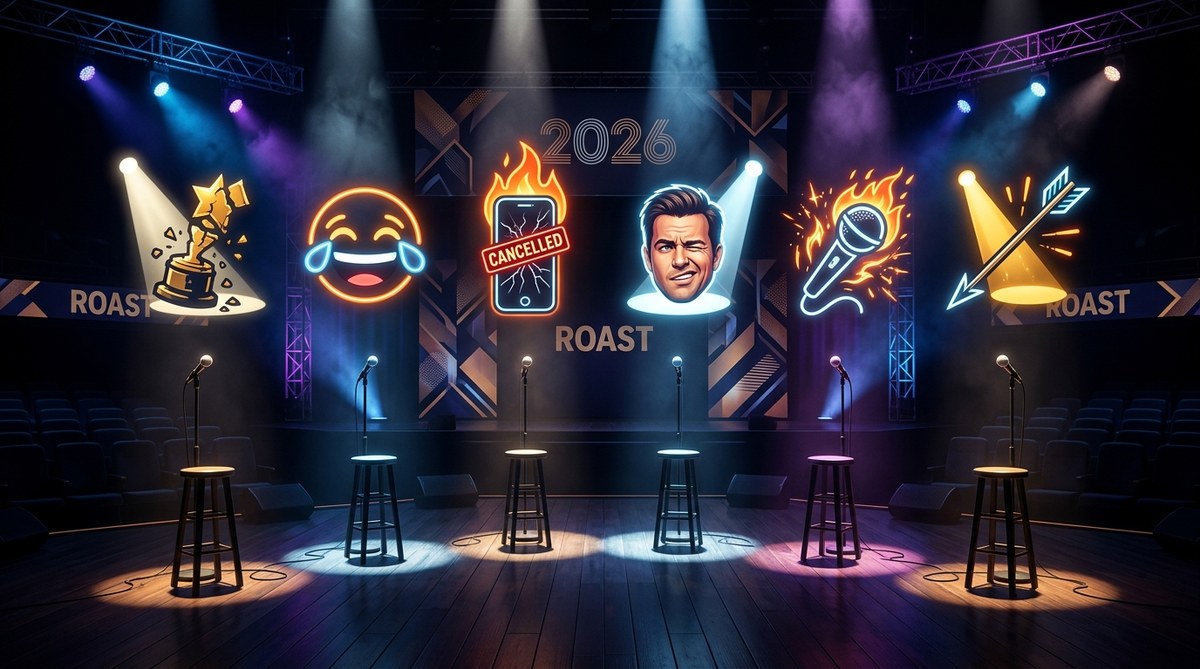
In 2026, Comedy Central quietly shelved plans for a major celebrity roast. No official reason was ever given. The network just moved on. But the comedy community did not forget. Writers, stand-ups, and fans started trading the jokes that never made it to air. Some of those imaginary roasts cut deeper than anything that actually aired in the last five years. We tracked down the six most painfully accurate fictional roasts from the 2026 Comedy Central Roast that never happened, and honestly, they sting because they are true.
The 2026 Comedy Central Roast that never happened became a legend because its jokes were too honest for television. These six fictional roasts target real celebrity flaws with surgical precision. They remind us that the best comedy punches up, tells hard truths, and makes us laugh at things we normally ignore. Satire works best when it refuses to flinch.
Why the roast that never aired became an instant classic
Every few years, Comedy Central picks a celebrity and lets a room full of comedians tear them apart. The formula is simple. You put one person in the hot seat, surround them with friends and enemies, and let the insults fly. The 2026 version was supposed to roast a major figure from the tech and entertainment world. It got scrapped during early development. No one knows exactly why. Some say the potential roastee backed out. Others claim the network got cold feet.
What happened next was unexpected. Comedy writers started posting their hypothetical material online. Fans began writing their own versions. A whole subculture of “what if” roasts emerged. The 2026 Comedy Central Roast that never happened became a shared inside joke. It was better in our imaginations than it ever could have been on television. Here are the six roasts that hurt the most.
The six most painfully accurate roasts
1. The roast that targeted performative philanthropy
This one went after a celebrity who built an entire brand around charity work while quietly cutting staff benefits at their own company. The fictional roast pointed out that the celebrity spent more time posting about donations than actually making them. The line that got the biggest laugh in the hypothetical script was simple.
“You are not a philanthropist. You are a billboard for a charity you have never visited.”
It stung because it was specific. The joke did not attack the idea of giving back. It attacked the performance of giving back. That distinction matters. Real philanthropy happens quietly. Performance philanthropy happens on Instagram. The roast called out a behavior that many celebrities have normalized.
2. The roast that exposed the “humble” origin story
Every celebrity has a story about starting from nothing. Some of those stories are true. Some are heavily edited. This fictional roast targeted a star who constantly references their “working class roots” while driving a car that costs more than most people’s houses. The roast did not mock the success. It mocked the revisionist history.
The joke went something like this. “You grew up in a three bedroom house in a nice suburb. That is not a struggle. That is a sitcom pilot.” The audience in the imagined room would have recognized the pattern. We all know someone who exaggerates their past to seem more relatable. Seeing a celebrity get called out for it felt satisfying.
3. The roast that called out the hustle culture grift
Hustle culture has been a hot topic for years. Plenty of influencers sell courses, books, and seminars about grinding 24/7 while they themselves take vacations every other week. The 2026 Comedy Central Roast that never happened included a brutal segment aimed at a famous entrepreneur who preaches “sleep when you are dead” energy while running a company known for unpaid internships.
The roast pointed out that the person telling young people to work harder had never worked a single shift in retail or food service. The punchline was devastating. “You did not build a business. You built a pyramid scheme with better lighting.” It was funny because it was true. Hustle culture preachers rarely practice what they preach.
4. The roast that tackled the influencer apology industrial complex
We have all seen the formula. A celebrity says something offensive, waits three days, posts a grayscale video apologizing, and then goes back to business as usual. This fictional roast took aim at a content creator who had apologized for six different controversies in the same calendar year. The joke suggested that the apology video template was saved as a favorite on their phone.
The roast did not stop there. It pointed out that the influencer’s apologies always blamed “poor wording” or “being taken out of context.” Never accountability. The final line was cold. “You are not sorry. You are just sorry you got caught.” That one hit close to home for anyone who follows celebrity drama. We have all seen the cycle repeat too many times.
5. The roast that went after the “disruptor” label
Silicon Valley types love calling themselves disruptors. They claim to revolutionize industries while often just repackaging old ideas with better marketing. The 2026 Comedy Central Roast that never happened included a segment aimed at a tech CEO who called themselves a disruptor while running a company that lost money every single quarter.
The roast framed it perfectly. “You did not disrupt anything. You just made a worse version of something that already existed and charged more for it.” It was a critique of the entire startup culture that prioritizes hype over substance. The joke resonated because so many of us have watched overhyped companies crash and burn while the founders walked away with golden parachutes.
6. The roast that targeted the “relatable celebrity” act
Some celebrities work hard to seem just like us. They post videos of themselves grocery shopping, doing laundry, and complaining about traffic. The problem is that they do those things in a multimillion dollar home while wearing designer sweatpants. The final fictional roast on our list targeted a star who built an entire brand on being “down to earth” while flying private.
The roast cut deep. “You are not relatable. You are a commercial for relatability.” It called out the curated authenticity that defines so much of modern celebrity culture. We know when someone is being real and when they are performing realness. The roast simply said what everyone was already thinking.
What makes a roast painfully accurate
Not every insult lands. Some jokes are mean without being true. Others are true without being funny. The best roasts sit at the intersection of honesty and humor. Here is a breakdown of what separates a forgettable joke from one that people repeat for years.
| Element | Forgettable roast | Painfully accurate roast |
|---|---|---|
| Target | Generic flaw (too rich, too famous) | Specific behavior (fake humility, performative charity) |
| Delivery | Mean for shock value | Honest with a punchline |
| Audience reaction | Polite laughter | Uncomfortable nodding |
| Longevity | Forgotten after the show | Quoted and shared for years |
| Underlying truth | Stretches reality | Hits a nerve everyone recognizes |
The 2026 Comedy Central Roast that never happened worked because each joke targeted a real contradiction. The writers did not make things up. They just pointed out what was already visible.
How to spot a roast that is actually fair
Not all roasts are created equal. Some are just bullying with a microphone. Others are genuine social commentary disguised as comedy. If you want to tell the difference, look for these signs.
- The joke punches up, not down.
- The target could theoretically laugh at themselves.
- The criticism is specific, not vague.
- The comedian is not just being cruel for attention.
- The audience feels a little uncomfortable because the truth is uncomfortable.
A good roast leaves everyone thinking. A bad roast just leaves a bad taste.
Why we needed this roast to exist
Comedy Central has a long history of roasting celebrities. The roasts are usually fun, but they rarely say anything truly risky. The network plays it safe. The 2026 Comedy Central Roast that never happened became legendary precisely because it did not have to follow those rules. Without the pressure of network approval, writers could aim at targets that usually get a free pass.
The fictional roasts tackled subjects that real roasts avoid. Performative charity. Fake origin stories. Hustle culture exploitation. The influencer apology machine. Empty disruption claims. Curated relatability. These are not just celebrity problems. They are cultural problems. The roast held up a mirror to behaviors we have all noticed but rarely discuss.
If you enjoyed this kind of sharp comedy analysis, you might also like our breakdown of why we laugh at things that should not be funny. It covers the psychology behind why uncomfortable truths make us laugh.
How to write your own painfully accurate roast
If you want to try writing a roast that actually lands, follow this simple process.
- Identify a specific contradiction in the person’s public persona.
- State the contradiction plainly without exaggeration.
- Add a punchline that reframes the observation.
- Remove any words that sound mean for the sake of being mean.
- Test the joke on someone who knows the target well.
The goal is not to destroy someone. The goal is to make a point so sharp that it cannot be ignored. Comedy works best when it reveals something we already knew but never said out loud.
The lasting impact of jokes that never aired
The 2026 Comedy Central Roast that never happened will probably never air. That is okay. It already exists in the collective imagination of comedy fans. It sparked conversations about what roasts should be. It reminded us that the funniest jokes are often the most honest ones.
If you love this kind of pop culture deep dive, check out our list of 15 canceled TV shows that deserved way more seasons. It has the same energy of appreciating something that never got its full chance.
What the roast teaches us about comedy and honesty
The best comedy does not just make you laugh. It makes you think. The six roasts we covered here all share one thing. They refuse to let the subject off the hook. They do not settle for easy jokes about appearance or wealth. They aim at character flaws that actually matter.
That is why the 2026 Comedy Central Roast that never happened resonated so deeply. It was not mean for the sake of being mean. It was honest. And honesty, when delivered with skill, is the funniest thing in the world.
Next time you watch a roast, pay attention to which jokes land and which ones flop. The ones that make the room go quiet are usually the ones telling the truth. Those are the jokes worth remembering.