5 Surprising Subcultures That Defined 2026 (and You Probably Missed)
You scroll through TikTok and see the same three sounds. Every brand is selling “quiet luxury.” Algorithms keep feeding you what you already like. And yet, beneath the surface, real groups are forming. Subcultures in 2026 don’t announce themselves with a manifesto. They start in Discord servers, empty parking lots, and library basements. They reject the mainstream before the mainstream even notices. And five of them have quietly taken over this year without you realizing it.
Subcultures in 2026 are not about flashy fashion or viral dances. They are about intentional rebellion: swapping smartphones for flip phones, treating internet access as a luxury to be turned off, bragging about buying less, romanticizing handwritten research, and gathering in person for improvised comedy. These five movements show where culture is heading next.
The Slow-Phone Movement: Dumb Phones, Smarter Living
Remember when Nokia 3310s were indestructible? A growing group of Gen Z and young millennials in 2026 are ditching iPhones for dumb phones. Not because they cannot afford a smartphone. Because they choose to. The movement is called “slow phone” and it has its own meetups, swap events, and even YouTube channels where people review 2000s keypad handsets.
Membership is small but passionate. In the United States, sales of basic feature phones rose 18 percent in the first half of 2026 compared to the previous year, according to a report from Counterpoint Research. The slow phone community shares tips on how to keep WhatsApp working on a Sony Ericsson and which carrier still supports 2G networks. They trade custom ringtone files and share playlists that only work on an MP3 player.
The appeal? Freedom from endless scrolling. Many slow phone users say they feel less anxious and more present. Some even carry a secondary smartphone for maps or banking but keep it in airplane mode.
“I used to spend four hours a day on Instagram. Now I spend four minutes on predictive text texts. My brain feels lighter.” — Milo C., a 23-year-old slow phone convert from Austin, Texas.
This subculture pairs well with the 2026 trend of 10 internet trends from 2010 that would flop today, where hyperconnectivity was the norm. Slow phone users are the anti-viral.
Digital Detox Tourism: Disconnecting as a Flex
What started as a few remote cabins with no Wi-Fi has grown into a full blown travel niche. Digital detox tourism in 2026 is not just about camping. It is about high end retreats in places that ban devices entirely. The package includes a lockbox for your phone at checkin, printed maps, landline telephones for emergencies, and daily group cooking classes.
These retreats are especially popular with marketers, tech workers, and content creators who spend all day online. They want to be unreachable for 48 hours. The price tag often exceeds $500 a night. And the demand is so high that some bookings require a waitlist of four months.
Why now? Because constant connection is exhausting. The 2026 “deinfluencing” wave, which we covered in the rise of deinfluencing, shows people rejecting overconsumption. Digital detox tourism is a physical way to practice that.
A typical retreat schedule looks like this:
- Arrival and surrender: hand over phone, sign a waiver.
- Guided nature walk with a naturalist.
- Group lunch cooked from local ingredients.
- Afternoon: journaling, hammocks, board games.
- Evening: campfire storytelling, no screens.
- Morning: sunrise yoga, then reclaim phone.
- Optional: “extended detox” for an extra day.
The subculture is forming its own language. People talk about their “offline score” based on consecutive hours without notifications. Some return home and delete social media apps. Others become regulars.
Underconsumption Core: The Art of Making Do
If 2024 and 2025 were about “buying the best version of everything,” 2026 flips that. Underconsumption core is a subculture that celebrates using things until they break, repairing instead of replacing, and finding joy in having very little.
This is not minimalism as design aesthetic. It is not Marie Kondo. Underconsumption core looks like:
- Wearing a hoodie with ten patched holes and showing it off on Instagram.
- Using a cracked phone screen protector for a year because it still works.
- Resoling the same pair of leather boots for the fourth time.
- Making furniture from pallets and scrap wood.
- Sharing “no spend month” challenges in dedicated Facebook groups.
The movement has deep ties to the “deinfluencing” trend of 2025, but it goes further. It rejects the idea that you need a specific aesthetic to live well. Practitioners often say “we are not anti consumer. We are anti waste.” They film themselves fixing things, sewing buttons, and turning old t shirts into grocery bags.
Marketers are confused. How do you sell to someone who actively avoids buying new stuff? Some brands are adapting by offering lifetime repair services and sell replacement parts. Patagonia and Levis have seen a surge in repair workshop attendance.
A table of differences between underconsumption core and traditional minimalism:
| Aspect | Underconsumption Core | Traditional Minimalism |
|---|---|---|
| Goal | Extend product life | Reduce visual clutter |
| Attitude | Wabi-sabi, embrace wear | Clean, uniform, sleek |
| Social media style | Proud imperfections | Curated capsules |
| Budget | Low (repair is cheaper) | Often high (buy quality once) |
| Community | DIY tutorials & mending circles | Decluttering influencers |
Dark Academia 2.0: Gothic Libraries and AI-Free Essays
Dark Academia never fully went away after 2020. But in 2026, it morphed into something new. The original aesthetic of tweed jackets and poetry slams evolved into a subculture focused on analog knowledge. Members of Dark Academia 2.0 reject AI generated essays and ChatGPT summaries. They handwrite notes in fountain pen. They read physical books and dogear the pages. They trade rare secondhand editions at in person book swaps.
Why now? Because AI tools are everywhere. The novelty of generating a five paragraph essay in five seconds wore off. People miss the struggle of learning. Dark Academia 2.0 embraces that struggle. It is not anti technology. It is pro depth.
This subculture thrives at small liberal arts colleges, but also online in dedicated Discord servers where members “co write” letters to each other. They study Latin, learn calligraphy, and organize “reading parties” at local cafes where phones are banned.
A common activity is the “library scavenger hunt.” Participants receive a list of obscure topics and must find relevant information in a physical library without using the internet. Winners get a used copy of a classic novel.
The subculture also connects to a broader nostalgia for pre internet rituals. Some members dress in vintage 1940s clothing, not for costume, but because they feel it helps them concentrate. That overlap with are we living in a nostalgia trap is real, but Dark Academia 2.0 is less about looking backward and more about reclaiming focus.
The Revival of Live Improv: Unscripted and Unfiltered
The fifth subculture is surprisingly low tech: live improvisational comedy. In 2026, people are flocking to small venues to watch performers make up scenes on the spot. No scripts. No safety net. Just a suggestion from the audience and an open mind.
This is not the improv of “Whose Line Is It Anyway?” The new wave is more experimental. Think absurdist comedy, surrealist characters, and zero rules. Shows often have themes like “the universe is a vending machine” or “every scene must include a confession.” Tickets for these shows in cities like Los Angeles, New York, and Chicago sell out within hours.
What drives this subculture? Two things. First, people are tired of polished, algorithm optimized content. Improv is messy. That is the appeal. Second, after years of remote work and digital isolation, people crave real time human interaction. Improv forces someone to react in the moment. You cannot pause a live show.
The community extends beyond the stage. Participants join weekly drop in workshops. They form troupes that meet at community centers. They record nothing. No videos, no podcasts. They want the experience to exist only in memory.
Some key traits of the improv revival subculture:
- Emphasis on listening over performing.
- Rejection of “clout chasing” in comedy.
- Low costume budget, high energy.
- Strong anti heckling norms.
- Cross pollination with slow phone users (many improv fans also try dumb phones).
How to Spot an Emerging Subculture Before It Explodes
You do not need to be a trend forecaster to catch the next wave. Here is a simple process:
- Follow the friction points. Every subculture solves a problem that the mainstream ignores. Slow phones fix screen addiction. Underconsumption core fixes waste. Spot the problem, spot the group.
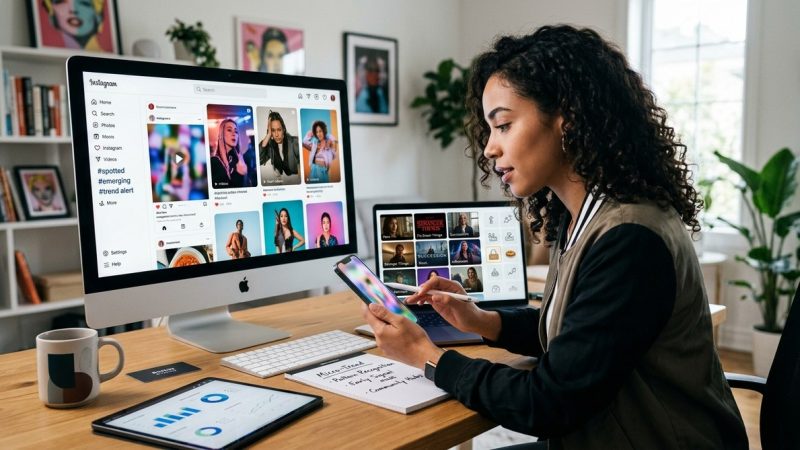
- Check secondhand online spaces. Subcultures first form in Reddit communities, private Discords, and small Instagram Groups. Search for terms that feel awkward, like “repair circle” or “no phone vacation.” If the group has been active for over six months, it is serious.
- Look for physical gatherings. Once an online group starts meeting in person, it is becoming a subculture. Library reading parties, mending workshops, flip phone meetups. These events are hard to scale and that is what makes them authentic.
- Track the language. New subcultures invent words. Underconsumption core uses “make do” as a badge. Slow phone users say “dumb smart.” If you hear a term repeated across three different sources, pay attention.
| Mistake | Reason It Fails |
|---|---|
| Calling it a trend too early | Subcultures need at least 6 months of organic growth |
| Ignoring the economic angle | Most subcultures form in response to money stress |
| Assuming it is only for teens | Many 2026 subcultures include people in their 30s and 40s |
| Focusing on aesthetics only | Values matter more than outfits |
Look for the Quiet Rebels
The five subcultures of 2026 share a common thread: they all ask people to slow down. To use less. To be present. They are not loud. They are not trying to go viral. That is exactly why they matter. The next big cultural shift will not arrive as a hashtag. It will start with someone turning off their phone, picking up a pen, or laughing with strangers in a dark room. Pay attention to those moments. They are the ones that last.
So keep watching the edges. If you see a person typing on a BlackBerry in 2026, or a group of friends sewing patches onto a jacket instead of ordering a new one, you are witnessing the future. The subcultures that define this year are not gone. They are just getting started. And if you missed them until now, you are exactly on time.